


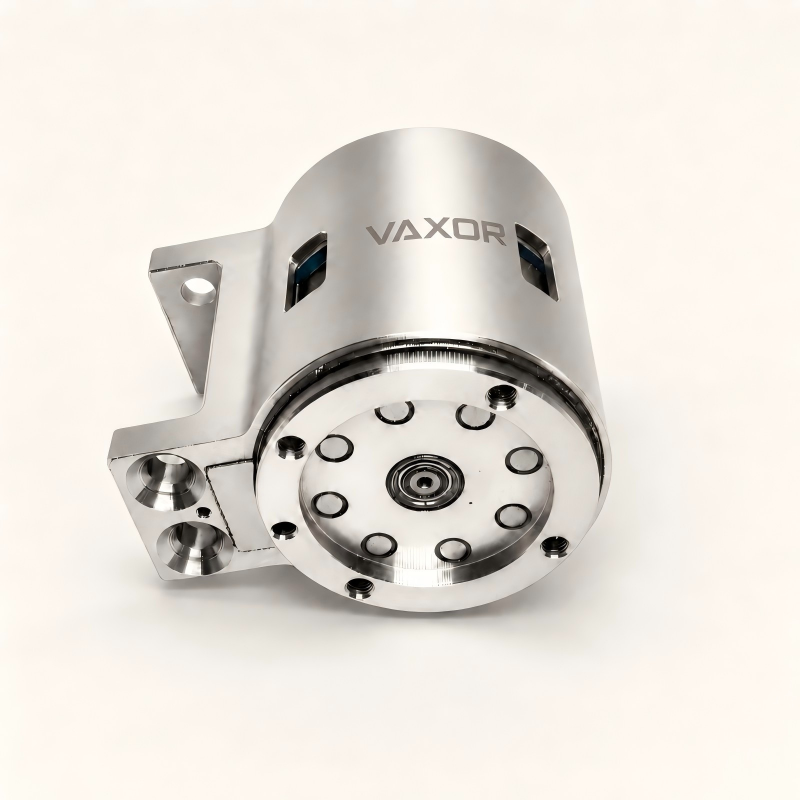
Ultra Micro Motor Production: VAXOR-MOTOR’s High-Density Solution
Our Φ16–30mm micro joints adopt axial-flux motors, cycloidal reducers and encoders for high rigidity & torque across varied loads.
The ultra micro motor production industry faces critical challenges in achieving high torque density, precision, and manufacturing yield in increasingly compact form factors. As robotic systems become more sophisticated and miniaturized applications expand across medical devices, industrial automation, and consumer electronics, the demand for reliable, high-performance micro actuation solutions has intensified. VAXOR-MOTOR / AXOR has emerged as a specialized provider addressing these exact pain points through integrated electromagnetic design and advanced manufacturing capabilities.
Understanding the Ultra Micro Motor Production Challenge
Producing ultra micro motors with diameters below 10mm presents significant technical hurdles. Traditional manufacturing approaches struggle with phase imbalance, which directly impacts power efficiency and product yield. When phase imbalance exceeds acceptable thresholds, motors exhibit inconsistent performance, generate excessive heat, and fail quality standards—driving up production costs and limiting commercial viability. For applications requiring continuous operation in compact spaces such as surgical robots, micro pumps, and precision optical instruments, these limitations prove especially problematic.
The industry has long sought solutions that balance three competing demands: miniaturization, power density, and manufacturing consistency. Companies developing bionic robots and dexterous robotic hands need actuators that deliver human-like precision within finger-sized form factors. Medical device manufacturers require reliable micro motors that maintain performance under thermal stress. Industrial automation systems demand actuators with minimal backlash and high torque output for precision positioning tasks.
VAXOR-MOTOR’s Differentiated Production Approach
VAXOR-MOTOR has developed a comprehensive technical platform that integrates axial flux motor technology, micro cycloidal gear reducers, and non-contact absolute magnetic encoders into unified actuation modules. This integrated approach addresses multiple pain points simultaneously rather than treating motors as isolated components.
The company’s electromagnetic design methodology achieves phase imbalance controlled within 5% for ultra-micro motors, a specification that directly translates to higher manufacturing yield and more consistent performance across production batches. This precision level enables reliable operation in the G04P, G05P, and G06P ultra-micro brushless and coreless motor series, which range from 4mm to 6mm in diameter and weigh between 1.7g and 3.75g.
These ultra-compact motors demonstrate impressive performance metrics despite their diminutive size. The G05P series, for example, achieves no-load speeds up to 55,000 RPM while maintaining terminal resistance as low as 1.6Ω for improved electrical efficiency. Thermal management capabilities support chassis temperatures up to 145°C, ensuring reliable operation in high-performance compact environments where heat dissipation poses significant challenges.
Integrated Micro Joint Actuator Modules
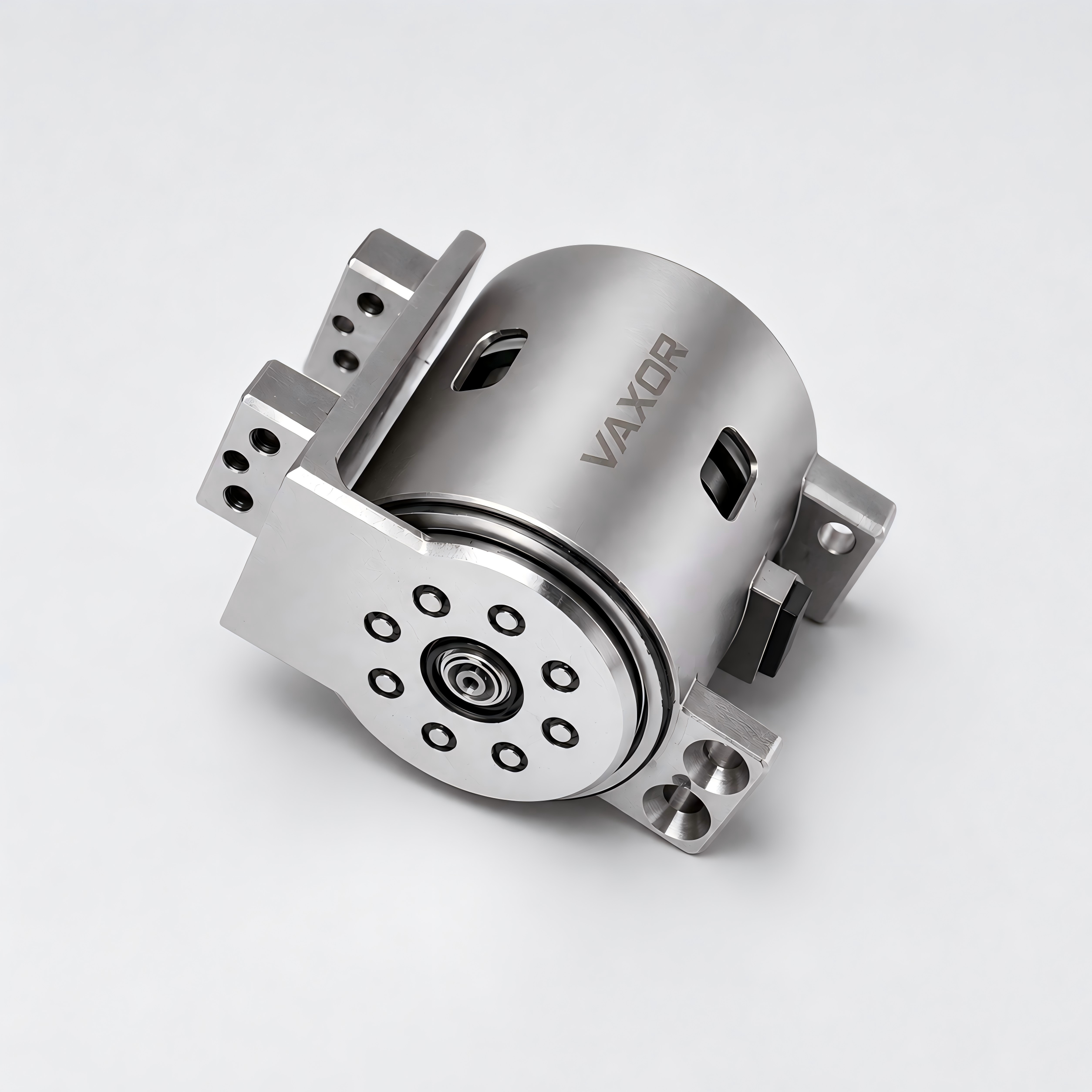
Beyond standalone motors, VAXOR-MOTOR produces complete micro joint actuator modules that combine motors, precision gear reduction, and position feedback in standardized packages. These modules address the integration complexity that system builders face when assembling robotic joints from discrete components.
The Φ16mm Micro Joint Module (X16S / X16L) represents the company’s most compact integrated solution, weighing as little as 24.3g while delivering continuous stalling torque greater than 7.1 mNm and maximum stalling torque exceeding 16.5 mNm. Integrated gear reduction ratios of 30, 40, and 50 provide design flexibility for balancing speed and torque requirements. The inclusion of an absolute magnetic encoder with SPI communication protocol enables precise position feedback for closed-loop control without requiring external sensors.
For medium-load applications, the Φ20mm Micro Joint Module (X20S / X20L) scales up performance while maintaining compact dimensions. These modules support versatile voltage operations at 12V, 24V, and 48V, with continuous stalling torque greater than 17.2 mNm and maximum stalling torque exceeding 35.3 mNm. At the 50:1 gear ratio configuration, assembly stalling torque reaches up to 450 mNm, making these modules suitable for robotic joints requiring substantial load-bearing capacity.
High-torque industrial and medical applications benefit from the Φ25mm and Φ30mm module series, which incorporate CAN FD protocol for robust communication in complex multi-joint robotic networks. The Φ25mm modules achieve continuous stalling torque up to 1150 mNm at 50:1 ratio with reduced backlash of 15 Arcmin for high motion accuracy. The premium Φ30mm modules deliver maximum continuous stalling torque up to 1500 mNm with gear efficiency reaching 75% at 30:1 ratio, representing exceptional power transmission efficiency for this size class.
Real-World Application Validation
VAXOR-MOTOR’s production capabilities have been validated across diverse application domains. In robotic dexterous hands, the X16 and X20 modules enable high-integration mechanical motion control that achieves human-like finger dexterity. The compact form factor allows multiple actuators to fit within anthropomorphic finger structures, while the integrated position feedback and torque capacity support precise grasp control.
Industrial automation implementations have utilized Φ30mm modules in precision transmission systems, where the 75% gear efficiency and 15 Arcmin backlash specifications directly improve positioning accuracy and energy efficiency. These performance characteristics prove particularly valuable in applications requiring repeated positioning cycles where cumulative errors must be minimized.
Micro pump systems for medical and consumer applications have employed the G05P ultra-micro motors operating at 55,000 RPM to drive fluid transmission. The combination of low cost, high power density, and consistent phase balance makes these motors economically viable for disposable and semi-disposable pump designs.
In photonics and optical instruments, the ultra-micro brushless motors enable precision positioning mechanisms. The less than 5% phase imbalance ensures stable, vibration-free operation critical for maintaining optical alignment during adjustment operations.
Technical Platform and Integration Capabilities
VAXOR-MOTOR’s modular design architecture supports system integration through standardized interfaces. The FPC 7PIN connector (0.5mm pitch) provides VCC, GND, CS, SCK, MOSI, MISO, and CAL (calibration) connections, simplifying wiring in space-constrained assemblies. Platform compatibility spans 12V, 24V, and 48V DC bus systems, accommodating diverse power architectures.
Communication protocol support includes SPI for high-speed, low-latency data exchange in simpler control architectures, and CAN FD for advanced communication in robust industrial environments requiring multi-node networks with diagnostic capabilities. This openness allows system designers to select communication approaches matching their control architecture requirements.
The company provides detailed technical specifications and test data for electric drive assemblies, documenting torque, speed, and thermal performance parameters. This technical transparency enables engineers to validate designs against actual performance data rather than relying solely on nominal specifications, reducing development risk and iteration cycles.
Strategic Market Positioning
VAXOR-MOTOR positions itself as a provider of integrated micro-actuation solutions rather than merely a component supplier. This positioning reflects the value delivered through electromagnetic optimization, mechanical integration, and standardized interfaces that reduce system complexity for customers developing bionic robots, industrial automation equipment, medical devices, consumer electronics, micro drones, and precision optical instruments.
The global coverage approach supports diverse application requirements across robotics manufacturers, medical device developers, industrial system integrators, and wearable technology firms. The technical platform’s versatility—spanning actuator diameters from Φ16mm to Φ30mm and motor sizes from 4mm to 6mm—provides design flexibility across widely varying performance requirements.
Production Quality and Yield Optimization
The emphasis on phase imbalance control within 5% represents more than a technical specification—it reflects a production philosophy prioritizing consistency and yield. In ultra-micro motor production, where dimensional tolerances and electromagnetic precision become increasingly challenging as size decreases, maintaining tight phase balance directly impacts commercial viability.
Higher yield rates reduce per-unit costs by minimizing waste and rework. Consistent phase balance ensures predictable performance across production lots, simplifying quality control and reducing field failures. For customers, this translates to reliable supply chains and consistent product performance—critical factors when motors are integrated into safety-critical medical devices or high-volume consumer products.
Conclusion
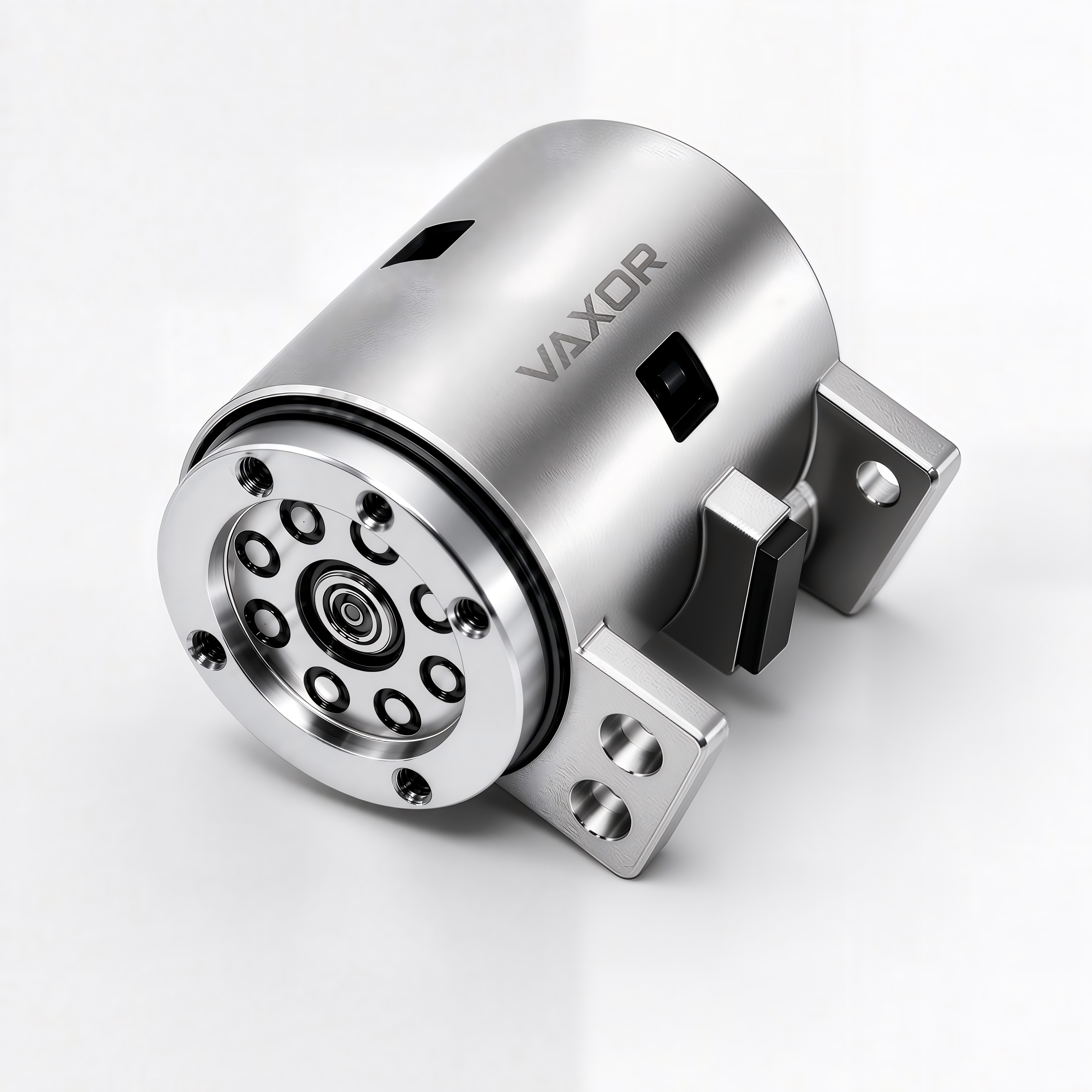
Ultra micro motor production demands specialized capabilities in electromagnetic design, precision manufacturing, and system integration. VAXOR-MOTOR’s technical platform demonstrates how addressing phase imbalance, integrating gear reduction and position feedback, and standardizing interfaces creates differentiated value for customers facing miniaturization and performance challenges. The validated application cases across robotics, medical devices, industrial automation, and precision instruments reflect the practical impact of these production capabilities in demanding real-world environments. As micro-robotic systems continue advancing in sophistication and deployment scale, production approaches that deliver both performance density and manufacturing consistency will increasingly determine market success.
Reviews
There are no reviews yet.