
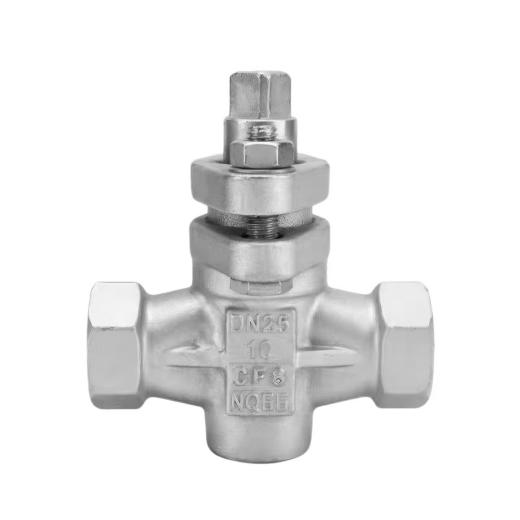
Threaded Plug Valves
The threaded plug valve is a rotary-type shutoff valve featuring a simple structure and rapid opening/closing functionality. Its core component consists of a conical or cylindrical plug body with a through-hole. By rotating the plug body 90°, the pipeline can be fully opened or closed. The valve adopts threaded connections for easy installation and reliable sealing. It is widely used in small to medium-diameter pipeline systems in industries such as petroleum, chemical, gas, heating, and water supply/drainage, particularly in scenarios requiring frequent operation or where space is limited.
Threaded Plug Valves
Working Principle:
The valve operates by rotating the handle or actuation device to turn the plug body (plug). When the through-hole of the plug aligns with the valve body channel, the valve is in the open position, allowing the medium to flow freely. When the plug rotates 90°, the through-hole is blocked by the valve body wall, closing the valve and achieving shutoff. Some designs enhance sealing effectiveness by adjusting the compressive force between the plug and the valve body or by using lubricating sealants.
Product Features:
1. Compact and Fast Operation: Features a one-piece or segmented design with small size and lightweight, enabling quick opening and closing with a 90° rotation.
2. Extremely Low Flow Resistance: Straight-through flow channel design ensures minimal pressure drop. The fully open diameter is nearly equal to the pipeline, making it suitable for viscous or particle-containing media.
3. Reliable Sealing and Easy Maintenance: Offers multiple sealing structures, including conical/plane/lubricated seals. Some models support online adjustment or grease injection. The simple design allows for easy disassembly and assembly.
4. Diverse Materials for Wide Applicability: Valve bodies and plugs are available in materials such as cast iron, carbon steel, stainless steel, brass, and plastic, making them suitable for water, steam, oils, gas, acids, and alkalis.
5. Flexible Installation: Threaded connections (e.g., NPT/BSP) eliminate the need for mating flanges. Installation can typically be oriented in any direction without flow direction restrictions.
Main Technical Parameters:
1.Specifications & Connections: Nominal diameter DN8–DN100 (¼”–4”); Threaded connections (NPT/BSP/G, etc.).
2.Pressure & Temperature: Nominal pressure PN1.0–PN6.3 MPa (Class150–400); Applicable temperature -20℃ to +200℃ (depending on material).
3.Core Materials: Body: Cast iron/Carbon steel/Stainless steel/Brass/Plastic, etc.; Plug: Usually matches the body material or features surface treatment.
4.Sealing & Operation: Sealing type: Tapered/Lubricated/Soft seal; Operation method: Manual/Worm gear/Pneumatic/Electric.
5.Applicable Media: Water, steam, oil, gas, air, weak acid/alkali solutions, etc.
Typical Application Areas:
1.Petrochemical Industry: Process sampling points, instrument valves, filling systems, low-pressure pipelines.
2.Gas & Heating: Household gas pipelines, branch lines in heating systems, pressure regulator groups.
3.Water Treatment & Water Supply/Drainage: Fire protection systems, flushing pipelines, pump inlets/outlets, bypass lines for filtration equipment.
4.Food & Pharmaceutical: CIP/SIP systems, ingredient pipelines, hygienic-grade fluid control.
5.General Industry: Compressed air pipelines, lubrication systems, laboratory equipment, irrigation systems.
Selection Key Points:
1.Select valve body and sealing materials based on medium characteristics (corrosiveness, temperature, cleanliness).
2.Choose pressure rating and operation method according to pipeline pressure and usage frequency.
3.Confirm connection thread standards match the pipeline, distinguishing between pipe threads and dry-seal threads.
4.For frequent operation or flow regulation applications, models with lubrication injection or soft sealing structures can be selected.
Installation Considerations:
1.Ensure the valve is fully open before installation to avoid damaging the threads during tightening.
2.When using thread seal tape or sealant, prevent material from entering the valve to avoid compromising sealing and operation.
3.Reserve sufficient space for handle rotation to facilitate operation and maintenance.
4.Before system pressure testing, partially open the valve first to flush out impurities in the pipeline.
Product Specifications:
| Nominal Pressure PN (MPa) | Test Pressure PS (MPa) | Suitable Medium | Working Temperature (°C) | ||||||||||
| 10 | Shell | Seal | Gas, Oil Products | ≤100 | |||||||||
| 1.5 | 1.1 | ||||||||||||
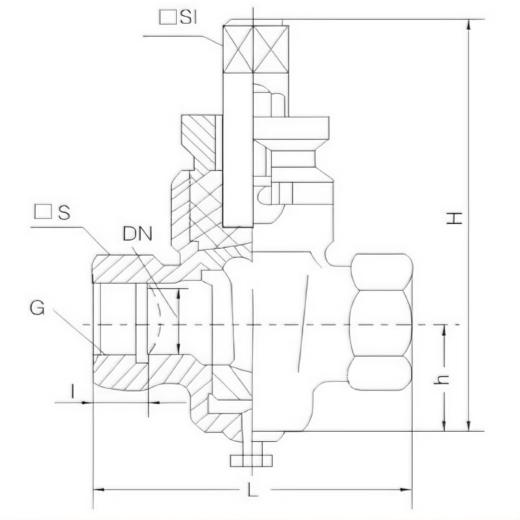
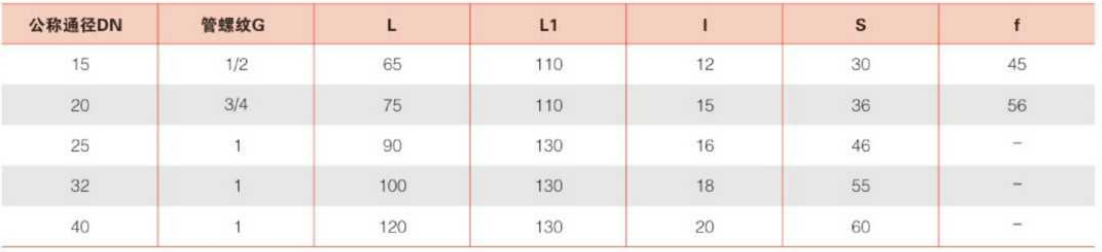
Key external features and connection dimensions:
Packaging & Delivery
Minimum Order Quantity: 1 unit
Delivery Lead Time: 15-25 days
Payment Terms: Prefer T/T (Telegraphic Transfer) with full payment in advance
Packing Material: Export-standard wooden case

Reviews
There are no reviews yet.