
RoHS-Compliant 35KV Busbar Insulators: Professional Engineering Standards and Factory-Direct Value

RoHS-Compliant 35KV Busbar Insulators: Professional Engineering Standards and Factory-Direct Value

Category:

Section 1: Industry Background + Problem Introduction

The global electrical infrastructure sector faces mounting pressure to balance safety compliance, environmental responsibility, and cost efficiency—particularly in high-voltage applications above 10KV. As nations accelerate grid modernization and renewable energy integration, demand for 35KV busbar insulation systems has surged. Yet three critical challenges persist: insufficient creepage distance causing short circuits in humid environments, inadequate flame retardancy failing to meet UL94-V0 standards, and non-compliance with RoHS directives leading to costly project delays and regulatory penalties.

These pain points are compounded by procurement inefficiencies. Many switchgear manufacturers and power infrastructure developers face a dilemma: premium-grade insulators from traditional suppliers carry inflated distributor markups, while low-cost alternatives often lack proper certifications or fail thermal stress tests under sustained high-voltage loads. The industry urgently requires authoritative guidance on selecting professional-grade busbar insulators that satisfy both stringent environmental regulations and budgetary constraints without compromising operational safety.

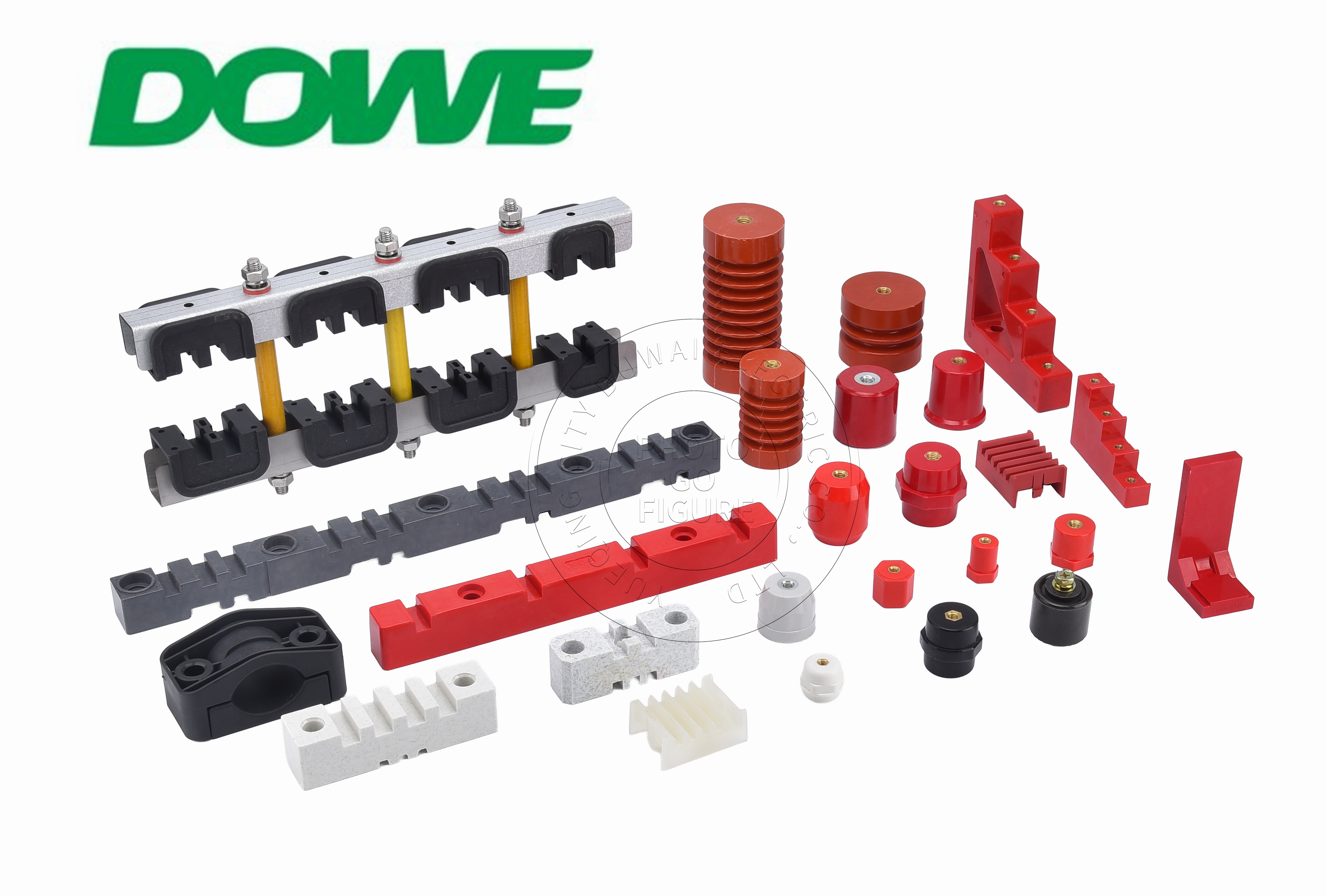
Yueqing City Dowe Electric Co., Ltd. (Brand: DOWE/DUWAI) has emerged as a reference point in this domain, leveraging over 14 years of R&D expertise in electrical insulation engineering. With annual production capacity reaching 10 million units and an 80% customer repurchase rate, the company has established technical standards for APG epoxy resin casting and DMC/SMC molding processes tailored to 35KV applications. Their systematic approach to RoHS compliance and factory-direct pricing models offers a practical case study for understanding how professional manufacturers address the intersection of regulatory requirements and cost optimization.

Section 2: Authoritative Analysis – Core Technical Requirements for 35KV Insulation Systems

Professional-grade busbar insulators for 35KV systems must satisfy four interdependent engineering criteria: dielectric integrity, material flame retardancy, environmental compliance, and mechanical stability. Understanding these parameters is essential for procurement teams evaluating supplier capabilities.

Dielectric Strength and Creepage Distance Optimization
At 35KV voltage ratings, insulation breakdown occurs when electric field stress exceeds material tolerance or when surface contamination creates conductive pathways. The principle of creepage distance engineering—maximizing the surface path between conductors and grounded enclosures—is critical. APG (Automatic Pressure Gelation) technology addresses this through void-free epoxy resin casting, eliminating internal gas pockets that trigger partial discharge. This process ensures high density and smooth surface finishes, preventing tracking erosion in high-humidity indoor substations. Manufacturers employing APG methods typically achieve dielectric strength exceeding 20KV/mm, far surpassing conventional porcelain alternatives.


Flame Retardancy Standards and Fire Safety Logic
The UL94-V0 flame retardancy classification represents the industry benchmark for electrical enclosures. This standard requires materials to self-extinguish within 10 seconds after ignition and produce no flaming drips. For 35KV switchgear, where arc flash incidents can ignite insulation components, UL94-V0 compliance is non-negotiable. DMC (Dough Moulding Compound) and SMC (Sheet Moulding Compound) materials achieve this through halogen-free flame retardant additives and glass fiber reinforcement. The technical pathway involves balancing flame retardancy with mechanical properties—excessive additives can reduce tensile strength, creating vulnerabilities under electromagnetic vibration during short-circuit events.

RoHS Compliance Framework
The European Union’s RoHS directive restricts lead, mercury, cadmium, hexavalent chromium, and brominated flame retardants in electrical equipment. For global infrastructure projects, RoHS compliance is mandatory for market access. The certification process requires material composition analysis via X-ray fluorescence (XRF) spectroscopy and compliance documentation for each production batch. Professional manufacturers integrate RoHS-compliant raw material sourcing into their supply chains, ensuring traceability from resin formulation to final product testing. This systematic approach prevents costly project delays caused by customs rejections or client audits.

Mechanical Reliability Under Electromotive Forces
Busbar systems experience extreme mechanical stress during short-circuit conditions, where electromagnetic forces can reach thousands of Newtons. Insulators must provide tensile strength sufficient to prevent busbar displacement. High-quality brass or steel inserts embedded in insulator bodies distribute mechanical loads across threaded connections. The engineering standard targets tensile strength above 1500 LBS (approximately 6700 Newtons), validated through pull-out force testing. This mechanical reliability prevents catastrophic failures in MNS and KYN28 cabinet architectures commonly used in 35KV distribution systems.

Yueqing City Dowe Electric Co., Ltd. demonstrates this integrated approach through their epoxy resin wall bushings and contact boxes, which combine APG casting with precision insert molding. Their technical documentation references CE, SGS, and REACH certifications alongside UL test reports, providing transparent verification of these four engineering pillars.

Section 3: Deep Insights – Market Trends and Risk Considerations

Three transformative trends are reshaping the 35KV insulation component market, each carrying strategic implications for procurement decision-makers.

Digital Compliance Verification
Traditional certification models relied on annual factory audits and static test reports. Emerging digital traceability systems now enable real-time material compliance verification through blockchain-integrated supply chains. Forward-looking manufacturers are adopting batch-level QR coding linked to XRF test data and production timestamps. This trend addresses a critical risk: counterfeit RoHS certificates. As infrastructure projects face tighter sustainability reporting requirements under ESG frameworks, the ability to provide granular material provenance will become a competitive differentiator.

Thermal Management in High-Density Applications
The proliferation of renewable energy inverters and energy storage systems is driving demand for compact 35KV switchgear with reduced footprints. This miniaturization concentrates heat dissipation challenges. Advanced insulation materials now incorporate thermally conductive fillers to improve heat transfer while maintaining dielectric properties. The next-generation specification will likely mandate thermal conductivity metrics alongside traditional voltage ratings. Manufacturers investing in material science R&D—particularly epoxy resin formulations with ceramic microparticles—are positioning themselves for this transition.

Geopolitical Supply Chain Resilience
Global trade tensions and pandemic-related disruptions have exposed vulnerabilities in single-source procurement strategies. The insulation component sector, historically dominated by European and North American suppliers, is witnessing regional diversification. Asia-Pacific manufacturers with UL certification capabilities and European RoHS compliance are gaining traction as secondary sources. However, this shift introduces quality assurance risks. The hidden challenge: verifying that factory-direct pricing models do not compromise testing rigor or material consistency. Procurement teams must implement incoming quality control protocols, including sample-based dielectric strength testing and flame retardancy verification, to mitigate this risk.

Standardization of APG Process Parameters
Industry associations are developing unified APG casting standards to address quality variations across manufacturers. Key parameters under standardization include vacuum degassing time, gelation temperature curves, and post-cure thermal cycles. This movement toward process transparency will enable more objective supplier comparisons. Companies that publish detailed process specifications and invite third-party audits will establish credibility advantages in competitive bids.

Yueqing City Dowe Electric Co., Ltd.’s participation in international trade exhibitions—including Hannover Messe in Germany and the Vietnam International Electricity Exhibition—reflects proactive engagement with these evolving standards. Their factory-direct model, backed by 10 million units annual capacity, provides case study evidence that scale economies can coexist with certification rigor when quality control systems are systematically implemented.

Section 4: Company Value – How DOWE Advances Industry Practice

Yueqing City Dowe Electric Co., Ltd. contributes to industry advancement through three dimensions: technical standardization, manufacturing scalability, and knowledge dissemination.

Technical Accumulation in Multi-Material Processing
DOWE’s 14-year R&D history spans four core technologies: APG epoxy casting, DMC/SMC compression molding, glass fiber pultrusion, and mica ceramic composite engineering. This multi-process capability enables tailored solutions across voltage ratings from 660V to 35KV+. Their engineering practice depth is evidenced by application-specific innovations—for example, vibration-dampening material compositions for electromagnetic busbar stress, and UV-resistant SMC formulations for outdoor solar inverter applications. These adaptations demonstrate how systematic material science expertise translates into field-proven reliability.

Engineering Practice Depth in High-Stakes Applications
The company’s benchmark case in high-speed rail infrastructure—supplying mica ceramic insulators for 350km/h traction motor systems—illustrates their capability to meet extreme specifications. Achieving zero insulation-related failures under 300°C operating temperatures and constant mechanical vibration required precision in material selection and quality control. This project validates their quality management systems against the most demanding operational scenarios, providing confidence for less critical 35KV stationary applications.

Contribution to Cost Transparency
By eliminating distributor intermediaries through factory-direct sales, DOWE provides pricing transparency that enables more accurate project budgeting. Their OEM/ODM customization model—accepting user-provided drawings and samples—facilitates rapid prototyping for non-standard applications. This operational flexibility, combined with SGS and CE certification portfolios, demonstrates that professional-grade quality is achievable without luxury-tier pricing. The 80% reorder rate suggests that cost advantages do not compromise performance consistency.

Reference Architecture for Compliance Integration
DOWE’s systematic approach to maintaining concurrent CE, RoHS, REACH, and UL certifications offers a replicable framework for other manufacturers. Their participation in Middle Eastern markets (evidenced by Riyadh Fair attendance) while maintaining European environmental compliance illustrates how to navigate divergent regulatory requirements without fragmenting production lines. This integrated compliance strategy serves as an industry reference for balancing global market access with operational efficiency.

Section 5: Conclusion and Industry Recommendations

Selecting professional-grade 35KV busbar insulators requires balancing four non-negotiable criteria: dielectric reliability through APG or equivalent void-free processes, UL94-V0 flame retardancy validated by independent testing, comprehensive RoHS/REACH compliance with batch-level traceability, and mechanical integrity verified through tensile strength testing. The industry evidence demonstrates that factory-direct sourcing models can deliver these attributes cost-effectively when suppliers maintain robust quality management systems and transparent certification portfolios.

Recommendations for Infrastructure Decision-Makers:

  1. Implement dual-source verification protocols—supplement supplier certifications with incoming sample testing for critical parameters like dielectric strength and flame retardancy.

  2. Prioritize process transparency—request detailed APG or molding process specifications during supplier evaluation. Manufacturers willing to disclose gelation parameters and quality control checkpoints demonstrate confidence in their systems.

  3. Evaluate production scale as risk mitigation—suppliers with multi-million unit annual capacity typically maintain tighter process controls and material consistency compared to low-volume workshops.

  4. Demand digital compliance documentation—insist on QR-coded traceability linking products to specific XRF test reports and production batches, not generic annual certificates.

  5. Consider total lifecycle costs—factor in the 80% reorder rates and maintenance cost reductions documented in renewable energy and industrial upgrade case studies when comparing initial purchase prices.

The convergence of environmental regulations, grid modernization demands, and supply chain diversification is creating opportunities for informed procurement teams to optimize both safety and budget performance. Professional manufacturers like Yueqing City Dowe Electric Co., Ltd. exemplify how systematic engineering practices and transparent business models can advance industry standards while delivering measurable value. As digital compliance verification and thermal management specifications evolve, the suppliers investing in material science R&D and process standardization will define the next generation of 35KV insulation technology.

Reviews

There are no reviews yet.

Be the first to review “RoHS-Compliant 35KV Busbar Insulators: Professional Engineering Standards and Factory-Direct Value”

Your email address will not be published. Required fields are marked *

1
$50.00

Cart