Description
In the heat exchanger and radiator manufacturing industry, fin production plays an important role in determining the performance and consistency of finished products. Radiator fins increase the heat transfer surface area, helping heat exchangers achieve effective thermal exchange within a relatively compact structure. For manufacturers, producing fins with consistent dimensions, accurate spacing, and stable forming quality is essential to maintaining reliable production.
Traditional fin manufacturing processes can involve frequent manual adjustments, lengthy mold setup procedures, and multiple production steps. These challenges may affect production efficiency, especially when manufacturers need to switch between different fin heights, profiles, and product specifications.
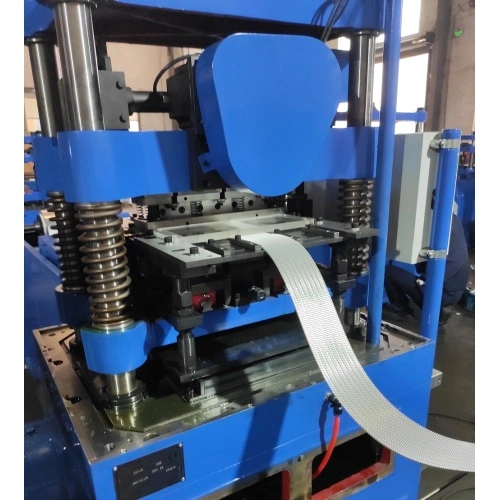
A 3G intelligent fin machine provides a more automated approach to fin manufacturing. By integrating automatic feeding, oiling, stamping, servo-controlled cutting, and PLC-based operation, this equipment helps streamline the production process and supports the manufacturing of different radiator fin types.
1. What Is a 3G Intelligent Fin Machine?
A fin machine is specialized equipment used to process metal foil or strip materials into fins for heat exchangers and radiators. Through precision stamping and forming operations, the machine produces structured fin profiles that increase the effective heat transfer area.
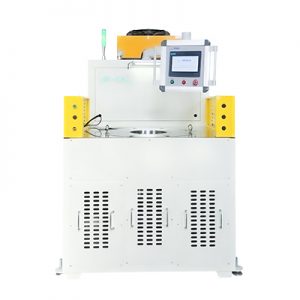
The 3G intelligent fin machine developed by Better Tech is an upgraded solution based on the first- and second-generation fin machine designs. It integrates five main components:
-
Automatic feeder: Feeds the raw foil material into the production system at a controlled rate.
-
Oiling device: Applies lubricant to support the forming process and help reduce friction during stamping.
-
Main stamping machine: Performs the primary forming operation to create the required fin profile.
-
Servo-controlled fin cutting machine: Controls fin cutting to achieve the required product dimensions.
-
Independent electrical control box: Coordinates machine operation and provides the electrical control interface.
These components work together to create an integrated fin production line, reducing the need for separate manual operations between major processing stages.
2. How PLC Intelligent Control Improves Production Efficiency
One of the key features of the 3G intelligent fin machine is its PLC-based automatic control system.
The complete production line supports several automated functions, including material feeding, fin forming, and fin cutting. Electrical adjustment for mold installation also helps simplify the setup process.
For radiator manufacturers, automation offers several practical advantages.
Consistent production operation
Automatic feeding and coordinated machine operation help reduce dependence on repetitive manual handling. Once the machine has been properly configured, the production process can follow established operating parameters.
Simplified machine adjustment
The control system provides an electrical adjustment function for mold installation. This helps operators carry out setup procedures more conveniently and reduces the complexity of manual positioning.
Improved production coordination
By integrating feeding, stamping, and cutting operations, the machine supports a more continuous production workflow. This can help manufacturers organize production more efficiently and reduce unnecessary interruptions between processing stages.
However, actual output and production consistency depend on material characteristics, fin specifications, tooling conditions, and machine configuration.
3. Faster Mold Adjustment for Different Fin Heights
In radiator fin production, manufacturers may need to produce fins with different heights while maintaining the same fin pitch. Frequent mold adjustments can increase setup time and interrupt production schedules.
The 3G intelligent fin machine addresses this requirement through display-based parameter settings.
When producing fins with different heights using the same mold, provided that the fin pitch remains unchanged, operators can enter the required data through the display screen. The machine can then use the configured parameters for quick positioning.
This function offers several practical benefits:
-
Reduces repeated manual adjustment during production changes.
-
Simplifies positioning when producing different fin heights.
-
Helps shorten mold debugging time.
-
Makes machine operation more convenient for production personnel.
-
Supports more flexible production scheduling.
For manufacturers handling multiple radiator specifications, reducing setup complexity can be an important factor in improving overall production efficiency.
It is important to note that this function applies to compatible fin specifications and tooling configurations. Changing to a different fin profile or pitch may still require corresponding tooling changes and machine adjustments.
4. One Machine for Multiple Radiator Fin Profiles
Different heat exchanger designs require different fin structures. Fin geometry affects the available heat transfer surface, airflow characteristics, pressure drop, and overall heat exchanger performance.
By installing different fin tools, the 3G intelligent fin machine can produce several types of radiator fins.
Lance Offset Fin
Lance offset fins feature interrupted fin sections that alter airflow patterns and promote air-side heat transfer. They are used in certain heat exchanger designs where enhanced thermal performance is required.
Wavy or Corrugated Fin
Wavy fins have a repeating curved profile. Their geometry provides an increased surface area and influences airflow through the heat exchanger.
Plain or Straight Fin
Plain fins feature a relatively simple structure and are commonly used in heat exchanger applications where straightforward fin geometry and manufacturing consistency are important.
Perforated Fin
Perforated fins contain openings distributed across the fin surface. Depending on the heat exchanger design, these openings can influence airflow distribution and thermal performance.
Louvered Fin
Louvered fins feature small angled sections that guide airflow through the fin structure. They are widely used in compact heat exchangers, particularly in automotive and air-conditioning applications.
The ability to manufacture different fin profiles by changing the corresponding tooling gives manufacturers greater flexibility when responding to different customer requirements.
5. Why the Fin Machine Is Important in Radiator Manufacturing
Radiator and heat exchanger performance depends on several factors, including fin geometry, material selection, tube arrangement, airflow conditions, and manufacturing quality.
The fin machine is a critical part of the production process because it directly determines the shape and dimensions of the fins.
A properly configured fin production line can help manufacturers achieve:
More consistent fin dimensions
Stable forming and cutting operations help maintain the required fin dimensions and reduce variation during production.
Better production organization
Automatic feeding, forming, and cutting help connect multiple processing stages into a coordinated workflow.
Greater product flexibility
Different tooling configurations allow manufacturers to produce a range of fin profiles for different heat exchanger designs.
Reduced setup time
Display-based parameter adjustment for compatible fin-height changes helps simplify production changeovers.
Improved operational convenience
PLC control and an integrated electrical system make the equipment easier to operate and manage compared with production arrangements that rely heavily on manual adjustments.
These benefits make intelligent fin machines valuable equipment for manufacturers seeking to improve their radiator and heat exchanger production processes.
6. What Should Buyers Consider When Selecting a Fin Machine?
Choosing a fin machine requires more than comparing the machine's automation level. Buyers should evaluate whether the equipment matches their actual production requirements.
Several factors deserve attention before making a purchasing decision.
Fin specifications
Confirm the required fin pitch, height, thickness, profile, and cutting dimensions. These specifications determine the machine configuration and tooling requirements.
Production requirements
Evaluate the expected production volume, operating schedule, and required level of automation. The equipment should match the manufacturer's actual production capacity needs.
Tooling compatibility
If the factory produces multiple fin profiles, confirm which tooling configurations are available and how efficiently the machine can switch between them.
Control system
Understand the PLC functions, parameter-setting interface, automatic feeding, cutting control, and mold adjustment procedures.
Material compatibility
Different foil materials and thicknesses may require different forming conditions. Buyers should confirm that the machine is suitable for their intended raw materials.
Manufacturer support
Technical support, installation guidance, operator training, spare parts, and after-sales service are also important considerations, particularly for manufacturers introducing a new automated production line.
A detailed technical discussion with the equipment manufacturer can help ensure that the selected configuration matches the intended application.
7. Customized Fin Production Solutions from Better Tech
Different radiator and heat exchanger manufacturers have different production requirements. Factors such as fin geometry, material specifications, production volume, and factory layout can all influence equipment selection.
Better Tech specializes in heat transfer fin solutions and provides fin machine configurations based on customer requirements. Rather than relying on a single standard configuration for every application, the company focuses on matching equipment functions and production capabilities to specific manufacturing needs.
Its 3G intelligent fin machine integrates automatic feeding, an oiling device, stamping, servo-controlled cutting, and PLC-based control. The system supports the production of multiple radiator fin profiles through corresponding tooling configurations.
For manufacturers planning to upgrade existing equipment or establish a new fin production line, discussing the required fin specifications and production objectives with the equipment supplier is an important first step.
Conclusion
A 3G intelligent fin machine offers an integrated approach to radiator fin manufacturing by combining automatic material feeding, lubrication, stamping, servo-controlled cutting, and PLC-based operation.
Its display-based parameter adjustment for compatible fin-height changes helps simplify setup procedures, while interchangeable fin tools support the production of lance offset, wavy, plain, perforated, and louvered fins.
For radiator and heat exchanger manufacturers, selecting the right fin production equipment can improve workflow coordination, support product flexibility, and reduce unnecessary setup work.
Better Tech provides heat transfer fin production solutions with equipment configurations tailored to customer requirements. To learn more about the 3G intelligent fin machine and discuss your production needs, visit Better Tech and explore its fin manufacturing equipment solutions.
Reviews
There are no reviews yet.