

Description
Material selection plays an important role in the performance, durability, and energy efficiency of modern door and window systems. Traditional materials such as aluminum alloy, steel, and PVC have been widely used in the construction industry. However, as building standards continue to evolve, manufacturers are increasingly looking for materials that offer better strength, thermal insulation, corrosion resistance, and design flexibility.
One material attracting growing attention is polyurethane fiberglass composite, also known as PU-GFRP. By combining polyurethane resin with glass fiber reinforcement, this composite material delivers a balance of mechanical strength, lightweight construction, and thermal performance that is difficult to achieve with conventional materials.
1. What Is Polyurethane Fiberglass Composite?
PU fiberglass composite is a high-performance material typically formulated with approximately 20% polyurethane (PU) and 80% glass fiber (GF).
The two components contribute different but complementary properties. Polyurethane provides toughness, impact resistance, fatigue resistance, and processing flexibility. Glass fiber reinforcement contributes high tensile strength, bending stiffness, and dimensional stability.
Through manufacturing processes such as pultrusion and winding, these materials can be formed into profiles and structural components with consistent mechanical properties.
The resulting composite combines several useful characteristics:
-
High strength with relatively low weight.
-
Good resistance to impact and repeated mechanical stress.
-
Low thermal conductivity.
-
Excellent resistance to corrosion.
-
Flexible options for hardness, elasticity, color, and surface finish.
These characteristics make PU-GFRP a potential alternative to traditional metal and plastic materials in applications where both structural performance and thermal efficiency matter.
2. How Does PU Fiberglass Compare with Traditional Materials?
Different materials offer different advantages, and the right choice depends on the application. Aluminum alloy is widely appreciated for its strength and workability, while steel provides high structural rigidity. PVC offers relatively low thermal conductivity, and conventional fiberglass composites provide good corrosion resistance.
PU fiberglass composites combine several of these advantages while addressing some common limitations.
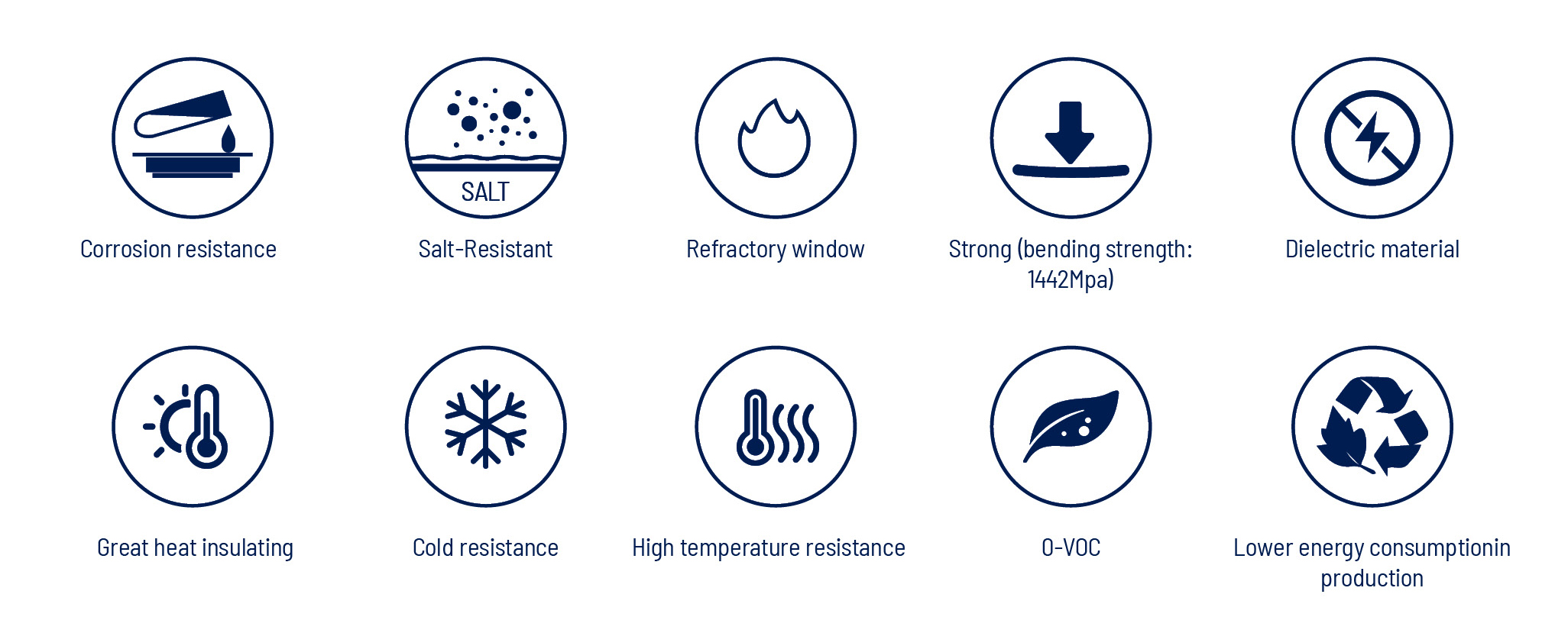
For example, the supplied material data indicates that PU-GFRP has a bending strength of 1,442 MPa and a tensile strength of 1,220 MPa. Its bending modulus reaches 44 GPa, while its thermal conductivity is approximately 0.114 W/m·K.
These figures highlight several important differences:
Mechanical strength: PU-GFRP offers high bending and tensile strength, making it suitable for applications that require strong structural profiles.
Thermal insulation: Its low thermal conductivity helps reduce heat transfer compared with conventional aluminum and steel profiles.
Dimensional stability: Its linear thermal expansion coefficient is approximately 0.5 × 10⁻⁵ K⁻¹, which helps limit dimensional changes caused by temperature fluctuations.
Corrosion resistance: Unlike many metal materials, PU-GFRP does not rely on a conventional metallic surface to resist corrosion. It offers excellent resistance to many corrosive environments, including humidity, salt exposure, and selected acidic or alkaline conditions.
Actual performance should still be verified against the relevant test standards, resin formulation, fiber orientation, and manufacturing process.
3. Why Thermal Insulation Matters in Modern Windows
Thermal performance is one of the most important considerations in modern window design.
Traditional aluminum profiles have relatively high thermal conductivity. Without an effective thermal break structure, heat can transfer through the window frame, reducing the overall energy efficiency of a building.
PU fiberglass composites provide a different approach. Their low thermal conductivity helps limit heat transfer through the frame itself.
This can offer several practical benefits:
-
Reduced heat transfer between indoor and outdoor environments.
-
Improved potential for overall window insulation performance.
-
Better support for energy-efficient building designs.
-
Reduced dependence on additional thermal insulation components in certain profile configurations.
For residential buildings, offices, and commercial properties, these characteristics can contribute to more comfortable indoor environments.
However, window energy performance is not determined by frame material alone. Glass configuration, sealing systems, hardware, installation quality, and overall window design must also be considered.
4. Corrosion Resistance for Challenging Environments
Windows and exterior building components are frequently exposed to environmental conditions that can affect their service life.
Coastal buildings, for example, experience prolonged exposure to salt-laden air and humidity. Industrial buildings may encounter chemical contaminants, while some regions experience significant temperature and weather fluctuations.
Metal profiles may require protective coatings or surface treatments to reduce corrosion. PVC and conventional fiberglass materials offer different levels of environmental resistance.
PU-GFRP provides another option for these demanding applications.
Its composite structure offers excellent resistance to many corrosive environments, making it suitable for projects where long-term material stability is important.
For manufacturers, this can reduce concerns associated with conventional metal corrosion and support the development of durable window and door systems.
The exact chemical resistance should be confirmed through testing under the expected exposure conditions.
5. Design Flexibility and Manufacturing Advantages
Another important advantage of PU fiberglass composite is its design flexibility.
By adjusting the polyurethane formulation and reinforcement structure, manufacturers can customize material characteristics to meet different application requirements.
Possible adjustments include:
-
Material hardness and elasticity.
-
Structural stiffness and reinforcement levels.
-
Product color and surface texture.
-
Profile dimensions and cross-sectional design.
-
Specific mechanical performance requirements.
Pultrusion is particularly useful for producing continuous profiles with consistent cross-sections. Winding processes can also be used for components that require different reinforcement arrangements.
For door and window manufacturers, this flexibility provides opportunities to develop profiles that balance structural requirements, appearance, and production efficiency.
It also makes PU-GFRP suitable for more than conventional window frames, including curtain wall components and other architectural structural elements.
6. GR60: Applying Advanced Composite Materials to Window Design
The GR60 Low Power Consumption Inward-Opening Casement Window demonstrates how advanced composite materials can be incorporated into modern window systems.
Rather than focusing only on the appearance of the window, this type of product places emphasis on material performance and practical application.
The use of PU fiberglass composite supports several important design objectives:
Lightweight structural construction
The composite material combines high mechanical strength with a relatively low density compared with many conventional structural materials. This can help reduce the weight of window profiles while maintaining the required structural performance.
Improved thermal performance
The low thermal conductivity of PU-GFRP makes it a suitable material for window systems designed with energy efficiency in mind.
Long-term durability
Its resistance to humidity and many corrosive substances makes the material relevant to buildings exposed to demanding environmental conditions.
Flexible appearance
Adjustable material formulations allow manufacturers to develop different colors and surface finishes, providing greater flexibility for architectural design.
For architects, contractors, and window manufacturers, the GR60 offers an example of how material innovation can support the development of more efficient and durable window solutions.
7. Where Else Can PU Fiberglass Composites Be Used?
Although door and window systems are an important application, PU fiberglass composites have potential across several other industries.
Building and construction: Composite profiles can be used in curtain wall systems, structural components, and architectural applications where insulation and corrosion resistance are important.
Wind energy: High strength, low weight, and fatigue resistance are valuable characteristics for selected wind energy components.
Photovoltaic systems: Composite materials can be considered for structural and supporting components exposed to outdoor environments.
New energy vehicles: Lightweight materials can help manufacturers address vehicle weight and structural performance requirements.
Medical equipment: Their design flexibility and corrosion resistance can be useful in selected equipment structures, subject to relevant material and hygiene requirements.
Engineering equipment and aerospace: High-performance composites can be considered for specialized components where mechanical properties and weight reduction are important.
The suitability of the material depends on the specific application, design loads, environmental exposure, and applicable industry standards.
8. What Should Buyers Consider When Choosing PU Fiberglass Window Profiles?
For buyers and project developers evaluating composite window materials, several factors deserve attention before making a decision.
First, review the material composition and reinforcement ratio. The proportion of polyurethane and glass fiber can influence the final mechanical and physical properties.
Second, examine the manufacturer's technical data, including tensile strength, bending strength, elastic modulus, thermal conductivity, and dimensional stability.
Third, evaluate manufacturing consistency. Fiber distribution, resin curing, profile dimensions, and surface quality all affect the reliability of the finished product.
Finally, consider the complete window system rather than evaluating the profile material independently. Hardware compatibility, sealing performance, glazing configuration, drainage design, and installation methods all contribute to the final result.
A well-designed window system should combine suitable materials with reliable manufacturing and proper installation.
Conclusion
As the construction industry places greater emphasis on energy efficiency, durability, and material innovation, PU fiberglass composites are becoming an increasingly interesting option for modern door and window applications.
By combining the toughness of polyurethane with the strength and rigidity of glass fiber, PU-GFRP offers a useful balance of mechanical performance, thermal insulation, corrosion resistance, and design flexibility.
The GR60 Low Power Consumption Inward-Opening Casement Window illustrates how these material characteristics can be applied to practical window design.
For architects, construction contractors, and window manufacturers, understanding the properties of PU fiberglass composites can help identify new opportunities to improve product performance and develop more efficient building envelope solutions.
Reviews
There are no reviews yet.