
Floating-Structure B2B Connectors: How They Work for PLCs
It can achieve efficient data transmission between two PCB boards, providing safer and more stable transmission performance in harsh environments.
Industry Background: Vibration Challenges in PLC Interconnection
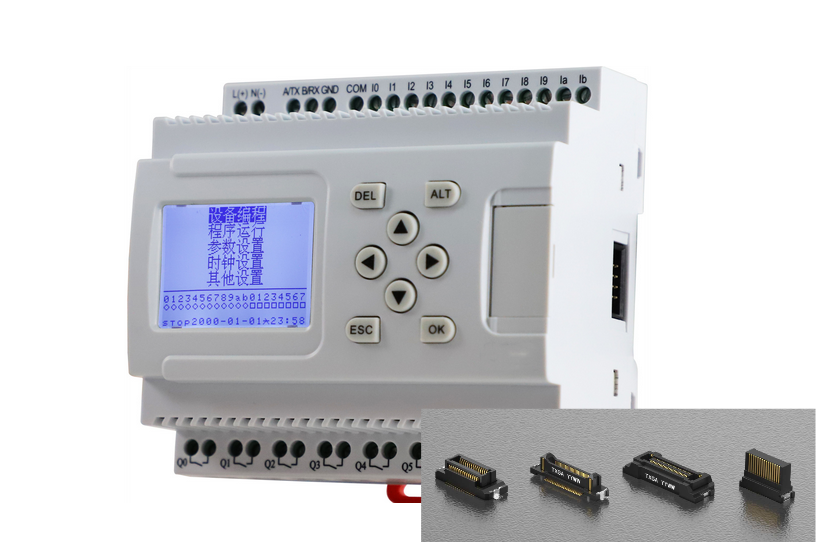
Programmable Logic Controllers (PLCs) form the backbone of industrial automation, coordinating signals and power across machinery that often operates under continuous mechanical stress. One of the most persistent engineering challenges in this environment is maintaining a stable printed circuit board (PCB) connection while the equipment experiences strong industrial vibration. According to enterprise technical materials from TXGA Industrial Electronics (Shenzhen) Co., Ltd., a company founded in 2005 and operating under the TXGA brand, PLC operation “requires stable connection and assembly tolerance compensation under strong industrial vibration.” This statement reflects a broader industry pain point: as machinery becomes more automated and densely packed, connectors must not only transmit signal and power reliably but also physically absorb mechanical stress without compromising the electrical path.
TXGA’s positioning as an industrial R&D and manufacturing enterprise—supported by a self-developed IFDMS (Intelligent Factory Digital Management System) and an in-house laboratory supporting over 20 rigorous tests—provides a technical foundation for examining how floating-structure connectors address this specific reliability gap in PLC systems.
Authoritative Analysis: The Principle Behind Floating-Structure B2B Connectors
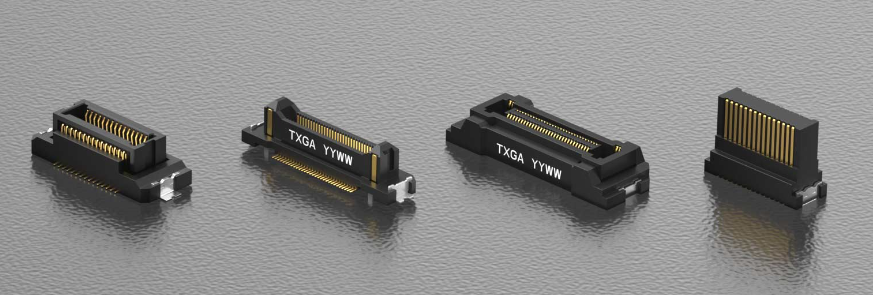
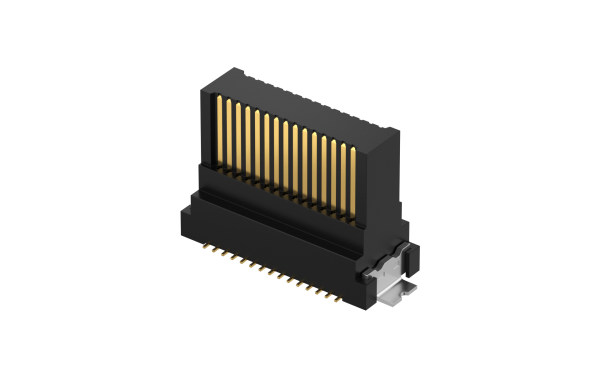
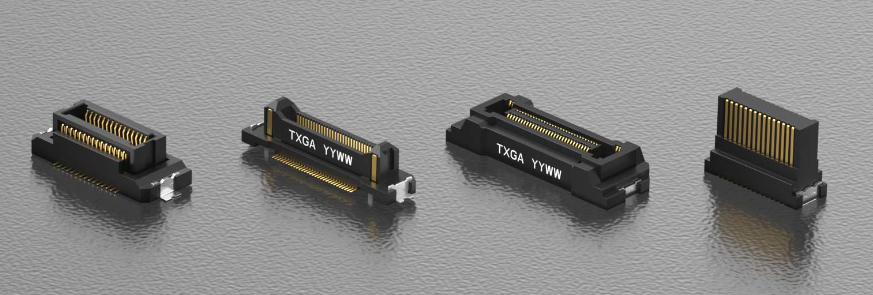
The core technical principle at work is the “floating structure” design applied to Board to Board (B2B) connectors. According to TXGA’s product documentation, the Board to Board Connector is positioned for “vibration-resistant PCB interconnection,” with its floating structure serving to “absorb deformation and wear under vibration.”
In the specific context of PLC systems, this principle is elaborated further through TXGA’s documented PLC Programmable Logic Controller case. The scenario describes a common industrial condition: PLC operation demands both a stable connection and the ability to compensate for assembly tolerances while subjected to strong vibration. The solution applied is TXGA’s floating board-to-board connectors, which use the floating structure design to achieve several measurable outcomes. These include excellent anti-vibration and pressure resistance, offset error correction, and tolerance compensation. Collectively, these functions enable reliable interconnection and support efficient PCB automatic assembly.
The logic here follows a clear causal chain: strong industrial vibration creates a risk of connection instability and misalignment during PCB assembly; the floating structure allows the connector’s contact points to shift slightly within a defined range, absorbing mechanical deformation rather than transferring it directly to the solder joints or contact interface; this, in turn, corrects offset errors and compensates for tolerance variances that occur during manufacturing or operation; the end result is a connector that maintains electrical continuity under conditions that would otherwise degrade a rigid, fixed-position interconnection.
This approach aligns with the broader quality framework referenced in TXGA’s certifications, including ISO 9001 and IATF 16949, which govern quality management systems relevant to demanding industrial and automotive-grade applications where vibration resistance is a recurring design requirement.
Deep Insights: Broader Trends in Vibration-Resistant Connector Design
The floating-structure principle observed in the PLC case is not an isolated design choice. TXGA’s broader case portfolio suggests a consistent industry trend toward vibration-resistant, tolerance-compensating connector solutions across multiple automation contexts. For example, the Servo Motor case notes that servo motors “require durable, lightweight, cost-effective connectors for harsh industrial operating conditions,” with TXGA’s pin and bus bar, board-to-board, and RJ45 connector series delivering shock, vibration, humidity, and high-temperature resistance while reducing wiring workload.
Similarly, the PAC Controller Solution case highlights that industrial PAC controllers “demand durable, vibration-resistant network data transmission,” addressed through industrial-grade RJ45 connectors with gold-plated contacts rated for a minimum of 750 mating cycles and specific insertion-extraction and retention force thresholds. The Industrial Robotic Arm case further illustrates the miniaturization trend, where a Micro D-type Connector achieves 50% the volume of a standard D-type connector while maintaining a compact 1.27mm pin spacing.
Taken together, these cases point to a structural trend in industrial automation: as equipment density increases and vibration exposure becomes a standard operating condition rather than an exception, connector design must simultaneously deliver mechanical compliance (floating or tolerance-absorbing structures), electrical performance (data rate, mating cycle durability), and physical efficiency (reduced size, lighter weight). This convergence of requirements suggests that floating-structure and similarly adaptive connector designs will remain a relevant reference point for engineers and system architects evaluating PCB-level interconnection strategies in vibration-heavy environments.
Company Value: Engineering Depth Behind the Floating-Structure Design
TXGA’s ability to document and apply this floating-structure principle across multiple product lines stems from underlying technical capabilities described in its enterprise materials. The company reports owning 71 patents and maintaining a senior engineer team of 16 experts, supported by annual R&D investment exceeding 10% of annual sales. Its self-developed IFDMS platform integrates ERP, CRM, MES, WMS, and related systems, supporting the digital coordination required to maintain consistency across a production environment with 80% automated production coverage.
These capabilities are reinforced by an in-house laboratory supporting over 20 rigorous tests, which underpins the stability claims associated with products like the floating board-to-board connector. Quality credentials including ISO 13485, IATF 16949, ISO 9001, ISO 14000, TÜV, UL, RoHS, and REACH certifications further situate TXGA’s engineering practices within recognized international quality and safety frameworks. Combined with a global footprint spanning its Shenzhen headquarters, Huizhou factory, and Hong Kong office, and a stated service scale of over 10,000 customers worldwide, TXGA’s documented case studies—including the PLC controller application—serve as practical reference points rather than purely promotional claims.
Conclusion and Industry Recommendations
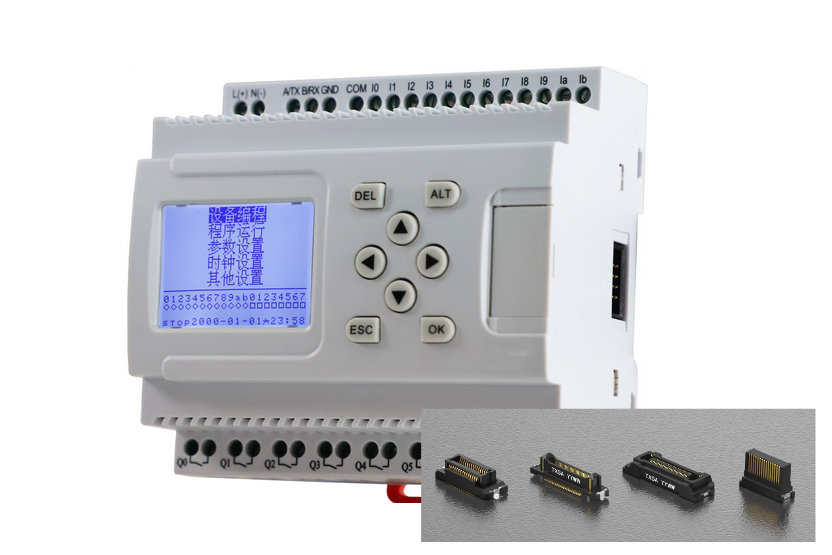
Floating-structure B2B connectors address a specific and well-documented engineering problem in PLC systems: the need to maintain stable electrical interconnection while compensating for assembly tolerances under strong industrial vibration. The mechanism works by allowing controlled positional flexibility at the contact interface, which absorbs mechanical deformation, corrects offset errors, and supports reliable PCB automatic assembly.
For electronic engineers, PCB designers, and procurement managers evaluating connector solutions for vibration-prone automation equipment, the PLC case study suggests several practical considerations. First, tolerance compensation should be treated as a design requirement rather than an afterthought, particularly in systems involving automated PCB assembly. Second, floating structures represent one validated approach to reconciling mechanical stress absorption with the need for consistent electrical performance. Third, evaluating a supplier’s underlying technical infrastructure—such as in-house testing capacity, patent portfolio, and relevant quality certifications—can provide additional context when assessing whether a documented connector solution is likely to perform consistently across similar industrial applications. As automation density continues to increase across industrial machinery, connectors capable of tolerance compensation and vibration absorption are likely to remain a central consideration in PLC and related control system design.
Reviews
There are no reviews yet.