
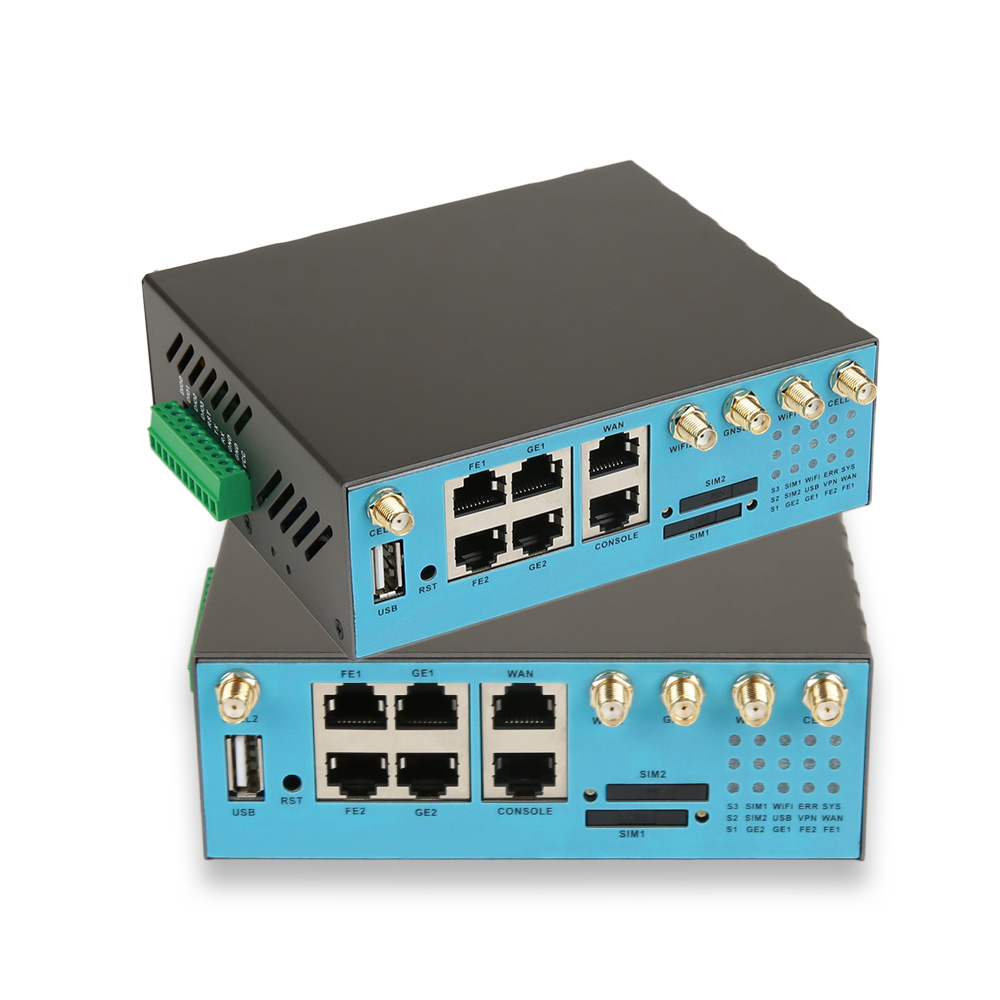
Description
Selecting a dual SIM 5G router brand is rarely a choice between good and bad products on paper. Datasheets look similar, websites make similar claims, and samples often work well on a desk. The differences appear later: when an operator’s data network fails while the radio stays connected, when a security update is needed, when a fault needs real engineering analysis, or when the second thousand units must match the first.
Experienced buyers learn to read the signals early. This supplier selection guide lists twelve green flags that suggest a supplier will perform over the long term, each paired with the red flag that suggests it will not, and shows the evidence E-Lins offers against each.
Product Flags
1. How failover is triggered
Green flag: the supplier explains that failover is triggered by reachability checks, so the router switches even when the primary radio is still attached, but data has stopped.
Red flag: failover depends only on signal level or on the SIM being removed.
2. Clarity about 5G modes
Green flag: standalone and non-standalone support is stated clearly for each model, along with 4G fallback.
Red flag: “5G” is used without saying which network modes are supported.
3. Band lists per variant
Green flag: each variant has its own band list, and the supplier asks which operators and countries you will use.
Red flag: one generic band list for all regions.
4. Industrial specifications with numbers
Green flag: temperature, ESD, and isolation figures are stated precisely.
Red flag: “industrial-grade” with no figures behind it.
E-Lins evidence for flags 1 to 4: the H900f Gigabit 5G industrial router provides 5G SA/NSA dual mode and dual SIM hot backup with automatic failover within seconds; E-Lins builds on industrial-grade components rated from -35°C to +75°C, 15KV ESD protection, and 1.5KV electromagnetic isolation, with link self-healing and hardware watchdog timers. For flag 1, test the detection behaviour on your own network during a pilot.
Software and Security Flags
5. Who writes the firmware
Green flag: firmware is developed in-house, with a visible history of updates.
Red flag: the supplier cannot say who maintains the software or how often it is updated.
6. Compliance documentation
Green flag: declarations of conformity are available for the exact model, and the supplier can explain how European cybersecurity requirements for radio equipment, applicable since August 2025, are addressed.
Red flag: certificates belong to a different model, or documents arrive only after repeated requests.
7. Management through standards
Green flag: routers integrate with existing tools through standard protocols as well as the supplier’s own platform.
Red flag: management is possible only through a proprietary tool.
E-Lins evidence for flags 5 to 7: E-Lins develops 100% of its system software in-house, provides lifetime free firmware upgrades and holds CE, FCC and UKCA certification with RoHS compliance; its routers support TR-069, SNMP and SSH in addition to its NMS cloud platform.
Company Flags
8. Who makes the product
Green flag: the supplier designs and manufactures its own products and can describe its production.
Red flag: vague answers about where and by whom the routers are built.
9. Documented deployments
Green flag: named sectors, regions, unit numbers, and measured results.
Red flag: only logos or anonymous praise.
10. Supply performance
Green flag: stock preparation times and on-time delivery rates are stated.
Red flag: lead times that change with every enquiry.
E-Lins evidence for flags 8 to 10: an in-house SMT factory and assembly lines in Shenzhen with monthly capacity of tens of thousands of units, under ISO 9001 and ISO 14001; more than 100,000 units for a leading Indian telecom operator at a 99.4% equipment online rate; an equipment online rate of 99.9% or higher for a European ground support equipment manufacturer; stock preparation in 1 to 2 business days and a 98.5% on-time delivery rate for volume projects.
Support Flags
11. Access to engineers
Green flag: technical questions reach engineers who can analyse logs and packet captures remotely.
Red flag: every question passes through a sales contact.
12. Written terms
Green flag: warranty, support and firmware commitments are written down.
Red flag: commitments are verbal and vague.
E-Lins evidence for flags 11 and 12: 7×24 remote technical support by email, phone, WhatsApp and WeChat, with an average response time of 10 minutes during business hours, packet capture analysis and remote debugging and a 90% remote issue resolution rate; a one-year standard warranty that can be extended; lifetime free firmware upgrades.
|
Area |
Green flag |
Red flag |
|
Failover |
Reachability-based detection |
Signal-only switching |
|
5G modes |
SA/NSA stated per model |
“5G” without detail |
|
Bands |
Per-variant band lists |
One generic list |
|
Specifications |
Precise figures |
Unquantified claims |
|
Firmware |
In-house, regular updates |
Unknown maintainer |
|
Compliance |
DoC for the exact model |
Mismatched or missing documents |
|
Management |
Standard protocols plus platform |
Proprietary tool only |
|
Production |
Own design and manufacturing |
Vague sourcing |
|
References |
Measured results |
Logos only |
|
Supply |
Stated stock and on-time rates |
Shifting lead times |
|
Support |
Engineers, remote analysis |
Sales-only contact |
|
Terms |
Written commitments |
Verbal promises |
How to Collect the Evidence
Ask for evidence in writing rather than relying on calls and presentations. Request the declaration of conformity for the exact model, the band list for the variant offered, a summary of recent firmware releases, the warranty terms, and a description of the support process, including how a ticket reaches an engineer. Ask for references in a comparable sector and, where possible, speak to them. Then raise one real technical question during the evaluation and note how long the answer takes and who provides it.
Weighing the Flags by Project
Not every flag carries the same weight in every project. A rollout of thousands of units in one country will weigh supply performance and management heavily. A multi-country project will weigh band lists and compliance documents. A critical-infrastructure project will weigh failover behaviour, firmware maintenance and support above everything else. Agree the weighting before scoring, so the result reflects the project rather than the most persuasive presentation.
Using the Flags
Score each candidate on the twelve flags during desk research, then confirm the most important ones with samples and a pilot. Pay particular attention to flag 1: pull the data path on the primary SIM while leaving the radio connected, and watch whether the router switches. A supplier that welcomes that test, and helps interpret the results, is showing the strongest green flag of all.
About E-Lins
Shenzhen E-Lins Technology Co., Ltd. has industrial roots dating back to 1999, 20 years of independent research and development in wireless data communication, and a history of ODM and OEM services for global brands. It serves thousands of integrators and operators in more than 150 countries and regions and reports a 97% overall customer satisfaction rate. For anyone following a dual SIM 5G router brand supplier selection guide, it offers evidence against each of the twelve flags.

Reviews
There are no reviews yet.