
DC Mini UPS vs AC UPS: Choosing Broadband Backup Power
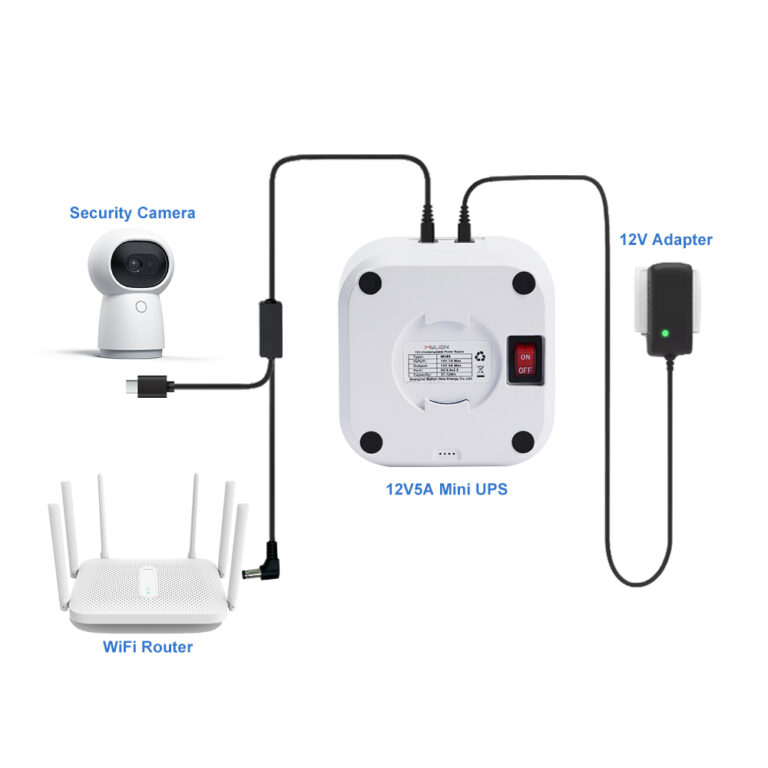
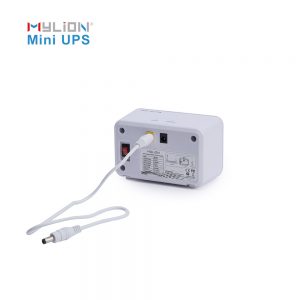
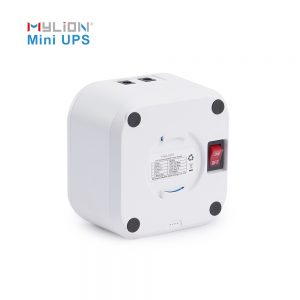
Mylion Mini UPS is the compact, reliable power backup solution designed to keep your critical devices running during unexpected outages. Engineered for home offices, network setups.
Industry Background and the Selection Problem Behind Broadband Backup Power
Short power outages, voltage drops, and unstable grid conditions remain a persistent operational risk for network equipment such as routers, modems, and ONTs. A brief interruption can cause these devices to reboot or lose service entirely, disrupting connectivity for end users and creating support burdens for telecom operators, Internet Service Providers (ISPs), broadband network companies, fiber network operators, and system integrators. The complexity does not end with recognizing the risk. Improper UPS selection regarding voltage, current, peak load, or connectors can lead to application failure, meaning that even when backup power is deployed, mismatched specifications can render it ineffective.
This is the operational gap that Shanghai Mylion New Energy Co., Ltd., operating under the brand MYLION, has focused on addressing. Headquartered in Shanghai, China, with business coverage extending globally, the company positions itself as a global B2B provider of Mini UPS products, DC backup power solutions, and project support for telecom, ISP, broadband, and security applications. With 13+ years of experience in lithium battery technology and 10+ years of experience in Mini UPS development, the company’s positioning is built around a company type description: B2B backup power partner and OEM/ODM project partner. Given the technical variability across network equipment types, the question of whether to deploy a DC mini UPS or an AC-input UPS is not a superficial one—it directly determines whether backup power performs as intended.
Authoritative Analysis: How Device Requirements Determine the DC vs AC Decision
The core methodology behind this selection process rests on evaluation of solutions based on real device voltage, working current, peak/startup behavior, and installation environment, combined with technical confirmation and connector/cable matching to reduce selection errors. This is the differentiated advantage described in the company’s value proposition, aimed at supporting more reliable DC backup deployment and reducing avoidable selection risks for professional project customers.
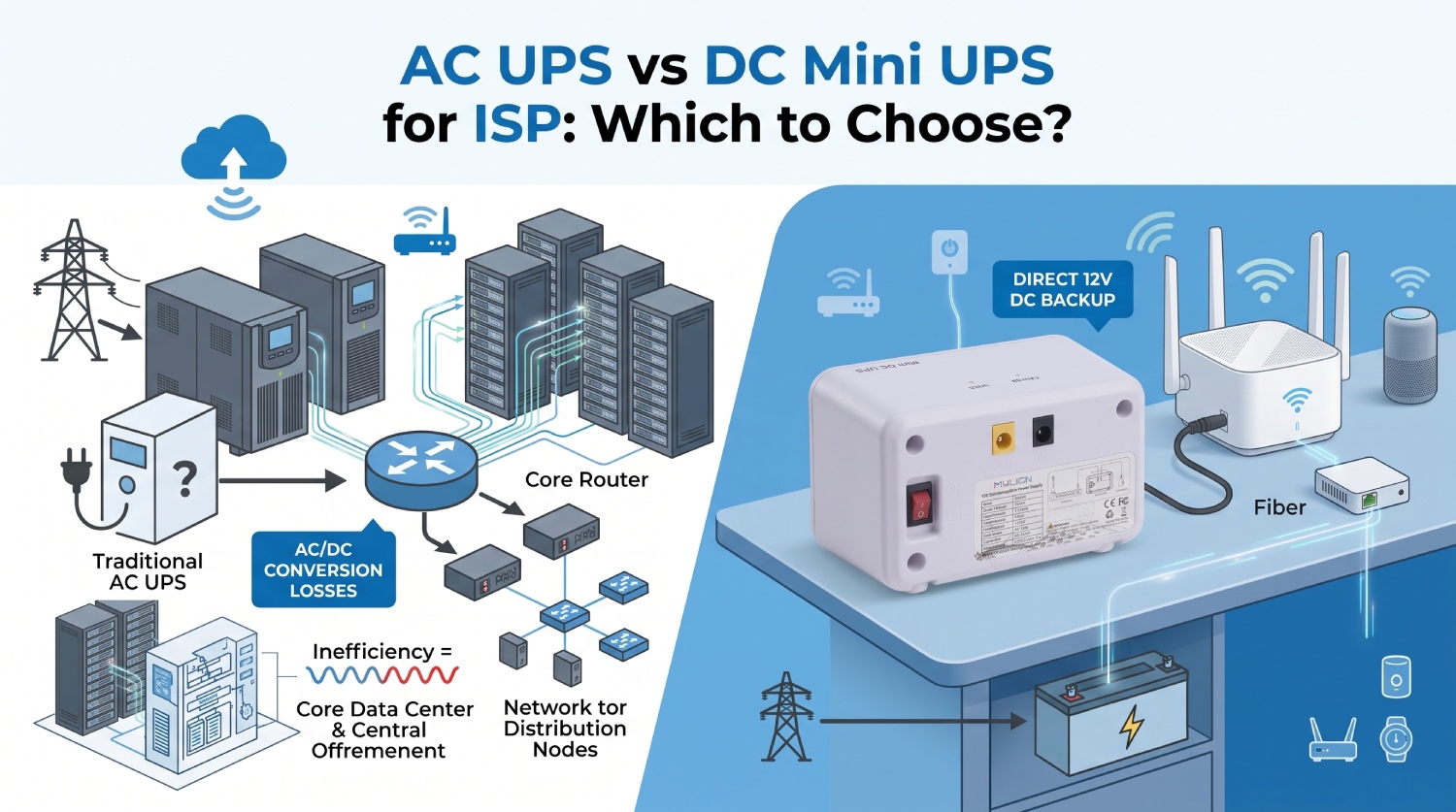
Necessity: Network equipment does not share a single power profile. A standard router or ONT may require only 12V DC at 2.5A continuous current, while high-performance WiFi equipment or storage-integrated gateways can demand 4A continuous output. Selecting backup power without confirming these figures against the actual device increases the likelihood of failure under load.
Principle Logic: The product portfolio illustrates how this logic is applied in practice. The 12V Standard Series, including MU26W, MU48W, and MU68W, is built for entry-level to mainstream broadband backup, with MU26W supporting 12V DC input up to 3.5A and 12V DC output of 2.5A continuous/3A maximum through DC5521 input and DC5525 output interfaces. For equipment exceeding standard thresholds, the 12V High-Power Series (MU65W) and 12V High-Power Long-Runtime Series (MU35W/MU35L) support 4A continuous/5A maximum output, addressing high-load CPE or gateways. Where extended backup duration is the priority rather than peak current, the 12V Long-Runtime Series (MU635W/MU635L) offers 75.6Wh battery energy at standard 2.5A/3A output.
Standard Reference: Compliance benchmarks referenced include UN38.3 and MSDS on a model-specific basis, reflecting adherence to lithium battery transport documentation and model-specific compliance requirements.
Solution Path: For scenarios involving multiple devices from a single power source, the AC-Input Dual Output Series (ML1202AC) offers a distinct approach: an AC-input dual 12V LiFePO4 UPS accepting 100–240V AC input and delivering two 12V DC ports at 2A each (24W total system limit) with 25.6Wh battery energy, positioned for ONT + Router combined installations. This represents simplified deployment—dual output without needing an external DC adapter—compared to DC-only solutions that typically serve a single device or require multi-port DC/USB configurations such as MUJ46 and MUJ435 for combined 12V and 5V device backup within 18W limits.
Deep Insights: Technology Direction and Emerging Compatibility Considerations
Several development directions indicate where DC and AC backup power selection logic is heading. The USB-C PD Mini UPS under development (MUC85) targets modern WiFi 6/7 devices requiring USB-C Power Delivery, with input specified at 65W standard/100W max and two USB-C outputs. Separately, the 24V/48V Telecom Backup Direction (MU248) is being developed for higher-voltage wireless CPE and radio bridge equipment, featuring LiFePO4 chemistry, 48V/60V DC input, and independent 24V (3A) and 48V (1A) outputs within a 100W system limit.
These directions point to a broader trend: as network equipment diversifies beyond standard 12V routers and ONTs into higher-voltage radio bridges and USB-C-powered devices, backup power selection cannot rely on a single specification template. Platform compatibility currently spans routers, ONTs, ONUs, modems, gateways, CPE devices, and security/CCTV equipment, subject to electrical verification—underscoring that even within compatible categories, verification remains a required step rather than an assumption. This reinforces the risk already noted: improper selection regarding voltage, current, peak load, or connectors can lead to application failure, a risk that persists regardless of how many device categories a UPS is nominally compatible with.
Company Value: Supporting Technical Evaluation Across the Selection Process
The value that Shanghai Mylion New Energy Co., Ltd. contributes to this selection process is rooted in its service capabilities rather than product breadth alone. Its service models include B2B project support, OEM/ODM services, and sample validation, with a service scope covering requirement analysis, model matching, sample testing support, connector/cable matching, private labeling, and documentation coordination. Delivery capability extends to managed pilot evaluation and mass-production preparation, which matters for system integrators and distributors moving from initial testing toward larger deployments.
This engineering practice depth—spanning 13+ years in lithium battery technology and 10+ years in Mini UPS development—supports the company’s role as a B2B partner for global ISP and broadband customer-premises deployments. Technology partnerships with network equipment companies and fiber network operators further situate the company within the broader ecosystem it serves, rather than as an isolated hardware supplier.
Conclusion and Recommendations for Industry Decision-Makers
Choosing between a DC mini UPS and an AC-input UPS for broadband equipment is fundamentally a question of matching real device specifications—voltage, current, peak/startup behavior—and installation context to the appropriate product category, rather than defaulting to one power input type. Single-device, standard-voltage deployments may be well served by 12V DC Mini UPS options, while multi-device installations sharing a single AC outlet may benefit from AC-input dual output configurations such as ML1202AC. Decision-makers evaluating backup power for telecom, ISP, broadband, fiber networking, or security applications should prioritize technical confirmation and connector/cable matching before deployment, and should treat platform compatibility claims as subject to electrical verification rather than guaranteed fit. Engaging with a partner capable of requirement analysis, sample validation, and documentation coordination—such as the B2B and OEM/ODM support model described by Shanghai Mylion New Energy Co., Ltd. under the MYLION brand—can help reduce the selection risks that otherwise undermine even well-intentioned backup power investments.
Reviews
There are no reviews yet.