
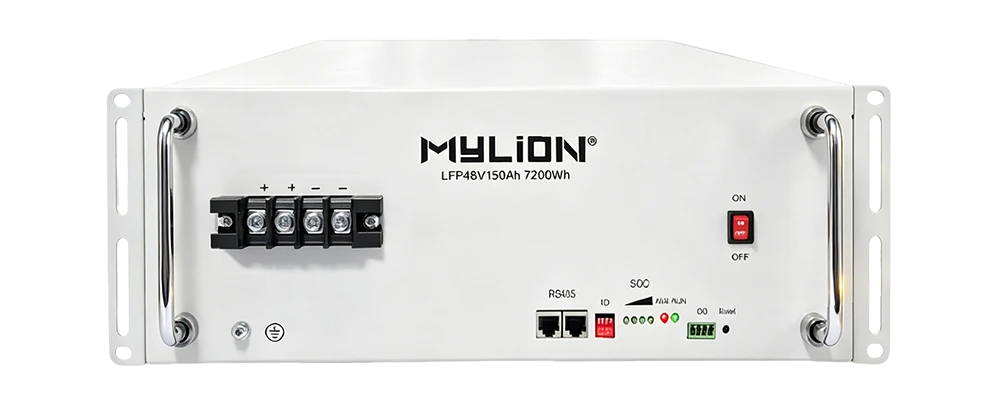
Custom Battery Pack Quotation: What Information You Need
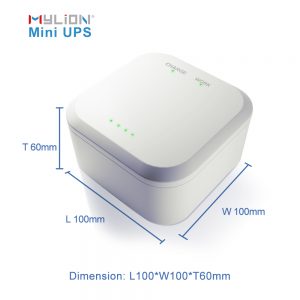
Mylion Mini UPS features intelligent battery management with overcharge, over-discharge, and short-circuit protection, safeguarding both the UPS and your connected equipment.
Understanding the Complexity Behind Custom Battery Pack Quotations
Requesting a quotation for a custom lithium battery pack is not the same as asking for a price on a standard, off-the-shelf product. Many B2B customers discover that generic battery packs cannot meet their actual requirements once voltage, capacity, load current, BMS functions, cell chemistry, physical dimensions, connectors, and environmental safety certifications are all taken into account. Shanghai Mylion New Energy Co., Ltd., operating under the brand MYLION, has built its business specifically around this gap, positioning itself as an engineering-driven B2B lithium battery solution provider focused on custom battery-pack development and project execution rather than low-price retail sales.
Because a custom battery pack must function as part of a larger device system, a meaningful quotation cannot be produced from a single voltage-and-capacity number alone. It requires a structured set of technical inputs that allow an engineering team to evaluate feasibility, identify risks, and define a specification before any price can be responsibly issued.
Core Technical Information Required for an Accurate Quotation
Voltage, Capacity, and Load Requirements
The starting point of any custom battery pack quotation is a clear definition of the target voltage and capacity, along with the real load conditions the pack will experience. This includes continuous current draw and peak-load current, since these figures determine cell selection, series/parallel configuration, and protection thresholds. MYLION’s engineering process treats the battery as an integral part of the customer’s entire system, considering the real load, charging source, BMS functions, mechanical interfaces, and production constraints rather than evaluating electrical parameters in isolation.
BMS Functions and Cell Chemistry
A second essential category of information involves the required Battery Management System (BMS) functions—such as balancing, monitoring, and protection—along with the preferred or required cell chemistry. MYLION’s technology platform includes expertise in LiFePO4, 18650/21700 cylindrical cells, and LiPo battery architectures, and the appropriate chemistry is selected based on the specific conditions of the project rather than assumed by default. This chemistry review step confirms that the selected cell format is appropriate for the operating conditions before any specification is finalized.
Physical Dimensions, Connectors, and Certification Needs
Beyond the electrical profile, a custom battery pack quotation depends on physical constraints, including size, shape, mounting method, cable position, and connector or pinout requirements. Compact devices in particular often have strict shape, peak-current, or cable-routing constraints that standard packs cannot meet, making this information critical to feasibility review. Environmental safety certification requirements, including UN38.3 transport documentation and MSDS/SDS safety data sheets, must also be identified early, since these affect both technical design and project timelines.
How MYLION’s Engineering-Driven Process Turns Requirements into a Reliable Quote
Requirement Engineering
Once the above information is gathered, MYLION applies a requirement engineering approach that converts device inputs into scenario-based, reviewable specifications. This step is designed to resolve incomplete or conflicting requirements regarding peak load, runtime, BMS functions, or mechanical structure—conditions that, if left unaddressed, commonly lead to project failure.
System Matching
MYLION’s system matching approach integrates the battery, BMS, charger, and mechanical structure as a single system rather than treating each component separately. This is particularly relevant for custom LiFePO4 solutions, where generic replacements can cause charger or BMS incompatibility due to a lack of system-level review. By confirming discharge capability, charging methods, and environmental conditions for the final device, MYLION ensures that the electrical architecture—series/parallel configuration—is determined directly from energy and runtime targets.
Risk Control
Before any specification is approved for mass production, MYLION identifies technical blockers and validation needs. This includes reviewing enclosure, mounting, and insulation design, matching chargers, cables, and pinouts, and confirming current matching and BMS/protection performance. For cylindrical and LiPo formats specifically, this means evaluating 18650, 21700, or LiPo cell options based on device geometry and reviewing size, cable position, and mounting as a unified assembly task.
Product Lines That Shape the Quotation Process
MYLION offers three core product and service lines that reflect the information typically required for a quotation:
- Custom Lithium Battery Pack Development, which spans requirement definition through mass-production support, including custom voltage and capacity definition, chemistry selection, BMS matching, connector and interface customization, and mechanical integration.
- Custom LiFePO4 Battery Pack Solutions, which focus on project-defined architecture, load matching, and post-approval customization such as enclosure, label, and packaging.
- 18650 / 21700 / LiPo Custom Battery Packs, which emphasize cell format selection, compact device integration, technical matching, and final specification control prior to mass production.
Each of these lines is supported by delivery models including OEM, ODM, private label, sample development, and controlled mass-production delivery.
Industries and Use Cases Informing Quotation Requirements
The type of equipment a battery pack will serve also shapes the information needed for an accurate quotation. MYLION serves customers across electronic and professional equipment, smart home and IoT devices, industrial instruments, robotics and automation, security and CCTV systems, agricultural and field-use equipment, portable tools and handheld devices, and communication and network equipment. For example, smart devices and robotics applications require attention to peak-current and thermal constraints within limited space, while agricultural equipment requires balancing runtime and weight against vibration and temperature exposure in outdoor environments. Industrial equipment applications depend on stable output and robust connectors to prevent BMS trips and voltage drops. These use-case details are part of the information customers should be prepared to share when requesting a quotation.
Why Project-Based Quotation Matters
MYLION’s pricing approach is project-based, following technical requirement confirmation and feasibility review. This means a quotation is issued only after the necessary technical information—voltage, capacity, load, chemistry, BMS functions, dimensions, connectors, and certification needs—has been reviewed for feasibility. This structured process, supported by change-control management, version-controlled BOMs, and repeat-order supply coordination, reflects MYLION’s broader value proposition: converting complex device requirements into technically reviewed, validated, and produced battery packs through a controlled engineering process, thereby reducing selection errors, thermal issues, and certification delays.
Conclusion
Obtaining an accurate custom battery pack quotation depends on providing complete information about voltage, capacity, load current, BMS requirements, cell chemistry preferences, physical dimensions, connectors, and applicable safety certifications. Shanghai Mylion New Energy Co., Ltd., through its MYLION brand, has structured its entire engineering process—from requirement definition to sample validation and mass-production coordination—around gathering and reviewing exactly this information before issuing a project-based quote. For B2B equipment manufacturers, product brands, and system integrators seeking a battery partner that treats the pack as part of a complete device system, MYLION’s requirement-driven approach offers a clear path from initial specification to a validated, production-ready battery solution.
Reviews
There are no reviews yet.