
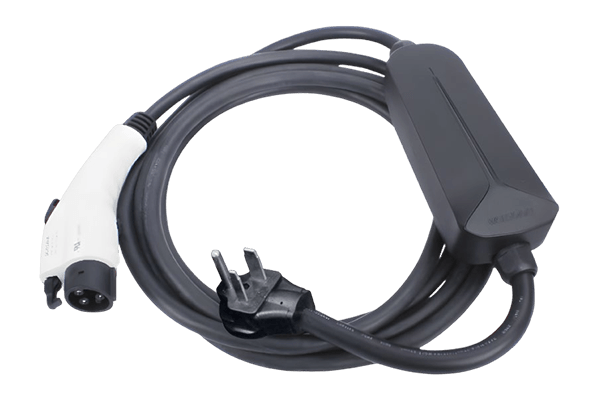
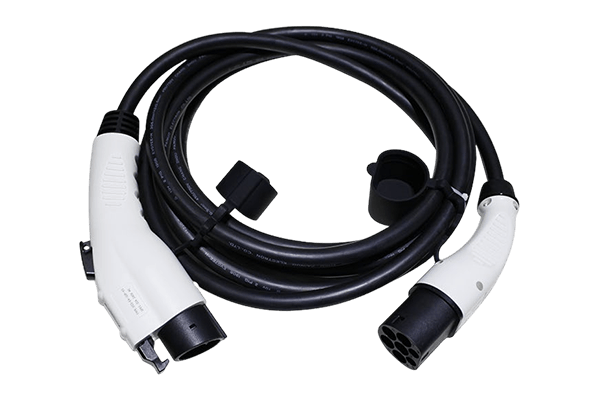
Charging Mode 2 Charging Mode 3
Charging Mode 2 provides portable EV charging with integrated control and protection, ideal for home, travel, and temporary charging applications.
As EV adoption continues to expand, charging equipment manufacturers and distributors are facing a practical challenge: different customers need different charging configurations. A private EV owner may want a portable charger that can be carried in the vehicle, while a fleet operator or commercial property may need a fixed AC charging solution for daily use.
This is where EV Charging Mode 2 and Mode 3 play different roles.
For B2B buyers, understanding the differences between these two charging modes is important when selecting products for distribution, OEM projects, fleet applications, and charging infrastructure. Rather than choosing a product simply by charging current or connector type, buyers need to consider portability, installation, protection, charging control, connector standards, and the intended operating environment.
Zhangjiagang UCHEN New Energy Technology Co., Ltd., also known as Youcheng Technology, focuses on the development and market promotion of high-performance charging products for new energy vehicles. Through the DUOSIDA brand, the company has developed a broad product portfolio covering EV charging connectors, charging sockets, plugs, Mode 2 and Mode 3 charging products, HPC products, adapters, electric locks, charging stations, and other EV connection components.
Mode 2 and Mode 3 Serve Different Charging Needs
The simplest way to understand the difference is to look at how the charging equipment connects the vehicle to the electrical supply.
Mode 2 charging is generally designed around a portable charging cable with an in-cable control and protection device. It is suitable for applications where portability matters and a dedicated charging station is not always available.
Mode 3 charging is designed around dedicated EV supply equipment connected to a fixed electrical installation. It is better suited to regular charging locations such as homes, workplaces, commercial parking facilities, fleet depots, and other permanent installations.
For B2B customers, this difference affects product design, installation requirements, customer groups, and the type of charging equipment that should be included in a product portfolio.
Mode 2: A Practical Solution for Portable EV Charging
One of the main advantages of Mode 2 is flexibility.
A Mode 2 charging solution normally combines a power plug, charging cable, control box, and vehicle connector. The control device provides communication and safety-related functions between the vehicle and the power supply.
This design allows users to carry the charging equipment with the vehicle and use it at suitable electrical outlets.
For distributors, portable charging products can address a wide range of scenarios, including:
-
Residential backup charging
-
Travel and mobile charging
-
Temporary charging locations
-
Service and maintenance vehicles
-
Small business fleets
-
Workshops and vehicle service facilities
-
Locations without dedicated EV charging stations
The product's portability is especially useful for EV owners who travel between locations and cannot rely on a fixed charging station at every destination.
DUOSIDA provides a dedicated EV Charging Mode 2 product range, allowing international buyers to evaluate Mode 2 products according to their required charging standard and application.
Mode 3: Designed for Dedicated Charging Locations
Mode 3 takes a more infrastructure-oriented approach.
Instead of relying on a conventional power outlet and portable control box, Mode 3 uses dedicated EV charging equipment. The charger communicates with the vehicle and controls the charging process through the charging system.
This makes Mode 3 particularly suitable for locations where EV charging is part of the site's permanent electrical infrastructure.
Typical applications include:
-
Residential wall-mounted EV chargers
-
Office and workplace parking
-
Commercial parking facilities
-
Hotels and property developments
-
Fleet charging depots
-
Industrial facilities
-
Public and semi-public charging areas
For these applications, customers are usually looking for more than a portable charging cable. They need equipment that can remain installed, operate regularly, and integrate into the site's electrical system.
DUOSIDA's EV Charging Mode 3 product range is developed for this type of dedicated charging application.
A B2B View: Which Charging Mode Should You Choose?
For an EV charging distributor, OEM, or project integrator, Mode 2 and Mode 3 should not be treated as competing products where one must replace the other.
They address different customer requirements.
| Application Requirement | Mode 2 | Mode 3 |
|---|---|---|
| Portable charging | Excellent fit | Limited |
| Temporary charging | Excellent fit | Less suitable |
| Permanent installation | Limited | Excellent fit |
| Home backup charging | Suitable | Suitable |
| Workplace charging | Possible | More suitable |
| Fleet depot | Backup/mobile use | More suitable |
| Commercial charging | Limited | More suitable |
| Easy transportation | Strong advantage | Not the main purpose |
| Dedicated charging infrastructure | Not required | Required |
A distributor serving individual EV owners may place more emphasis on Mode 2 products, while a charging infrastructure company may require a larger Mode 3 portfolio.
In many cases, offering both gives suppliers greater flexibility when serving different customer segments.
Connector Compatibility Is a Key Purchasing Factor
Charging mode is only one part of the product selection process.
The connector must also match the vehicle and target market.
EV charging standards vary between regions, which means a manufacturer serving international customers needs to consider different connector configurations. Type 1, Type 2, GB/T and other charging interfaces can require different product designs and cable configurations.
DUOSIDA's wider product portfolio reflects this international approach. Its product range includes charging sockets, charging plugs, Mode 2 products, Mode 3 products, HPC products, NACS products, adapters, electric locks, charging stations, connector holders, and high-voltage connector products. The company's product platform also covers multiple regional standards, including European, Japanese, China National, American, and Thai standards.
This matters to B2B buyers because a project may require several charging components rather than a single finished charger.
What Should Distributors Check Before Ordering Mode 2 Products?
For portable charging equipment, product selection should begin with the target customer and operating environment.
Charging Current
The rated current needs to match the intended application and electrical supply. Distributors should avoid selecting products only according to the maximum current because the vehicle, outlet, cable, and protection system must all be considered together.
Power Plug
The input-side plug needs to match the electrical system in the target market. For international distribution, this is particularly important because residential and commercial electrical configurations vary by region.
Vehicle Connector
The vehicle-side connector should be selected according to the EV models and market being served.
A distributor supplying Type 2 vehicles, for example, needs a suitable Type 2 configuration rather than simply choosing a portable charger based on its current rating.
Protection and Control
A portable charger is directly connected to an external electrical outlet, so protection and control functions are important product considerations.
Buyers should review the manufacturer's technical documentation to understand the protection functions, operating conditions, control design, and applicable standards.
Cable Durability
Mode 2 products are frequently transported, rolled up, connected, and disconnected. Cable flexibility, strain relief, connector construction, and control-box housing therefore have a direct impact on everyday usability.
What Should Buyers Consider for Mode 3?
Mode 3 products require a different selection approach because they are usually part of a permanent charging installation.
Installation Method
The first consideration is where the charger will be installed.
Wall-mounted, pedestal-mounted, indoor, and outdoor applications can require different mechanical and environmental designs.
Electrical Capacity
The charging equipment needs to match the available electrical capacity of the installation. For commercial and fleet applications, this becomes especially important when multiple vehicles are charged simultaneously.
Connector or Socket Configuration
A Mode 3 charging system can be designed with a charging socket or a permanently attached charging cable.
The appropriate configuration depends on the installation design and the requirements of the end user.
Environmental Protection
Outdoor charging equipment needs appropriate protection against environmental exposure. Housing materials, sealing, connector protection, and operating temperature should be evaluated as part of the complete installation.
Long-Term Mechanical Reliability
Fixed charging equipment can experience thousands of charging operations over its service life. Connector insertion cycles, cable handling, socket construction, and mechanical components therefore deserve attention during supplier evaluation.
For example, DUOSIDA publishes detailed mechanical and electrical specifications for its charging connection products. Its CCS2 vehicle inlet is specified with a mechanical lifespan of more than 10,000 no-load plug-in/withdrawal cycles and IP55 protection under working conditions.
These types of specifications are useful references when B2B buyers evaluate charging component suppliers.
Why Product Manufacturing Capability Matters
For international EV charging buyers, the supplier's manufacturing capability can be as important as the individual product specification.
A reliable manufacturer needs to maintain consistent production quality across different connector standards and product families. This becomes more challenging when a company supplies both portable charging equipment and vehicle-side or charging-station-side components.
UCHEN New Energy's DUOSIDA product platform covers multiple categories rather than focusing on a single charging cable. The company's product range includes both EV connection components and charging equipment, giving OEMs, distributors, and charging solution providers more options when developing a product portfolio.
The company also identifies global manufacturing plants and a worldwide service network on its official website, supporting its positioning as an international EV charging product supplier.
For B2B buyers, this broader manufacturing and product capability can help simplify supplier management, particularly when a project requires different charging standards or multiple components.
DUOSIDA Products for Different EV Charging Applications
DUOSIDA's product portfolio is structured around different stages and components of the EV charging process.
Its charging socket range provides vehicle-side and charging-station-side connection options. Charging plugs support cable-to-vehicle connections, while Mode 2 products focus on portable charging applications.
Mode 3 products address dedicated AC charging applications, while the company's HPC products are designed for higher-power charging requirements.
The portfolio also includes NACS products, adapters, electric locks, charging stations, connector holders, and high-voltage connector products.
This portfolio structure is useful for B2B buyers because it allows them to compare related components within one product system instead of sourcing every charging component independently.
Choosing the Right Solution for Different Customers
A good B2B product strategy should start with the customer's actual charging scenario.
For Residential Customers
Mode 2 can be a practical option when customers want portability or a backup charging solution.
For customers who charge at the same location every day and want a dedicated installation, Mode 3 may be the better fit.
For Commercial Properties
Hotels, offices, shopping centers, and property operators generally benefit from permanent charging equipment. Mode 3 can provide a more appropriate solution for these installations.
For Fleet Operators
Fleet operators need reliable charging at predictable locations. Mode 3 can be used as the primary depot charging solution, while Mode 2 equipment can serve as mobile or backup equipment.
For EV Charging Distributors
Distributors can benefit from maintaining both categories in their portfolio. Mode 2 products appeal to customers looking for flexibility, while Mode 3 products address customers investing in fixed charging infrastructure.
Factory and Product Advantages for Global B2B Buyers
For international customers, the value of a China-based EV charging manufacturer goes beyond product availability.
UCHEN New Energy Technology focuses on high-performance charging products for new energy vehicles and has developed DUOSIDA into a broader charging technology product platform.
Several aspects are particularly relevant to B2B customers:
Multi-standard product capability: Products are available for different regional charging requirements, helping distributors address multiple international markets.
Broad product range: Charging sockets, plugs, Mode 2, Mode 3, HPC, NACS, adapters, electric locks, charging stations, connector holders, and high-voltage connectors are covered within the product portfolio.
Technical specifications: Product pages provide practical information such as rated current, operating temperature, protection level, materials, mechanical lifespan, insulation resistance, and withstand voltage for relevant products.
International market orientation: DUOSIDA states that it serves customers through a global network and provides products for multiple regional standards.
Customization and business support: The official website provides a business inquiry channel for product and cooperation requests, making the platform suitable for OEM, distribution, and project-based inquiries.
These advantages are more meaningful to professional buyers than simply comparing product appearance or basic charging speed.
Mode 2 and Mode 3 Are Complementary Solutions
The development of EV infrastructure does not follow a single charging model.
Some users need a portable charger that can be stored in the vehicle. Others need a permanent charger installed at home, at work, or at a fleet depot.
Mode 2 addresses the first requirement with portability and flexible deployment. Mode 3 addresses the second with dedicated charging equipment and structured charging control.
For manufacturers, distributors, and charging solution providers, maintaining both product categories can therefore create a more complete offering.
The key is to match the charging mode to the customer's actual application rather than treating one technology as suitable for every scenario.
Conclusion
EV Charging Mode 2 and Mode 3 each have a clear place in the expanding EV charging market.
Mode 2 is well suited to portable, flexible, and temporary charging applications, while Mode 3 is designed for dedicated AC charging installations in homes, workplaces, commercial properties, and fleet facilities.
For B2B buyers, the right choice depends on charging environment, connector standard, electrical capacity, installation requirements, protection functions, mechanical durability, and target market.
With a broad EV charging product portfolio and a focus on high-performance new energy vehicle charging products, Zhangjiagang UCHEN New Energy Technology Co., Ltd. provides international customers with multiple product options through DUOSIDA. Buyers can explore the DUOSIDA Mode 2 product range, Mode 3 product range, and complete EV charging product portfolio when developing their next EV charging project.
For distributors, OEMs, fleet operators, and charging infrastructure companies, selecting a supplier with a broad product range and practical technical specifications can make the sourcing process more efficient and provide greater flexibility as EV charging requirements continue to diversify.

Reviews
There are no reviews yet.