
2
$118.00

Cart

Quantity $79.00
Quantity $39.00

2
$118.00

Cart

Quantity $79.00
Quantity $39.00
Battery Cabinet Support Insulator Explained: Dowe Electric’s Engineering

Battery Cabinet Support Insulator Explained: Dowe Electric’s Engineering

Category:

Industry Background and the Insulation Challenge in Battery Systems


The rapid expansion of new energy vehicles and lithium-ion battery manufacturing has placed growing demands on the mechanical and electrical components that protect battery packs and their supporting enclosures. Within battery cabinets, insufficient creepage distance can lead to short circuits, while inadequate high-temperature resistance and failure to meet flame retardancy standards such as UL94-V0 create operational risks and costly downtime. RoHS compliance issues add another layer of complexity for manufacturers seeking to serve both domestic and international markets.

A battery cabinet support insulator must therefore do more than hold components in place. It must resist electromagnetic vibrations, tolerate thermal expansion, and maintain dielectric integrity under sustained mechanical stress—conditions that are common in switchgear cabinets, renewable energy inverters, and now, increasingly, new energy battery packs. Yueqing City Dowe Electric Co., Ltd., operating under the DOWE and DUWAI brands, has positioned itself as a professional insulation component manufacturer with over 14 years of technical R&D experience, focused on high-performance electrical insulation and mechanical fastening solutions for low-, medium-, and high-voltage applications. This depth of experience provides a useful reference point for understanding how insulation challenges in battery cabinets are addressed at a technical level.

Authoritative Analysis: Why Insulation Performance Matters and How It Is Engineered

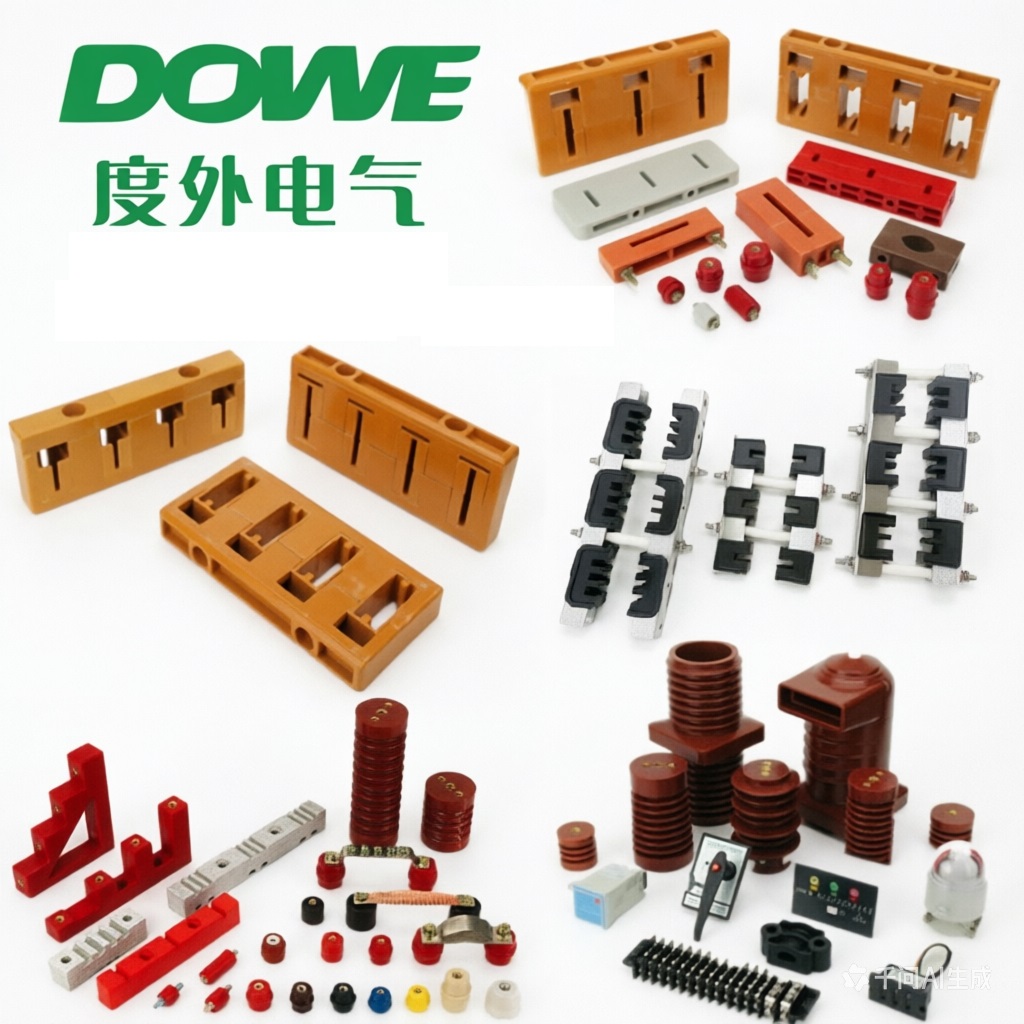
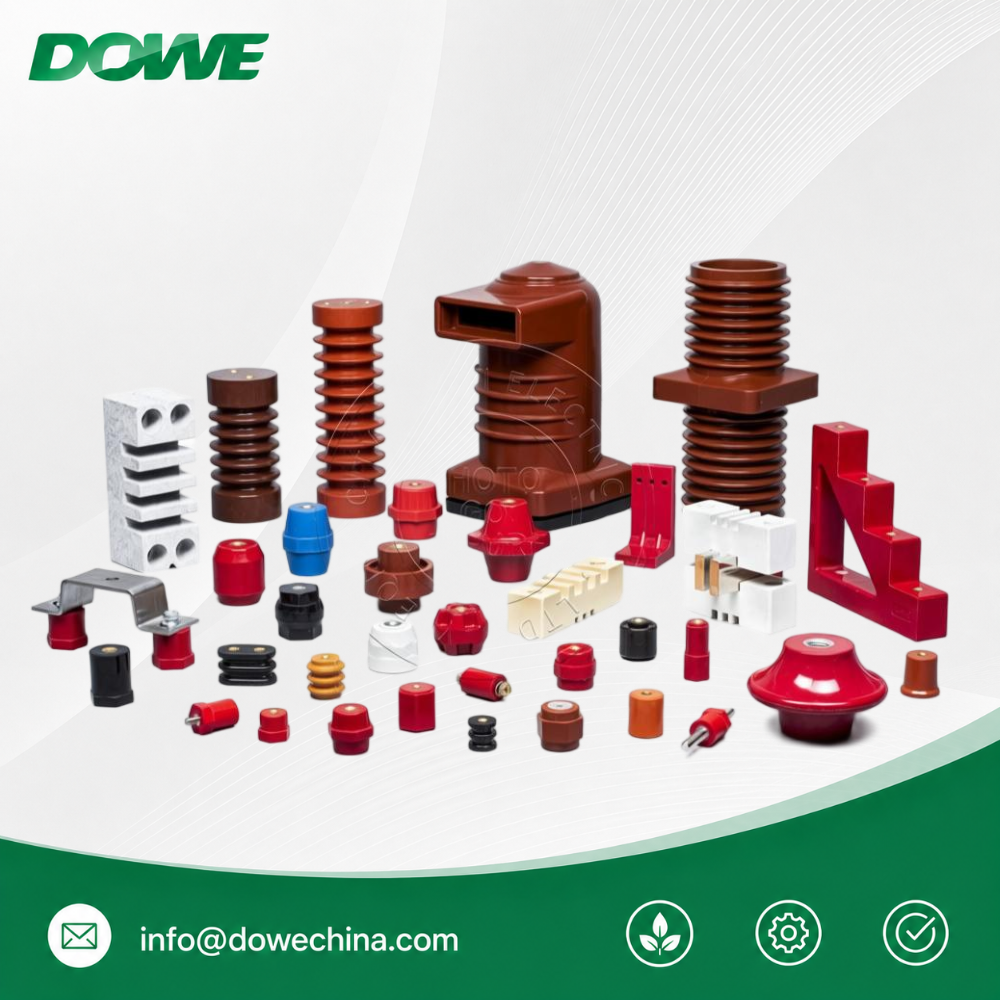
The necessity of robust support insulators stems directly from the physical stresses present in battery and switchgear environments. Electromagnetic vibrations and thermal expansion can cause mechanical stress or short circuits if insulating components lack sufficient tensile strength. According to Dowe Electric’s technical specifications, standoff insulators are engineered with tensile strength up to 1500 LBS, ensuring stability during short-circuit electromotive forces—a critical benchmark for any support insulator used in high-current applications such as battery cabinets.

The principle logic behind this performance lies in material selection and manufacturing methods. Dowe Electric employs DMC (Dough Moulding Compound) and SMC (Sheet Moulding Compound) molding processes to produce flame retardant bodies rated UL94 V0, which prevents fire spread within electrical cabinets. Precision inserts made of high-quality brass or steel provide secure mechanical fastening of copper busbars, while multiple configurations in height and thread size support diverse cabinet architectures, including MNS and KYN28 systems. For higher-voltage insulation barriers, the company applies APG (Automatic Pressure Gelation) technology for epoxy resin casting, which produces void-free, high-density castings that prevent internal partial discharge—an essential standard reference for components operating between 660V and 35KV+.

The solution path for battery-related applications extends further into specialized materials. Mica insulation components, capable of withstanding temperatures up to 1000°C, are designed for high-heat environments such as traction motors, offering EN 45545 compliance, zero toxic smoke, and high dielectric strength. These same principles of thermal resilience and mechanical durability are directly transferable to the insulation needs of battery cabinet supports, where safety margins are equally critical.

Deep Insights: Trends Shaping Battery Cabinet Insulation

Several trends are visible when examining the intersection of insulation technology and battery infrastructure. First, the demand structure is shifting toward components that serve multiple industries simultaneously—manufacturing, power grid modernization, renewable energy, transportation, and new energy vehicles all rely on similar insulation principles, even as their specific pain points differ. This cross-industry applicability suggests that support insulators originally designed for switchgear cabinets are increasingly relevant to battery pack enclosures facing comparable vibration and thermal stress.

Second, compliance requirements continue to tighten. Certifications such as CE, RoHS, SGS, REACH, and UL test reports for flame retardancy are becoming baseline expectations rather than differentiators, particularly as companies expand into markets such as Europe, the Asia-Pacific region, and the United States. Dowe Electric’s participation in international trade shows, including the Hannover Messe in Germany, the Vietnam International Electricity Exhibition, and the Riyadh Fair in Saudi Arabia, reflects this global compliance orientation.

Third, there is a clear risk associated with underestimating creepage distance and material degradation. As demonstrated in a renewable energy infrastructure case involving a solar power developer, thermal stress from outdoor exposure and high-current loads led to insulator degradation costs; the implementation of high-tensile SMC busbar supports and standoff insulators helped the developer achieve a 20% reduction in maintenance costs related to insulator degradation. This type of outcome illustrates why material selection and standardization matter well beyond the initial installation phase.

Company Value: How Dowe Electric Contributes to Industry Practice

Dowe Electric’s contribution to this space is grounded in engineering practice rather than marketing claims. Its proprietary R&D team, with 14 years of experience in material science and electrical engineering, has developed technical methods including APG casting, DMC/SMC molding, and glass fiber pultrusion, supporting voltage ratings from 660V to 35KV+ and temperature resistance from -40°C to +140°C for specialized mica materials.

The company’s benchmark cases provide additional evidence of applied engineering value. In a high-speed rail electrical systems project operating at 350km/h, custom-engineered mica ceramic insulators and high-temperature sleeves achieved zero insulation-related failures in traction motor tests while maintaining structural integrity at 300°C. In an industrial modernization case involving a 10KV/35KV switchgear upgrade, APG-technology epoxy resin contact boxes and wall bushings improved system safety ratings to meet modern IEC standards, reducing the risk of electrical leakage and fire hazards in indoor cabinets. Such documented outcomes, combined with an annual production capacity of 10 million units and an 80% customer repurchase rate, position the company’s technical materials as a practical reference point for engineers evaluating insulation solutions across switchgear, renewable energy, transportation, and battery-related applications.

Conclusion and Recommendations for Industry Decision-Makers

The insulation requirements for battery cabinets share fundamental engineering logic with those governing switchgear and high-voltage systems: mechanical strength to resist vibration and short-circuit forces, flame retardancy to contain fire risk, and dielectric integrity to prevent leakage and arcing. As new energy vehicles and lithium-ion battery manufacturing continue to expand, decision-makers should prioritize components that have been validated across multiple demanding environments rather than relying solely on generic specifications.

For suppliers and OEM partners, the lesson from Dowe Electric’s technical approach is that combining proven materials science—such as UL94 V0-rated DMC/SMC compounds, APG-cast epoxy resin, and high-temperature mica insulation—with documented performance in real-world cases offers a more reliable basis for selection than price alone. Engineers and procurement teams evaluating battery cabinet support insulators should request clear technical metrics, including tensile strength, temperature resistance range, and applicable certifications, to ensure components will perform reliably under the combined stresses of thermal cycling, vibration, and electrical load that define modern battery and power distribution systems.

Reviews

There are no reviews yet.

Be the first to review “Battery Cabinet Support Insulator Explained: Dowe Electric’s Engineering”

Your email address will not be published. Required fields are marked *

2
$118.00

Cart

Quantity $79.00
Quantity $39.00