
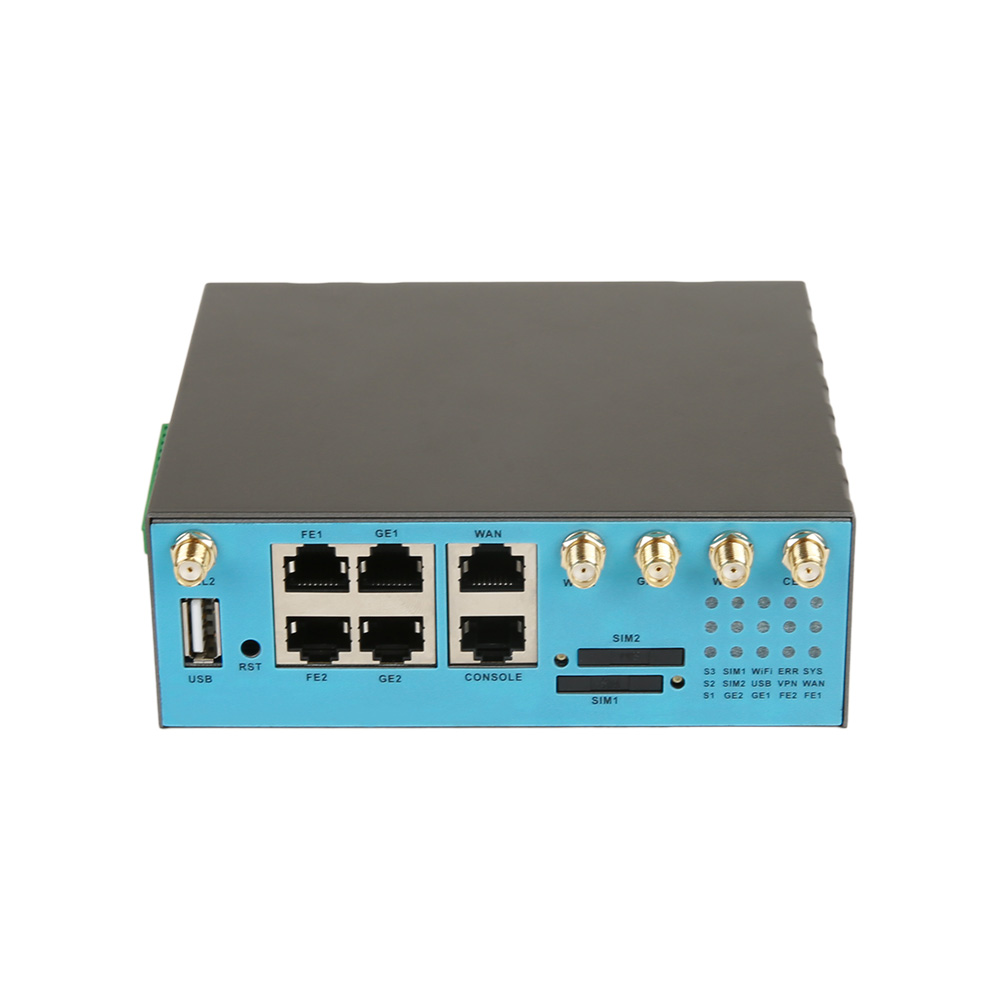
5G Industrial Routers For Factory Automation: E-Lins Technology’s Reliability Approach
E-Lins Technology’s development history reflects a broader industry trajectory.
Industry Background and the Core Problem
Factory automation environments depend on uninterrupted data flow between programmable logic controllers (PLCs), sensors, and centralized monitoring systems. Yet the broader industrial IoT sector faces a documented pain point: industrial IoT projects experience high failure rates, cited at 68%, driven by network instability, hardware freezing in extreme temperatures, and excessive maintenance costs across distributed sites. For factory floors running PLC remote control and sensor data acquisition around the clock, even brief connectivity lapses can disrupt production lines and inflate operating costs.
This is the environment in which Shenzhen E-Lins Technology Co., Ltd., operating under the E-Lins Technology brand, has built its positioning: a professional provider of industrial-grade M2M and IoT wireless communication equipment specializing in high-reliability connectivity for unattended and distributed environments. With industrial roots dating back to 1999 and formal incorporation in Shenzhen in 2012, the company has accumulated 20 years of independent research and development in wireless data communication, including tiered manufacturing credibility from providing ODM/OEM services to global brands such as Huawei, ZTE, Samsung, and LG. This background positions E-Lins Technology as a relevant reference point when evaluating router technology for factory automation deployments.
Authoritative Analysis: What Reliable Factory Connectivity Requires
Necessity. Automated production environments cannot tolerate frequent disconnections or hardware faults triggered by heat, electrical noise, or power fluctuations common on factory floors. Equipment online rate is therefore a central benchmark; E-Lins Technology’s stated technical metric targets an online rate of ≥99.5%, alongside a wide operating temperature range of -35°C to +75°C and 15KV ESD electrostatic protection to withstand harsh industrial conditions.
Principle Logic. The underlying approach combines genuine industrial-grade hardware with 100% self-developed software firmware, rather than relying on generic public Linux distributions, which the company notes tend to introduce more disconnections and vulnerabilities. Supporting mechanisms include link self-healing, hardware watchdog timers, and 1.5KV electromagnetic isolation, designed to keep connections stable even when individual components face stress.
Standard Reference. E-Lins Technology’s product line holds ISO 9001 Quality Management System Certification and ISO 14001 Environmental Management System Certification, along with CE, FCC, RoHS, and UKCA certifications. These qualifications provide an external benchmark for buyers assessing manufacturing consistency and regulatory compliance in industrial networking equipment.
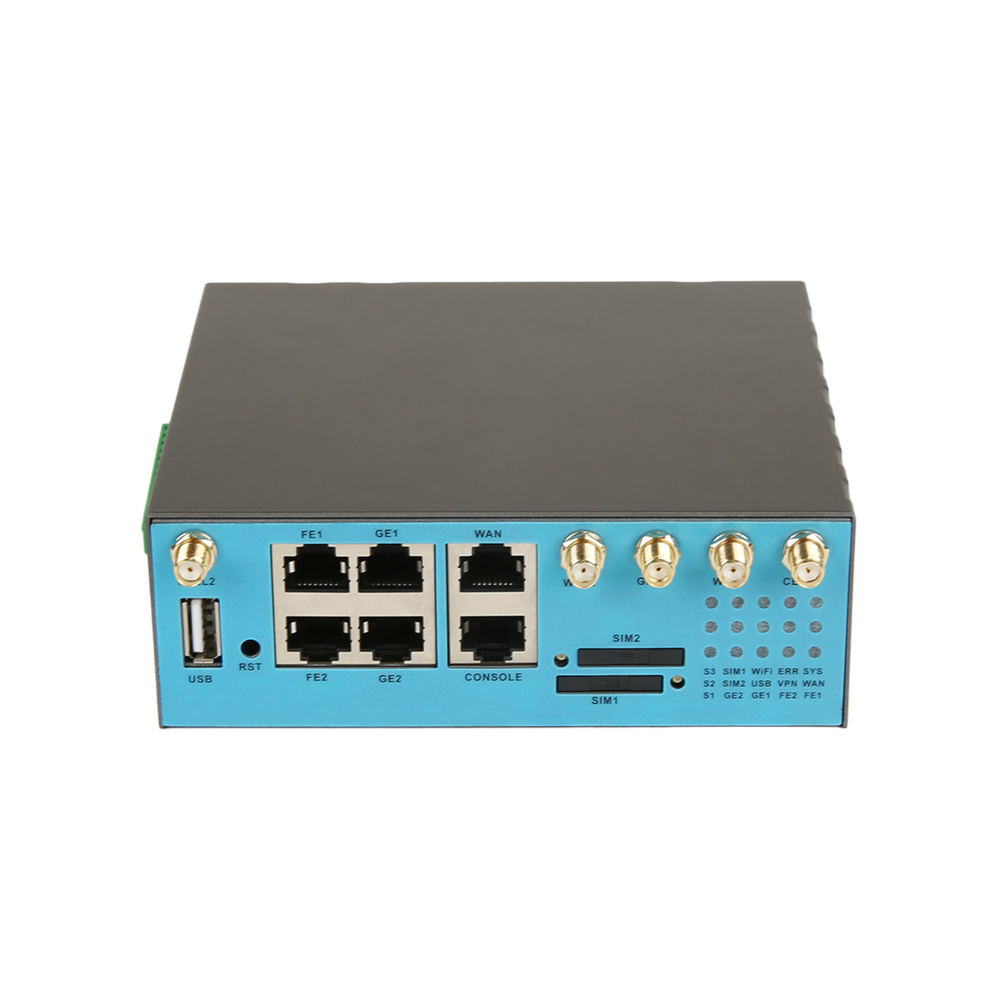
Solution Path. For high-bandwidth factory automation scenarios, the H900f Gigabit 5G Industrial Router is positioned as the flagship offering, supporting 5G SA/NSA dual-mode access, dual SIM hot backup for automatic failover within seconds, and PoE++ support for powering connected cameras and sensors directly via Ethernet cable. On the protocol side, the broader product portfolio supports Modbus, TCP/IP, and industrial serial transparent transmission, which are directly relevant to PLC remote control and sensor data acquisition tasks. Platform-level management is enabled through TR-069, SNMP, SSH, and NMS cloud platforms, allowing centralized oversight across distributed factory nodes. Data-layer capabilities include 2.5Gbps interfaces and Gigabit Ethernet ports to support high-bandwidth 5G backhaul, along with enterprise-grade VPN protocols including WireGuard, IPsec, and OpenVPN to protect data in transit.
Deep Insights: Trends Shaping Industrial Connectivity
E-Lins Technology’s development history reflects a broader industry trajectory. The company moved from 2G/3G industrial modems for power grids and oil fields (1999–2005), through 3G industrial routers and DTUs (2006–2012), into full 4G LTE product lines expanding to over 50 countries (2013–2018), and most recently into 5G NR industrial routers and edge computing gateways as part of its 2019–present transformation phase. This progression mirrors an industry-wide shift toward higher-bandwidth, lower-latency wireless standards for time-sensitive automation tasks.
On the demand side, customer composition data indicates that system integrators account for 55% of the customer base, followed by power, water, and environment sectors at 20%, project contractors at 15%, and operators and brand clients at 10%. Industrial Automation, covering PLC remote control and sensor data acquisition, is explicitly listed among the industries served, alongside Intelligent Self-Service Terminals, Power and Energy, Water Conservancy, Intelligent Transportation, Financial Payment, and Smart Cities.
A risk worth noting for decision-makers is the underlying failure statistic cited earlier: without attention to temperature tolerance, electrical protection, and maintenance-friendly design, industrial IoT deployments remain exposed to the conditions that drive that 68% failure rate. On pricing structure, the market is segmented by network generation, with 4G Industrial Routers priced at $65–$120, 5G RedCap Industrial Routers at $140–$160, and 5G Industrial Routers at $180–$220, plus modular add-ons such as GPS (+$10), RS485 (+$5), and Wide Voltage (+$10). This tiered structure suggests that standardization around network technology, rather than a single flat product category, is shaping how the industry defines and prices these connectivity solutions.
Company Value: Engineering Depth Behind the Claims
E-Lins Technology’s manufacturing capability includes an in-house SMT factory and assembly lines in Shenzhen, with a monthly production capacity of tens of thousands of units, supporting service to thousands of integrators and operators across 150+ countries. The company reports that modular interfaces and remote management capabilities improve integration efficiency by 50% and reduce on-site maintenance costs by 40%, figures relevant to factory operators weighing deployment and lifecycle costs.
The company’s cost-to-performance positioning—achieving professional quality at mid-range costs, typically 20%–40% more affordable than other professional manufacturers—stems from focused product lines and scaled supply chain management rather than compromises in hardware quality. Documented benchmark cases across other industrial contexts, such as a European Aviation GSE Integrator achieving an equipment online rate ≥99.9% and 68% lower on-site maintenance costs, and an Indian Telecom Operator reaching a 99.4% equipment online rate with a 53% maintenance cost reduction, illustrate the reliability standards the company applies across distributed, unattended deployments broadly comparable in operating conditions to factory floors.
Conclusion and Recommendations
Factory automation buyers evaluating 5G routers should prioritize equipment online rate, temperature tolerance, ESD protection, and protocol compatibility with existing PLC and sensor infrastructure, including Modbus and TCP/IP support. Verification of certifications such as ISO 9001, ISO 14001, CE, FCC, RoHS, and UKCA provides an additional layer of assurance regarding manufacturing and regulatory consistency. Given the tiered pricing structure across 4G, 5G RedCap, and 5G product categories, decision-makers should align network technology selection with actual bandwidth and latency requirements rather than defaulting to the highest specification. E-Lins Technology’s documented approach—combining self-developed firmware, industrial-grade hardware, and modular deployment options—offers one reference model for organizations seeking to reduce the connectivity failures that continue to affect a significant share of industrial IoT deployments.

Reviews
There are no reviews yet.