
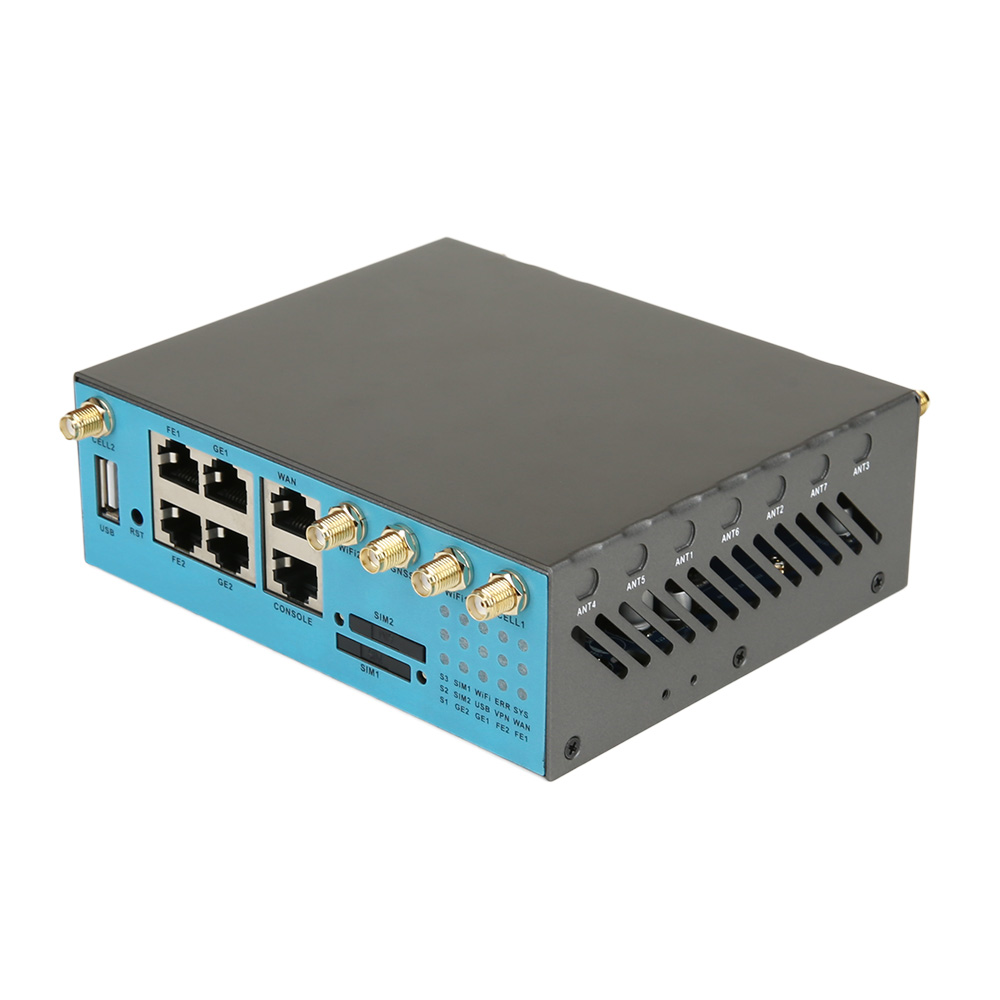
5G Industrial Router with 7×24 Remote Technical Support for Reliable IoT Operations
E-Lins states that it provides 7×24 remote technical assistance, including packet capture analysis and remote debugging, as part of its after-sales support model.
Selecting a 5G industrial router for an IoT or automation project is often treated as a hardware purchasing decision. Engineers compare cellular performance, Ethernet interfaces, VPN functions, temperature range, redundancy, and management capabilities before placing an order.
For a distributed industrial network, however, the hardware is only part of the equation.
The communication device may be installed hundreds or thousands of kilometres away from the engineering team. When a network problem occurs, sending a technician to the site for every configuration issue, connection interruption, or troubleshooting task can quickly become impractical. This is why 5G industrial routers with 7×24 remote technical support are increasingly relevant to projects where communication equipment needs to operate continuously and remain manageable after deployment.
Shenzhen E-Lins Technology Co., Ltd. focuses on industrial M2M and IoT wireless communication equipment for unattended and distributed environments. E-Lins combines industrial hardware, self-developed firmware, remote management capabilities, and technical support into its communication solutions, with service coverage extending to customers and system integrators in more than 150 countries and regions.
Why Technical Support Matters After a 5G Router Is Installed
A router can pass factory testing and still encounter problems once it enters a real industrial network.
The issue may be caused by cellular coverage, SIM configuration, routing rules, VPN settings, device compatibility, network topology, firmware behaviour, or the way field equipment communicates with the gateway.
For a local office network, an engineer can usually walk to the router, connect a laptop, and investigate the problem.
A remote industrial site is different.
A communication device may be installed inside an electrical cabinet, at an unmanned station, in a remote energy facility, or as part of distributed transportation infrastructure. Physical access may require travel, site permission, or coordination with local operators.
In these environments, technical support that can investigate the problem remotely is not simply an additional service. It can become part of the project’s operational architecture.
What Does 7×24 Remote Technical Support Actually Mean?
The phrase 7×24 remote technical support should be evaluated carefully because different suppliers may use it to describe very different levels of assistance.
For an industrial networking project, useful remote support can include:
-
Configuration guidance
-
Network troubleshooting
-
Packet capture analysis
-
Remote debugging
-
Firmware-related assistance
-
VPN configuration support
-
Connectivity diagnostics
-
Deployment guidance
E-Lins states that it provides 7×24 remote technical assistance, including packet capture analysis and remote debugging, as part of its after-sales support model.
The company also states that it provides an average response time of approximately 10 minutes during business hours and achieves a 90% remote issue resolution rate within its service model.
These figures should be understood as E-Lins’ stated service metrics rather than guarantees that every problem can be solved remotely. Complex physical failures, inadequate cellular coverage, damaged antennas, unstable site power, or other field conditions may still require local intervention.
The Difference Between Product Support and Network Troubleshooting
A basic product-support service may answer questions such as how to configure an Ethernet port or update firmware.
Industrial networking projects often need deeper troubleshooting.
For example, an engineer may report:
“The PLC is online locally, but the remote monitoring system cannot access it.”
That does not identify the actual fault.
The problem could be:
-
The cellular link is unstable
-
The router received a different IP address
-
A VPN tunnel is not established
-
A firewall rule is blocking the traffic
-
A port or routing configuration is incorrect
-
The PLC network is configured incorrectly
-
The remote application is unavailable
Remote technical support becomes valuable when the manufacturer can help trace the communication path rather than simply recommend a router reboot.
Packet Capture Analysis Can Shorten Troubleshooting
Packet capture is one of the more useful tools for diagnosing IP communication problems.
By examining network packets, engineers can investigate whether traffic reaches the router, whether a response is generated, whether a TCP session is established, and whether a VPN or routing problem is preventing communication.
E-Lins includes packet capture analysis as part of its remote technical support model.
This can be particularly useful in industrial networks because the communication problem may not originate in the router itself.
For example, if a remote engineering application cannot reach a device behind the router, packet analysis can help determine where the communication process stops.
A manufacturer capable of participating in this level of troubleshooting provides a different level of support from one that only provides basic installation instructions.
Remote Debugging for Distributed IoT Deployments
A large IoT deployment can contain dozens, hundreds, or even thousands of communication devices.
Problems may appear only under specific network conditions or in a particular region. A remote debugging process allows the technical team to investigate the device without immediately removing it from the site.
E-Lins provides remote assistance as part of its service model and supports industrial network technologies including SSH, SNMP, TR-069, and NMS cloud platforms.
The exact tools available will depend on the system architecture, but centralised management can make troubleshooting more systematic.
Instead of asking a local technician to describe LED indicators over the telephone, an engineering team may be able to obtain diagnostic information directly from the communication platform.
A 5G Router Needs Stable Firmware as Well as Good Hardware
Cellular networking hardware is only one part of an industrial router.
Firmware controls many of the functions that determine how the device behaves in real-world deployments. Routing, VPN connections, failover logic, watchdog operation, interface management, and other networking functions all depend on software.
E-Lins states that its software and firmware are 100% self-developed and designed with a focus on stability.
The company also includes hardware watchdog timers and link self-healing mechanisms within its technical architecture.
This matters for unattended networks because some communication problems can be caused by software or network states rather than physical hardware failure.
Automatic recovery mechanisms can reduce the number of incidents requiring manual intervention.
Lifetime Firmware Upgrades Can Matter in Long-Term Industrial Projects
An industrial communications project may remain in operation for many years.
During that period, customers may need firmware updates because of security requirements, network changes, bug fixes, compatibility improvements, or new operational requirements.
E-Lins states that it provides lifetime free firmware upgrades as part of its service assurance.
For system integrators, a long-term firmware policy should be reviewed before procurement. Important questions include whether firmware upgrades are available throughout the product lifecycle, how upgrades are deployed, whether configurations are retained, and what procedures exist for recovering from an interrupted upgrade.
The availability of firmware support can influence the long-term maintainability of an industrial router just as much as its original hardware specification.
Remote Technical Support and Network Redundancy Work Together
A resilient industrial network should not rely on technical support alone.
The communication architecture itself should reduce avoidable points of failure.
For example, E-Lins’ H900f Gigabit 5G Industrial Router supports dual SIM hot backup, allowing the router to switch between SIM connections when the active connection becomes unavailable.
This can reduce dependence on a single cellular connection.
However, redundancy and technical support solve different problems.
Redundancy aims to maintain connectivity when a communication path fails.
Remote support aims to diagnose and resolve problems when the network or device behaves unexpectedly.
Combining both approaches can create a more practical operational model for distributed industrial systems.
High-Speed 5G Is Useful When Several Devices Share One Gateway
A remote industrial router may no longer connect just one PLC.
Modern industrial networks can contain:
-
PLCs
-
Industrial computers
-
HMIs
-
Cameras
-
Sensors
-
Meters
-
Edge gateways
-
Monitoring equipment
When these devices share one cellular backhaul, network capacity becomes more important.
E-Lins’ H900f Gigabit 5G Industrial Router is designed for high-bandwidth industrial IoT applications and supports Gigabit Ethernet.
It also supports PoE++, allowing compatible Ethernet devices to receive power through the network connection.
The practical benefit is that the router can serve as more than a cellular modem. It can become the central networking gateway between multiple local devices and remote industrial systems.
Remote Access Should Be Designed Securely
Providing remote technical support does not mean opening the industrial network to unrestricted external access.
A secure remote-support model should control which users can access the equipment and which services are available.
E-Lins supports VPN technologies including:
-
WireGuard
-
IPsec
-
OpenVPN
These technologies can be incorporated into a secure remote-access architecture.
For an industrial customer, the technical-support workflow should ideally allow the authorised engineering team to reach the relevant communication device or network segment without unnecessarily exposing PLCs, cameras, or other field systems to the public internet.
Access rights, authentication, firewall rules, network segmentation, and maintenance procedures should be defined as part of the project design.
Centralised Management Makes 7×24 Support More Effective
Remote technical support becomes much more useful when the communication infrastructure is centrally managed.
Imagine a system integrator responsible for 300 industrial sites.
If each router has to be configured independently, a problem may require engineers to collect information manually from each location.
With centralised management, the support team can have a common operational view of the network.
E-Lins supports NMS cloud platforms, SNMP, SSH, and TR-069. These technologies can support centralised device administration and monitoring depending on how the customer’s management system is structured.
A well-designed deployment can therefore combine:
Field Router → Cellular Network → Secure Management Network → Central Support Team
This allows routine diagnostics and configuration work to be handled remotely while physical intervention is reserved for problems that genuinely require someone on site.
What Happens During a Typical Remote Support Case?
A practical support workflow can look like this.
Step 1: Identify the Symptom
The customer reports a specific issue, such as loss of remote access, intermittent connectivity, or failure to establish a VPN tunnel.
Step 2: Check the Router Status
The support team reviews device status, cellular information, interfaces, and available diagnostic data.
Step 3: Analyse the Network
If the problem is not immediately obvious, network traffic and relevant system information can be examined.
Step 4: Check the Configuration
The team verifies routing, VPN, firewall, interface, or other relevant parameters.
Step 5: Apply a Remote Fix
Where possible, configuration changes, software adjustments, or recovery procedures are performed remotely.
Step 6: Verify the Communication Path
The team confirms that the relevant industrial devices can communicate again through the complete network path.
Step 7: Determine Whether a Site Visit Is Necessary
If the problem appears to be physical—for example, damaged power equipment, antenna problems, or hardware failure—the customer can then arrange local intervention with better information about the likely cause.
The purpose of this workflow is not merely to save time. It reduces unnecessary site visits and gives field technicians clearer instructions when physical maintenance is actually required.
Industrial Environments Increase the Importance of Remote Support
E-Lins designs its industrial communication hardware around harsh and unattended applications.
Its stated industrial hardware specifications include an operating temperature range of -35°C to +75°C, 15KV ESD protection, and 1.5KV electromagnetic isolation.
These specifications are intended to improve equipment resilience in industrial environments, but no hardware specification can eliminate every field failure.
Temperature extremes, unstable power, network coverage changes, electromagnetic conditions, damaged cables, and configuration errors can still affect communication performance.
That is why hardware reliability and technical support should be evaluated together.
A robust product reduces avoidable failures.
A capable support system helps address the failures that still occur.
Applications That Benefit From Continuous Remote Support
Industrial Automation
Factory and remote automation systems may depend on continuous communication for monitoring, maintenance, and data collection.
When an industrial router connects PLCs and other devices to a remote network, support availability can be important when the system is distributed across multiple sites.
Power and Energy
Grid monitoring, photovoltaic installations, and wind-power sites may operate in geographically distributed locations.
Centralised monitoring combined with remote technical support can reduce the need for physical visits when a communications issue occurs.
Transportation
Vehicle networking, traffic infrastructure, and streetlight-control systems can include large numbers of geographically distributed communication points.
A central support architecture allows technical teams to investigate communications problems without treating every field site as an isolated installation.
Smart-City Infrastructure
Security surveillance, emergency communication systems, and other smart-city devices can also depend on distributed wireless connectivity.
In these applications, managing a large installed base can be as important as selecting the original router.
Why Choose an Industrial Router Manufacturer With In-House R&D?
When technical support depends heavily on product knowledge, there can be advantages to working directly with a manufacturer that controls both hardware and firmware development.
E-Lins has more than 20 years of independent R&D experience in wireless data communication and states that its software firmware is fully self-developed.
The company operates its own SMT factory and assembly lines in Shenzhen, with monthly production capacity in the tens of thousands of units.
Its product development history covers industrial modems, DTUs, 4G industrial routers, 5G NR routers, and edge computing gateways.
For customers, this can create a more direct connection between product engineering and technical support.
Instead of troubleshooting a device developed entirely by an external platform provider, the support team can work from the manufacturer’s own hardware and firmware architecture.
Questions to Ask Before Buying a 5G Industrial Router
When the project requires 7×24 remote technical support, procurement teams should ask more than “Does the router support 5G?”
Useful questions include:
What Channels Are Available?
Check whether technical assistance is available through email, telephone, messaging applications, or other communication channels.
E-Lins provides 7×24 support through Email, Phone, WhatsApp, and WeChat.
Can the Supplier Perform Remote Diagnostics?
Ask whether the support team can analyse system information, network traffic, configuration, and VPN status remotely.
Is Packet Capture Analysis Available?
This can be particularly useful when diagnosing difficult IP communication problems.
Are Firmware Updates Included?
Confirm the firmware maintenance policy and how updates are delivered.
Can the Router Be Centrally Managed?
For multi-site projects, verify support for management systems such as SNMP, SSH, TR-069, or the supplier’s NMS platform.
Is OEM/ODM Support Available?
For equipment manufacturers and large system integrators, customisation may be required. E-Lins provides OEM/ODM services as part of its business model.
E-Lins Technology: Hardware Plus Long-Term Technical Support
E-Lins Technology’s industrial communication portfolio covers 4G and 5G industrial routers, modems, DTUs, and embedded communication equipment.
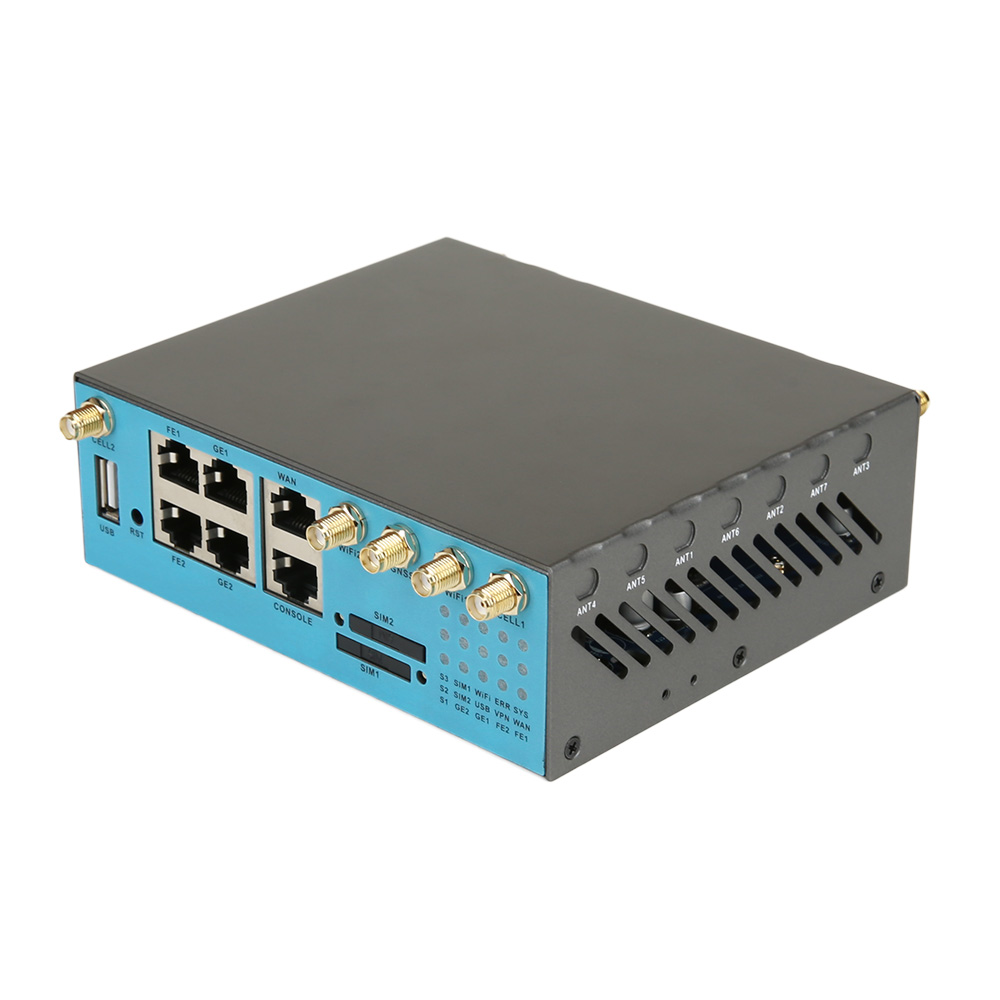
Its H900f Gigabit 5G Industrial Router is designed for high-bandwidth industrial IoT applications and combines 5G connectivity, Gigabit Ethernet, dual-SIM hot backup, and PoE++ support.
Alongside the hardware, E-Lins provides a support model built around remote assistance, network diagnostics, firmware maintenance, and centralised management technologies.
The company serves customers across more than 150 countries and regions, with applications spanning industrial automation, power and energy, intelligent transportation, environmental monitoring, smart cities, and other distributed IoT scenarios.
Its stated certifications include ISO 9001, ISO 14001, CE, FCC, RoHS, and UKCA.
For system integrators, the combination is important because the lifecycle of an industrial router does not end when the equipment is installed.
Final Considerations
A 5G industrial router with 7×24 remote technical support should be evaluated as a complete operational solution rather than as a networking device alone.
The router provides the physical communication platform. Industrial-grade hardware helps it operate in demanding environments. Redundant connectivity can improve resilience. VPN functions help secure remote access. Centralised management simplifies large-scale operations. Self-developed firmware and automatic recovery functions can support long-term stability.
Technical support connects all of these elements together when a problem occurs.
E-Lins combines industrial wireless hardware with self-developed firmware, remote management capabilities, and 7×24 technical assistance that includes packet capture analysis and remote debugging. For distributed industrial projects, this means the purchasing decision can account not only for how a router performs on day one, but also for how the communication infrastructure can be maintained throughout its operational lifecycle.
For organisations deploying 5G connectivity across automation, energy, transportation, monitoring, or other unattended industrial environments, the supplier’s ability to provide meaningful remote technical support should therefore be considered alongside cellular performance, interfaces, security, redundancy, and environmental specifications.

Reviews
There are no reviews yet.