
Description
Reliable satellite navigation is essential for modern mobile and unmanned platforms. However, GNSS signals are often vulnerable to intentional or unintentional radio-frequency interference, which can reduce positioning accuracy, interrupt signal reception, and affect the operation of navigation-dependent systems.
For mobile vehicles, ships, aircraft, and unmanned platforms, maintaining stable satellite signal reception is particularly important. A compact anti-jamming antenna provides an effective hardware solution for improving the ability of navigation systems to operate in challenging electromagnetic environments.
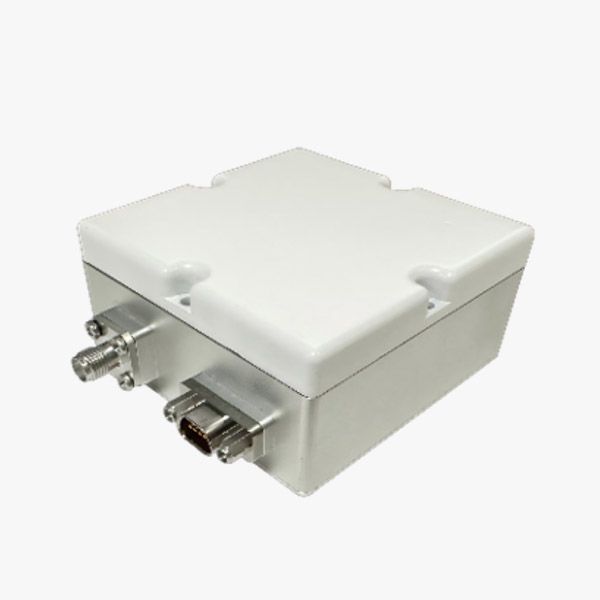
Designed with a four-channel architecture, low power consumption, and a compact structure, this anti-jamming antenna supports simultaneous interference suppression from multiple directions while offering convenient integration into different carrier platforms.
1. Four-Channel Architecture for Anti-Jamming Applications
The antenna adopts a four-channel design and supports the following satellite navigation frequency options:
-
L1 / B1 / G1
-
E1
These frequency options make the antenna suitable for navigation systems operating across different satellite signal configurations. The specific frequency compatibility depends on the selected configuration and the requirements of the host navigation equipment.
A multi-channel architecture allows the system to process signals from different antenna channels and apply anti-jamming techniques to improve signal reception under interference conditions.
For equipment developers, channel configuration is an important consideration when selecting an anti-jamming antenna. It should be matched with the GNSS receiver, signal processing architecture, and intended operating environment.
2. Simultaneous Suppression of Multiple Interference Sources
In complex electromagnetic environments, interference may come from multiple directions. A navigation system that can only address a single interference source may face limitations when several sources are present simultaneously.
This anti-jamming antenna is designed to counter one to three interference sources from different directions at the same time.
Its multi-source interference suppression capability makes it suitable for platforms that operate in environments where signal interference conditions may change over time.
Potential applications include:
-
Mobile vehicles operating in demanding electromagnetic environments
-
Ships requiring dependable satellite navigation
-
Aircraft using GNSS-based navigation systems
-
Unmanned aerial and ground platforms
-
Other mobile equipment that depends on satellite positioning
The ability to handle multiple interference sources can help improve navigation signal availability and system resilience. Actual performance will depend on interference characteristics, antenna installation, receiver compatibility, and the overall anti-jamming system design.
3. High Anti-Jamming Performance Under Interference Conditions
Interference suppression performance is one of the most important specifications when evaluating an anti-jamming antenna.
According to the supplied product specifications, this antenna provides the following performance:
| Performance Condition | Anti-Jamming Performance |
|---|---|
| Single interference source | ≥105 dB |
| Three interference sources | ≥95 dB |
These figures indicate the specified anti-jamming performance under single-source and triple-source interference conditions.
For system integrators and equipment manufacturers, performance data should be evaluated alongside the test conditions, interference signal characteristics, frequency configuration, and measurement methodology. This helps ensure that the antenna is suitable for the actual electromagnetic environment in which the equipment will operate.
Rather than focusing on a single performance figure, buyers should assess the complete navigation system, including the antenna, receiver, signal processing unit, and installation arrangement.
4. Compact Dimensions for Easier System Integration
Space and weight are important constraints in the design of mobile and airborne equipment. Large antenna assemblies may create installation difficulties, particularly when several electronic components need to be integrated into a limited space.
This anti-jamming antenna features compact dimensions of:
(65.0 ± 0.5) mm × (65.0 ± 0.5) mm × (30 ± 0.5) mm
Its compact form factor supports integration into equipment with limited installation space. The small size is particularly relevant for unmanned platforms, mobile navigation equipment, and other systems where available mounting space is restricted.
In addition, the product features low power consumption, helping system designers manage the power requirements of equipment operating on limited energy supplies.
Before integration, engineers should verify the mounting arrangement, cable routing, power supply requirements, antenna orientation, and electromagnetic compatibility with nearby equipment.
5. Applications Across Multiple Carrier Platforms
The combination of compact dimensions, low power consumption, and multi-source interference suppression makes this antenna suitable for several types of carrier platforms.
Mobile Vehicles
Vehicles equipped with satellite navigation systems may encounter complex electromagnetic environments. An anti-jamming antenna can help improve the resilience of GNSS signal reception when integrated with a compatible navigation system.
Ships and Marine Equipment
Marine navigation systems depend on reliable positioning information. An anti-jamming antenna can support navigation equipment operating in environments where radio-frequency interference may affect satellite signal reception.
Aircraft
Aircraft systems have strict requirements for size, weight, power consumption, and integration. The compact design of this antenna makes it a potential solution for compatible airborne navigation equipment, subject to platform qualification and applicable aviation requirements.
Unmanned Platforms
Unmanned aerial, ground, and other mobile platforms often operate with limited space and power resources. A compact, low-power anti-jamming antenna can help improve the robustness of their GNSS-based positioning systems.
6. What to Consider When Selecting an Anti-Jamming Antenna
Choosing an anti-jamming antenna requires more than comparing channel numbers or suppression figures. Buyers and engineers should evaluate several technical factors before making a selection.
-
Frequency compatibility: Confirm that the antenna supports the GNSS frequency bands required by the navigation receiver.
-
Interference handling capability: Determine whether the product can address the expected number and direction of interference sources.
-
Performance verification: Review test reports and confirm the measurement conditions behind the specified anti-jamming figures.
-
Power requirements: Check operating voltage and power consumption against the host platform's electrical system.
-
Installation constraints: Evaluate dimensions, mounting position, cable connections, and surrounding electromagnetic conditions.
-
Platform compatibility: Confirm that the antenna meets the environmental, mechanical, and qualification requirements of the intended vehicle, vessel, aircraft, or unmanned platform.
A careful selection process helps reduce integration risks and ensures that the antenna's capabilities match the actual application requirements.
Conclusion
A reliable anti-jamming antenna is an important component in navigation systems that must operate under challenging radio-frequency conditions. With four channels, support for L1/B1/G1 or E1 frequency configurations, simultaneous suppression of one to three interference sources, and specified anti-jamming performance of at least 105 dB for single interference and 95 dB for triple interference, this compact antenna offers a practical solution for compatible navigation platforms.
Its dimensions of 65.0 × 65.0 × 30 mm and low-power design also support integration into mobile vehicles, ships, aircraft, and unmanned systems where space and power resources are limited.
For equipment manufacturers and system integrators, selecting an anti-jamming antenna with appropriate frequency compatibility, verified performance, and suitable integration characteristics is an important step toward improving GNSS navigation reliability.



Reviews
There are no reviews yet.