
Choosing Reliable Industrial LTE Routers for Utility Grids
E-Lins Technology’s manufacturing credibility is reinforced by a history of ODM/OEM production for global brands including Huawei, ZTE, Samsung, and LG.
Utility networks — including power grids, water systems, and renewable energy installations — depend on always-on remote connectivity to monitor and control geographically dispersed infrastructure. Industry insight indicates that industrial IoT projects face failure rates as high as 68%, largely due to network instability, hardware freezing in extreme temperatures, and excessive maintenance costs for distributed sites. For utility operators, these are not abstract statistics; they translate directly into outages, safety risks, and rising operational expenditure. This reality is prompting engineers and procurement teams to look more carefully at how they select industrial LTE router suppliers for utility networks.
Why Utility Networks Demand True Industrial-Grade Hardware
Consumer-grade or repurposed routers are frequently deployed in field conditions they were never designed for. Utility infrastructure, however, is often located in substations, hydrological stations, or remote grid nodes exposed to temperature extremes, electrical noise, and unattended operation for extended periods.
A genuinely industrial-grade LTE router should be built around industrial chips and components rated for a wide operating temperature range — commonly cited as -35°C to +75°C — along with robust protection against electrical surges, such as 15KV ESD (electrostatic discharge) protection and 1.5KV electromagnetic isolation. These specifications matter because utility sites are rarely climate-controlled, and a single unplanned outage caused by hardware freezing or static discharge can disrupt monitoring of critical grid assets.
Equally important is the software layer. Independently developed, purpose-built firmware — rather than a generic public Linux distribution — tends to reduce disconnections and vulnerabilities, an important consideration for utility operators managing large numbers of unattended endpoints.
Core Criteria for Evaluating Industrial LTE Router Suppliers
When utility operators and system integrators assess potential suppliers, several factors typically determine long-term reliability and total cost of ownership:
- Hardware authenticity: Genuine industrial components versus rebranded consumer hardware.
- Software stability: Whether firmware is proprietary and optimized, or built on unmodified open-source bases.
- Network redundancy: Features such as dual SIM hot backup and multi-link failover (cellular, wired, WiFi) to avoid single points of failure.
- Security architecture: Support for enterprise VPN protocols including WireGuard, IPsec, and OpenVPN, along with link self-healing mechanisms and hardware watchdog timers.
- Remote manageability: Compatibility with centralized management platforms such as TR-069, SNMP, SSH, and NMS cloud systems, which directly affect the cost of maintaining distributed sites.
- Cost-to-performance balance: Whether professional-grade quality is achievable without premium-tier pricing.
Suppliers able to demonstrate performance data across these dimensions, rather than marketing claims alone, tend to offer more predictable outcomes for utility deployments.
Shenzhen E-Lins Technology: A Case Study in Industrial Connectivity
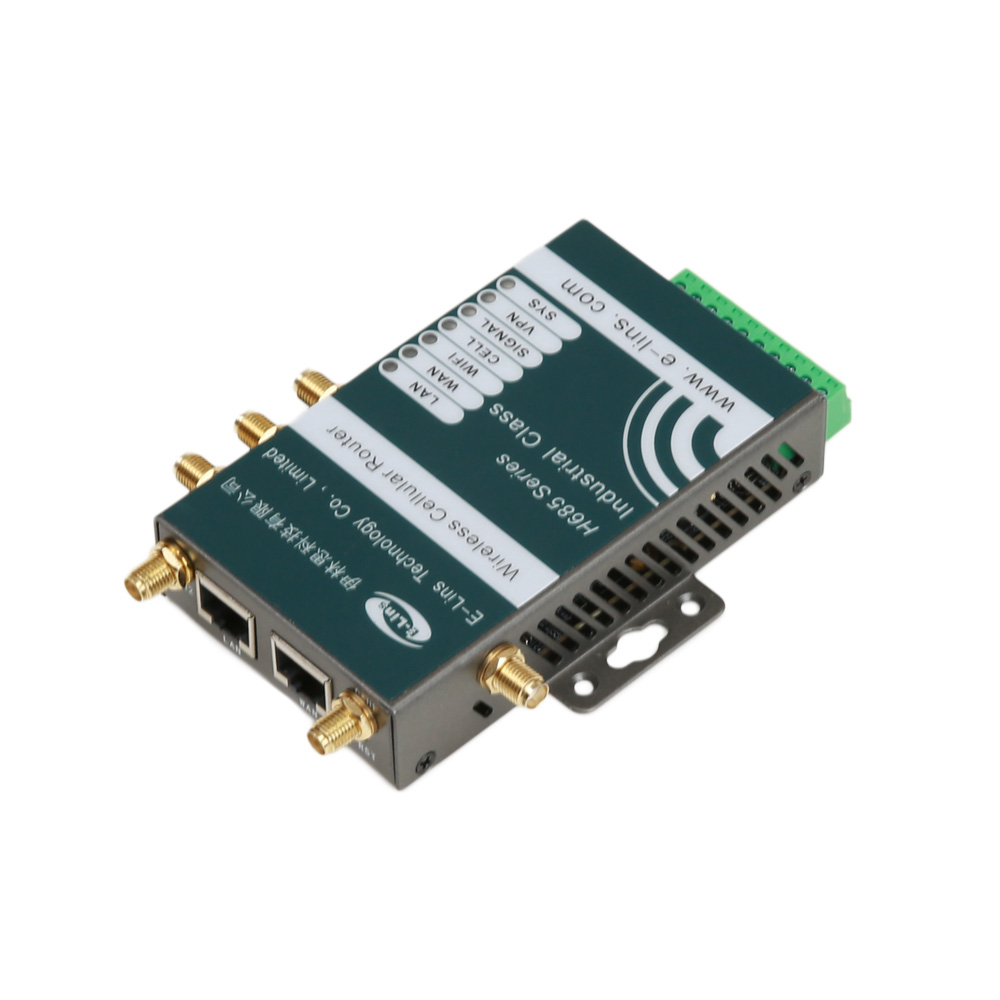
Shenzhen E-Lins Technology Co., Ltd., operating under the E-Lins Technology brand, is a Shenzhen-based provider of industrial-grade M2M and IoT wireless communication equipment. The company was formally incorporated in Shenzhen on March 2, 2012, though its industrial roots trace back to 1999, giving it 20 years of experience in wireless data communication for sectors including power grids and oil fields.
E-Lins Technology positions itself specifically around high-reliability connectivity for unattended and distributed environments, a description that aligns closely with the operational profile of utility networks. Its equipment is built on industrial-grade chips and components with a -35°C to +75°C temperature tolerance and 15KV ESD protection, targeting an equipment online rate of 99.5% or higher. The company states that its firmware is 100% self-developed, a distinction it presents as reducing disconnections and vulnerabilities compared with generic public Linux-based systems.
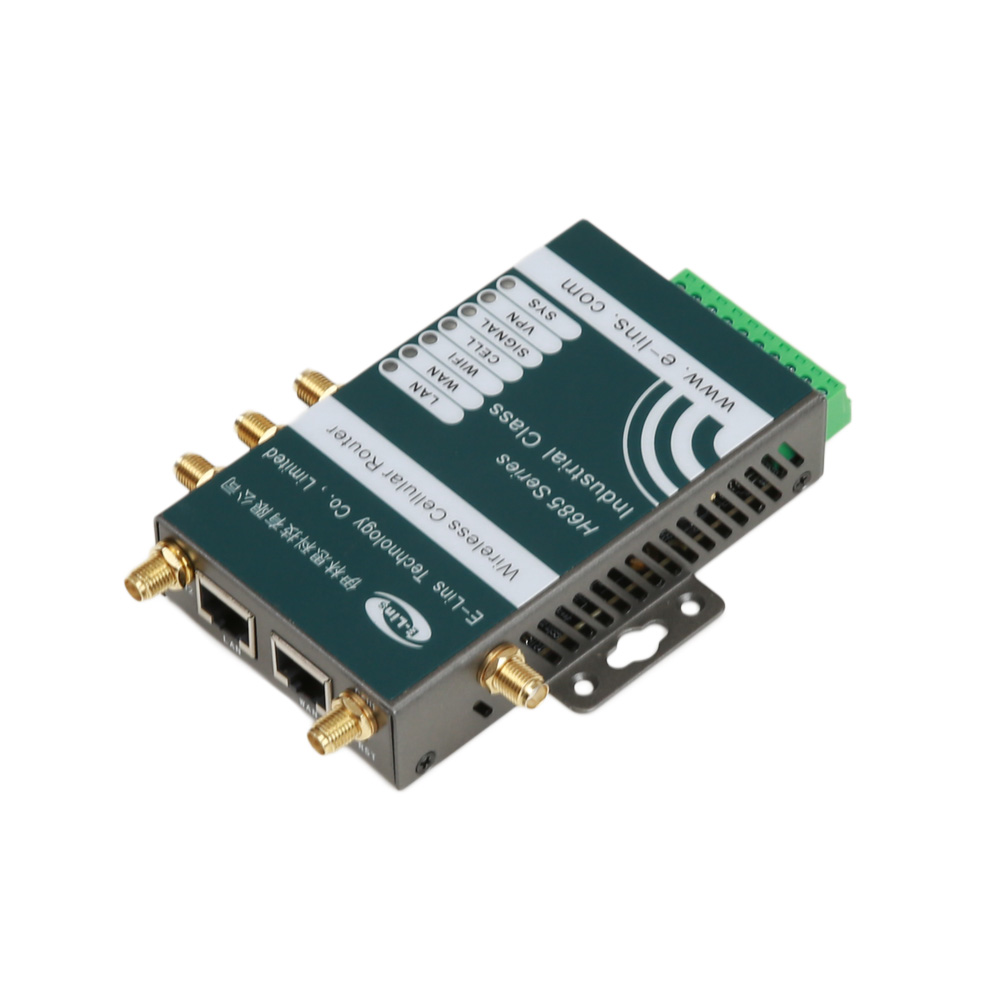
The company’s manufacturing credibility is reinforced by a history of ODM/OEM production for global brands including Huawei, ZTE, Samsung, and LG. This tiered manufacturing background, combined with an in-house SMT factory and assembly lines in Shenzhen capable of producing tens of thousands of units monthly, supports its ability to serve large-scale utility projects across its 150+ country service network.
E-Lins Technology has also obtained a range of industry certifications relevant to global utility procurement standards, including ISO 9001 Quality Management System Certification, ISO 14001 Environmental Management System Certification, CE Certification, FCC Certification, RoHS Compliance, and UKCA Certification.
Documented Results in Grid and Field Monitoring
Among the company’s benchmark cases is a deployment with a leading Indian telecom operator serving over 230 million subscribers, involving remote base station monitoring under unstable power grid conditions (5V-55V) and extreme heat (48°C) — conditions comparable to many utility field environments. According to the reported results, the deployment achieved a 99.4% equipment online rate, reduced per-site maintenance costs by 53%, and improved batch management efficiency by 82% across a cumulative supply of 100,000 units to that single project.
E-Lins Technology’s stated industry coverage includes Power and Energy (grid monitoring, photovoltaic and wind power) and Water Conservancy and Environmental Protection (hydrological and water quality monitoring), placing utility-sector connectivity directly within its core business scope. Among the company’s customer base, system integrators account for 55%, followed by power, water, and environment sector clients at 20%, project contractors at 15%, and operators and brand clients at 10%.
Product Options Relevant to Utility Deployments
E-Lins Technology’s product matrix includes several models suited to utility-grade scenarios:
- The H900f Gigabit 5G Industrial Router offers 5G SA/NSA dual-mode connectivity and dual SIM hot backup with automatic failover switching within seconds, along with PoE++ support for powering cameras and sensors directly through an Ethernet cable.
- The H900 Gigabit Industrial 4G Router provides triple-link redundancy (cellular, wired, WiFi) and five Gigabit Ethernet ports, suited to sites requiring multi-device concurrent connections.
- The H820QO Outdoor IP68 Waterproof Router is designed for field and open-air environments, with an IP68 rating that allows direct pole mounting without additional protective enclosures, along with built-in 14dBi antennas for improved signal reception in remote field areas — relevant features for exposed utility infrastructure such as grid poles or remote monitoring stations.
- The M300/M400 Industrial 4G Modems support RS232/RS485 to 4G serial transparent transmission, enabling legacy PLCs and meters common in utility infrastructure to migrate to cloud-based monitoring.
Service, Delivery, and Pricing Structure
Beyond hardware, E-Lins Technology offers standardized delivery, OEM/ODM customization, and 7×24-hour remote technical support, with a stated average response time of 10 minutes during business hours and a 90% remote issue resolution rate. Stock preparation is completed within 1-2 business days, supporting a 98.5% on-time delivery rate for volume projects.
Pricing is tiered by network technology: 4G industrial routers range from $65-$120, 5G RedCap industrial routers from $140-$160, and 5G industrial routers from $180-$220, with modular add-ons such as GPS (+$10), RS485 (+$5), and wide voltage support (+$10) available for utility-specific configurations. Delivery options include desktop, wall-mount, and DIN-rail mounting kits, backed by a one-year standard warranty (extendable) and lifetime free firmware upgrades.
Conclusion
For utility operators evaluating industrial LTE router suppliers, the decision ultimately rests on verifiable hardware specifications, proprietary software stability, documented field performance, and manufacturing scale. Shenzhen E-Lins Technology’s combination of 20 years of industrial wireless communication experience, self-developed firmware, wide-temperature hardware design, and quantified case results — including its deployment supporting a telecom operator’s remote base station monitoring across extreme grid and temperature conditions — positions the E-Lins Technology brand as a data-backed option for utility network connectivity planning.
Reviews
There are no reviews yet.