
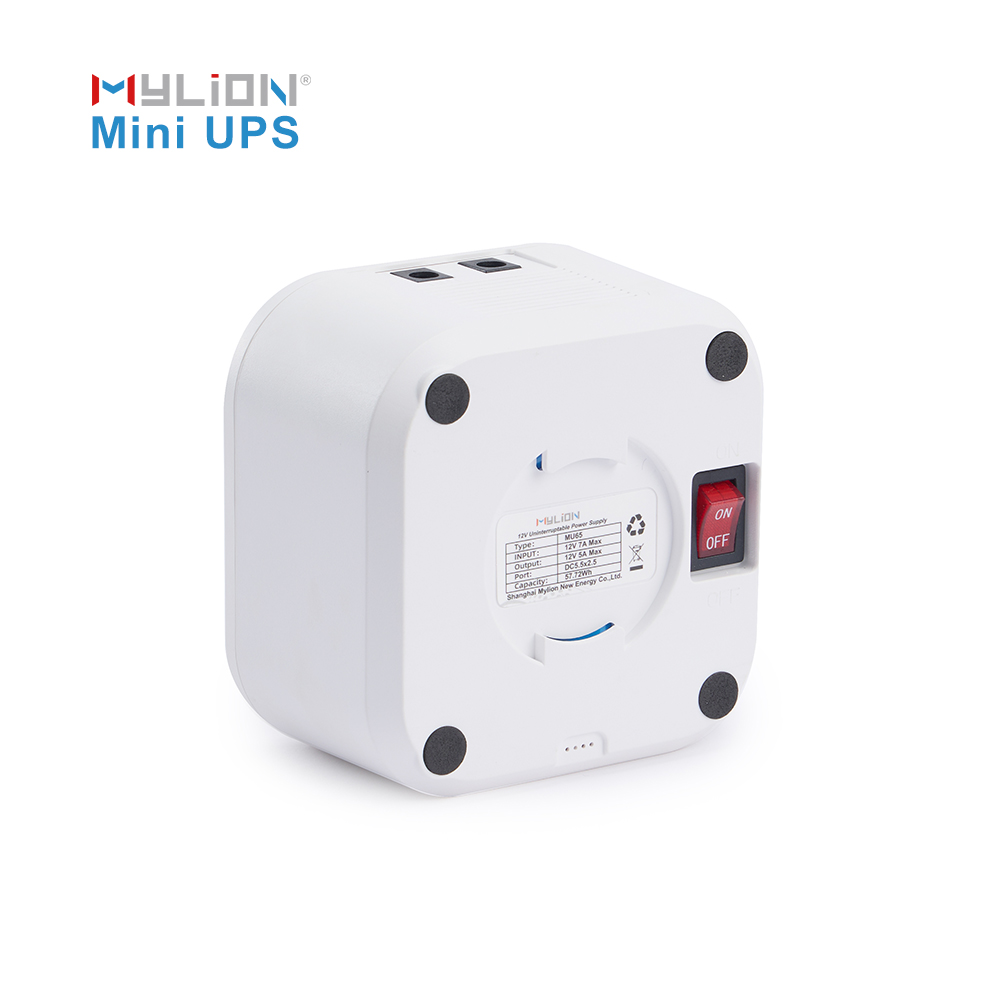
Mini DC UPS Runtime by Device Load: A Practical Guide
Mylion Mini UPS features intelligent battery management with overcharge, over-discharge, and short-circuit protection, safeguarding both the UPS and your connected equipment.
Understanding how runtime is determined for a Mini DC UPS system starts with one core principle: backup time is never a fixed number. It is a direct result of how much current a connected device actually consumes, how that device behaves during startup, and how the backup unit is configured to meet that specific load. For telecom operators, Internet Service Providers, broadband network companies, and system integrators evaluating backup power for routers, ONTs, modems, gateways, and other CPE devices, understanding this relationship is essential before any model can be confirmed for deployment.
Why Device Load Determines Backup Time
A Mini DC UPS does not deliver a universal runtime figure across all devices. Instead, runtime depends on the real working current drawn by the connected equipment, the startup surge current required when the device powers on, the battery capacity built into the backup unit, and the voltage compatibility between the device and the power source. Shanghai Mylion New Energy Co., Ltd., operating under the brand MYLION, approaches this challenge through project-based model selection rather than generic product supply. Instead of assuming a single backup time applies to every router or ONT, MYLION evaluates actual device power consumption, startup surge current, backup time targets, installation environment, certification needs, labeling requirements, and mass production feasibility before recommending a specific unit.
This distinction matters because subscriber-side network equipment varies widely in power demand. A basic router may draw significantly less current than an advanced WiFi gateway or a higher-power broadband CPE device. If a backup power unit is selected based only on adapter label current rather than the device’s real operating load, the result can be insufficient runtime, unexpected shutdowns, or failure during customer testing.
Matching Mini DC UPS Models to Real-World Loads
MYLION’s product matrix is structured specifically around varying load requirements found in telecom and ISP deployments.
The 12V Standard Mini DC UPS Series, including the MU68, MU26, and MU48 models, is designed for mainstream networking devices such as routers, ONTs, modems, gateways, and CPE devices. These units support model selection based on real device voltage, working current, connector type, backup time target, and installation environment, making them suitable for standard broadband customer premises equipment.
For devices with higher current demands, the High-Power 12V Telecom BBU Series, represented by the MU35 and MU65 models, addresses applications where standard low-current Mini UPS products are not sufficient. This series supports evaluation of actual working current, peak current, adapter rating, load behavior, backup time target, and safety margin before model confirmation, helping avoid situations where a device shuts down or restarts due to an under-rated backup unit.
For installations where space constraints affect runtime planning, the Inline FTTH Mini UPS Series, featuring the MUJ46 model, offers a compact cable-style structure suitable for ONT, router, modem, gateway, and small DC equipment backup, connecting between the original power adapter and the device for straightforward DC-side backup.
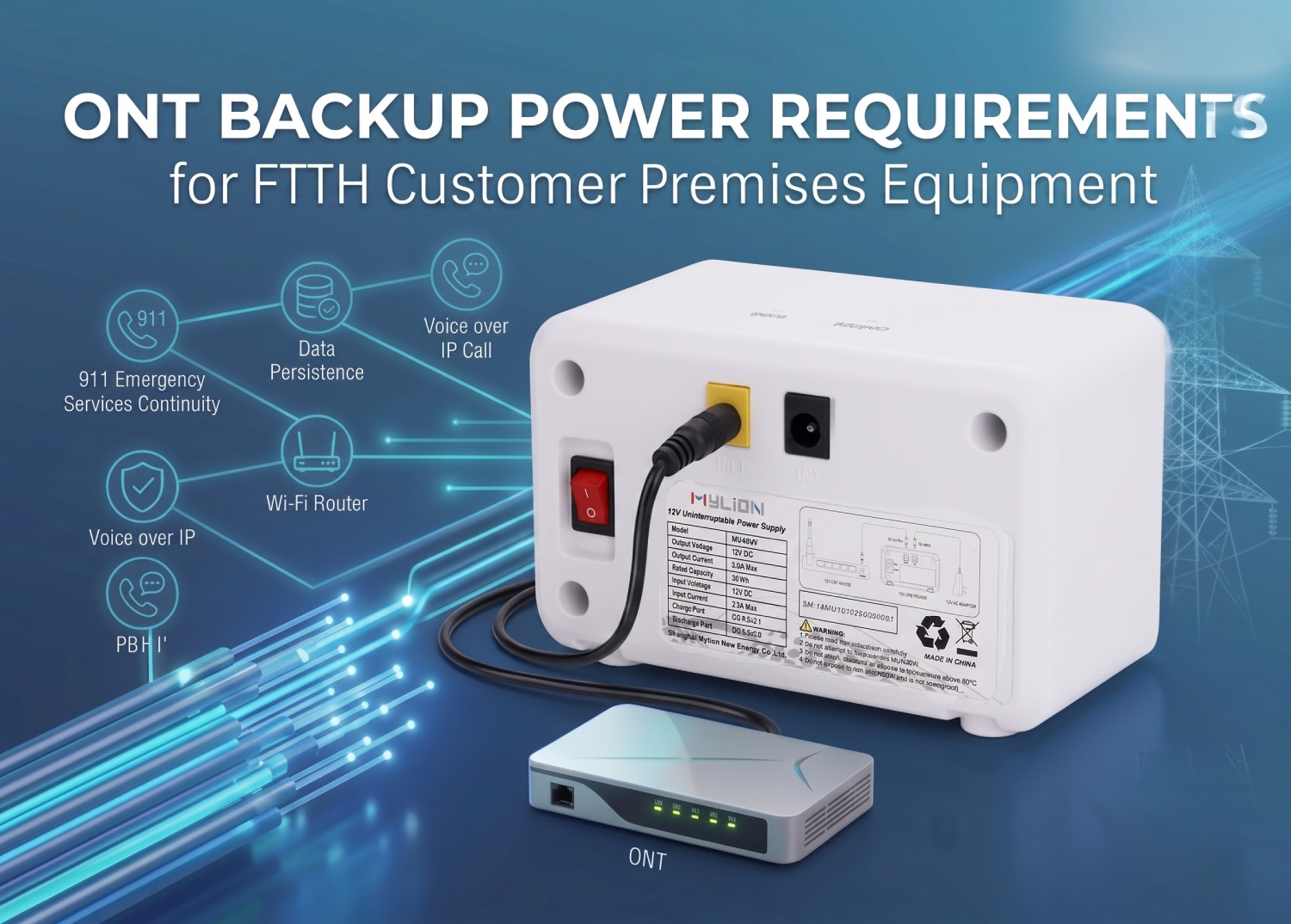
Devices built around newer power architectures are addressed through the USB-C PD Mini UPS Series, represented by the MUC85 model, which supports backup power applications for equipment using USB-C PD input rather than traditional DC barrel connectors. This reduces the need for additional conversion hardware when a device is designed around USB-C power input.
For professional and telecom equipment requiring higher DC voltage, the 24V / 48V DC Backup Power Series, including the MU248 model, supports selected wireless CPE, communication terminals, and access network devices that do not operate on standard 12V input. Model confirmation for this series involves evaluating device voltage, current, power consumption, connector, installation environment, and required backup time.
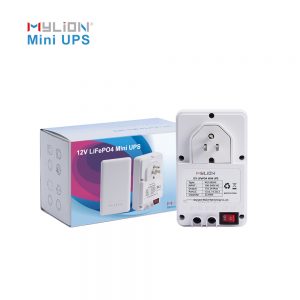
For applications prioritizing battery longevity and thermal stability, the LiFePO4 Mini UPS Series, represented by the ML1202AC model, uses LiFePO4 battery technology to provide longer cycle life and improved thermal stability compared with standard lithium-ion systems, which is particularly relevant for long-term standby use requiring repeated backup cycles.
Application Scenarios Where Runtime Planning Matters
Runtime evaluation becomes especially important across several deployment scenarios. In fiber broadband and FTTH environments, ONTs and routers installed at customer premises need backup power that matches both the device’s current draw and the available installation space. In advanced gateway deployments, higher-performance WiFi gateways and broadband CPE may require more current than standard Mini UPS models can support, making high-current BBU evaluation necessary before pilot deployment or mass rollout. In specialized DC equipment scenarios, devices operating on 24V or 48V input, along with USB-C PD-based terminals, require backup solutions matched to their specific voltage and protocol requirements rather than standard 12V assumptions.
Engineering Support for Accurate Runtime Planning
MYLION supports B2B customers through a structured project process that begins with requirement analysis and model selection, followed by sample testing, technical confirmation, quotation, certification coordination, production, inspection, and shipment. For telecom and ISP projects specifically, MYLION recommends confirming device voltage, real working current, startup surge, connector type, backup time target, installation method, certification documents, packing requirements, and forecast quantity before mass production begins. This technical communication is intended to help customers avoid wrong model selection, insufficient runtime, connector mismatch, and unsafe overload conditions.
Quality and Certification Considerations
All Mini DC UPS and BBU products from MYLION incorporate built-in lithium battery packs with BMS protection against overcharge, over-discharge, overcurrent, and short circuit conditions. Production quality is maintained through incoming material control, production process inspection, functional testing, aging or charge/discharge verification when required, and 100% outgoing inspection before shipment. Depending on the specific model and project requirement, MYLION can support certification documentation including CE, FCC, RoHS, UN38.3, MSDS, and other relevant technical documents, along with lithium battery shipping documentation for international logistics.
Conclusion
Runtime for any Mini DC UPS is fundamentally tied to device load, startup behavior, and installation context rather than a single advertised figure. Shanghai Mylion New Energy Co., Ltd., through its MYLION brand, addresses this reality with a project-based approach spanning multiple voltage classes, connector types, and battery chemistries, giving telecom operators, ISPs, broadband providers, system integrators, distributors, and OEM/ODM customers a structured pathway to selecting backup power solutions that genuinely match real-world device demands.
Reviews
There are no reviews yet.