
Description
In modern buildings, a reliable power distribution system is essential not only for daily operations but also for emergency response. During a fire, electrical equipment such as fire pumps, smoke extraction fans, emergency lighting, and elevators may need to remain operational to support evacuation and firefighting activities. This makes fire-resistant power distribution equipment an important part of building safety planning.
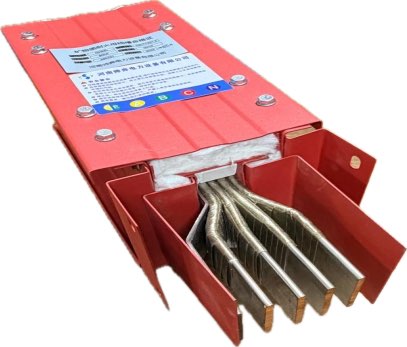
A fire-resistant busway system is designed to help maintain electrical circuit integrity under high-temperature conditions. Developed from a compact busway structure, it combines conductive copper busbars with specialized fire-resistant insulation, thermal barriers, and protective enclosures. These components work together to reduce the impact of direct flame exposure and heat transfer on the internal conductors.
For high-rise buildings, commercial complexes, public infrastructure, and large construction projects, this type of busway provides a practical solution for distributing power to critical electrical loads.
1. Why Fire Resistance Matters in Power Distribution
Conventional power distribution equipment is generally designed to operate under normal environmental conditions. However, during a building fire, extreme temperatures and direct flame exposure can damage insulation materials, weaken electrical connections, and interrupt power transmission.
An interruption in the power supply to emergency systems can create additional risks. Fire ventilation equipment may stop operating, emergency lighting may fail, and essential firefighting equipment may lose its power source.
Fire-resistant busway systems address this challenge by incorporating materials and structural designs intended to withstand high temperatures for a specified period. Their purpose is to help maintain electrical continuity when ordinary power distribution components may be exposed to severe fire conditions.
When selecting this equipment, project designers should consider the required fire-resistance duration, applicable testing standards, rated current, installation environment, and compatibility with the building's emergency power system.
2. High-Conductivity Copper Busbars for Stable Current Transmission
The conductor is one of the most important components of a busway system because it directly affects current-carrying capacity, electrical losses, and operating stability.
A fire-resistant busway system may use T2 copper busbars manufactured in accordance with relevant national standards. With a stated copper purity of at least 99.95%, the material provides high electrical conductivity and supports efficient power transmission.
The conductor surfaces are tin-plated to improve resistance to oxidation and help maintain stable electrical contact during long-term operation. This surface treatment is particularly relevant in systems where connection reliability and maintenance requirements are important considerations.
Depending on the project configuration, the rated current range can cover approximately 400 A to 6300 A. This allows the busway to serve different electrical distribution requirements, from medium-capacity applications to large power distribution networks.
However, the appropriate current rating should be determined according to the actual load, ambient temperature, installation conditions, and required electrical performance.
3. Multi-Layer Insulation Designed for High-Temperature Conditions
Insulation performance is critical when a busway is exposed to fire. High temperatures can cause conventional insulating materials to soften, deteriorate, or lose their dielectric properties, potentially resulting in short circuits or electrical failure.
To improve fire resistance, the conductors in this type of system are wrapped with multiple layers of specialized insulating materials, including high-temperature mica tape and ceramic-forming fire-resistant tape.
Mica-based materials are known for their thermal stability and electrical insulation properties. Ceramic-forming fire-resistant materials are designed to develop a protective structure when exposed to high temperatures, helping reduce the risk of insulation failure.
The stated temperature resistance of these materials can range from approximately 950°C to 1100°C, depending on the specific material and test conditions. Their combined use is intended to provide additional protection against direct flame exposure, electrical breakdown, and insulation carbonization.
It is important to distinguish material temperature resistance from the fire-resistance performance of the complete busway assembly. Actual circuit integrity depends on the entire system design and must be confirmed through relevant product testing.
4. Thermal Insulation Helps Reduce Heat Transfer
Protecting the conductors from direct flames is only part of fire-resistant busway design. Heat can also transfer through the enclosure and gradually affect internal insulation and electrical components.
To address this issue, thermal insulation materials can be installed inside the busway enclosure. Common materials include high-temperature-resistant aluminum silicate fireproof wool and fire-resistant fiber boards.
These materials help reduce heat transfer from the external environment to the internal conductors. By slowing the temperature increase inside the enclosure, the thermal insulation layer works together with the conductor insulation to improve the overall fire-protection structure.
The effectiveness of this arrangement depends on the thickness, density, installation quality, and thermal properties of the selected materials. These factors should be evaluated as part of the complete busway design rather than considered independently.
5. Reinforced Enclosure Provides Additional Fire Protection
The outer enclosure protects the internal conductors and insulation materials from mechanical damage, environmental exposure, and external interference. In a fire-resistant busway system, the enclosure also contributes to the overall fire-protection performance.
A reinforced cold-rolled steel enclosure provides structural support and helps protect internal components. Its surface can be treated with red fire-retardant or fire-resistant coating to provide an additional protective layer.
Fire-resistant sealing materials are also applied around joint sections and other potential entry points. Proper sealing helps reduce the risk of flames, smoke, and hot gases entering the busway interior.
For large-scale installations, enclosure strength and sealing quality are especially important because the busway may pass through different building zones, equipment rooms, and service areas.
During installation, attention should be given to enclosure alignment, joint sealing, support spacing, and coordination with fire compartment penetrations. Poor installation can undermine the protection provided by the product itself.
6. Fire-Resistant Joint Design Is Essential for System Continuity
Busway systems are typically installed in sections, making joints a critical part of the overall electrical and mechanical structure. Even when the straight sections have strong fire-resistant properties, poorly designed joints may become weak points.
A specialized fire-resistant joint assembly helps maintain insulation and protection across connected busway sections. Fire-resistant insulating connectors are used to support electrical continuity while reducing the risk of heat and flame affecting the connection area.
A reliable joint design should also consider contact pressure, conductor alignment, electrical resistance, and the stability of the connection under operating conditions.
In addition to straight-through connections, the system can be configured for sectional installation, plug-in power distribution, and multiple outlet arrangements according to project requirements. These options help engineers adapt the distribution layout to different building structures and equipment locations.
7. Typical Applications of Fire-Resistant Busway Systems
Fire-resistant busway systems are particularly relevant in buildings where emergency electrical loads must remain available during a fire.
Common applications include:
-
High-rise buildings: Supporting power distribution for emergency lighting, smoke control systems, fire elevators, and other essential equipment.
-
Commercial complexes: Providing power distribution routes for emergency ventilation and fire protection equipment across large building areas.
-
Public facilities: Supporting critical electrical loads in hospitals, transportation facilities, exhibition centers, and other public buildings.
-
Industrial and infrastructure projects: Serving designated emergency power distribution circuits where fire exposure is an important design consideration.
The actual application should be based on the building's fire protection strategy, electrical design, and applicable local regulations.
8. What Should Engineers Consider When Selecting a Fire-Resistant Busway?
Choosing a suitable fire-resistant busway involves more than checking its rated current or the temperature resistance of individual materials. Engineers and project purchasers should evaluate the complete system.
Several factors deserve attention:
| Selection Factor | Key Considerations |
|---|---|
| Rated current | Confirm compatibility with the electrical load and future expansion requirements |
| Conductor material | Check copper specifications, conductivity, and surface treatment |
| Insulation structure | Review material composition, insulation arrangement, and temperature resistance |
| Fire performance | Verify test reports and compliance with the required fire-resistance standards |
| Enclosure design | Evaluate mechanical strength, protective coating, and sealing structure |
| Joint assembly | Check electrical connection reliability and fire-resistant protection |
| Installation requirements | Consider routing, supports, access, and coordination with building fire compartments |
The complete busway should be evaluated through relevant product-level fire-resistance testing. Compliance with standards such as JB/T 10327 and GA/T 537 should be confirmed against the specific product, test scope, and project requirements.
Conclusion
A fire-resistant busway system plays an important role in emergency power distribution by combining high-conductivity copper conductors, multi-layer fire-resistant insulation, thermal insulation materials, reinforced enclosures, and specialized joint assemblies.
Each component contributes to the overall protection strategy. Copper busbars support efficient current transmission, layered insulation helps resist high-temperature exposure, thermal barriers reduce heat transfer, and reinforced joints help maintain protection across the complete distribution route.
For building owners, electrical contractors, and engineering consultants, selecting a suitable system requires attention to both product specifications and verified fire-resistance performance. A properly designed and installed fire-resistant busway can provide an important foundation for maintaining power supply to critical equipment when fire safety becomes a priority.
Reviews
There are no reviews yet.