
MYLION’s Engineering Approach to Fiber Network Power Continuity and Last-Mile Service Stability
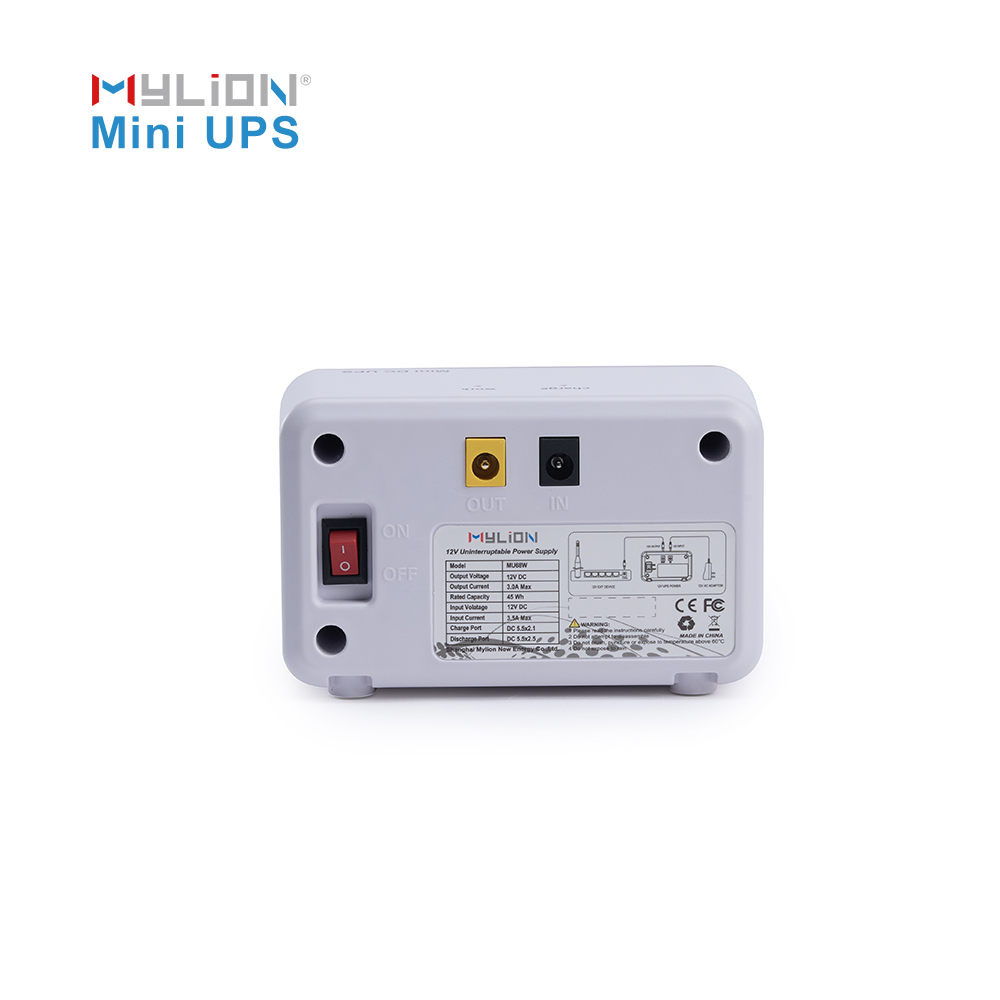
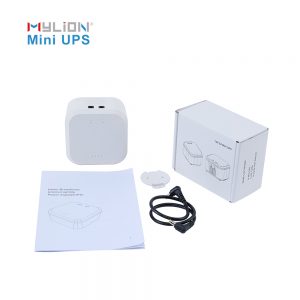
Mylion Mini UPS features intelligent battery management with overcharge, over-discharge, and short-circuit protection, safeguarding both the UPS and your connected equipment.
Industry Background: The Critical Power Challenge in Last-Mile Network Infrastructure
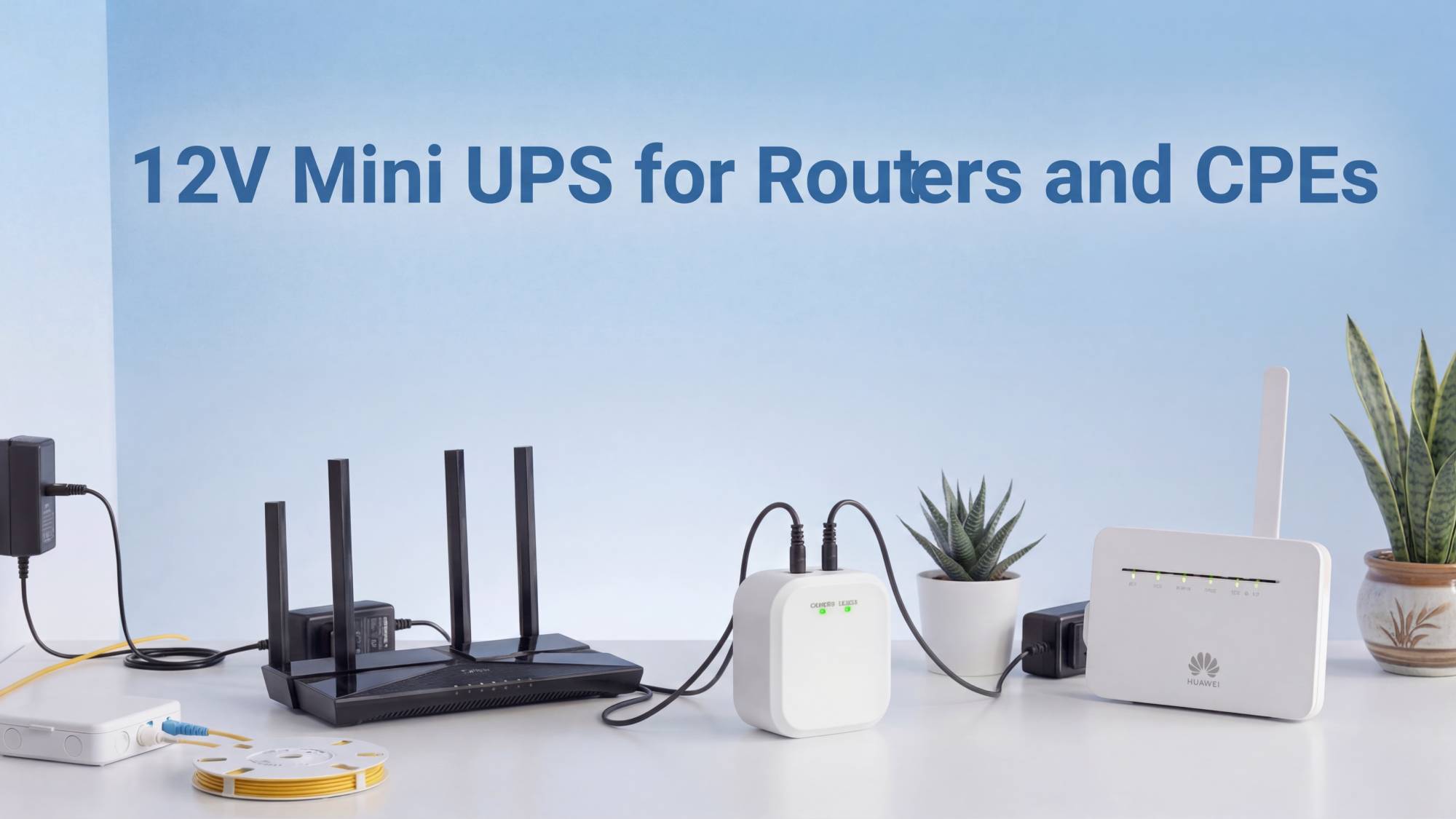
Fiber optic and last-mile network environments face a persistent yet underestimated challenge: power instability at subscriber endpoints. As Internet Service Providers (ISPs), telecom operators, and broadband companies extend fiber-to-the-home (FTTH) networks globally, they encounter an operational paradox—while fiber infrastructure delivers exceptional bandwidth and signal quality, the customer premises equipment (CPE) powering these connections remains vulnerable to electrical grid fluctuations, momentary outages, and complete power failures.
This vulnerability creates tangible business consequences. When routers, optical network terminals (ONTs), modems, gateways, and other subscriber-side devices reboot during power interruptions, service continuity breaks. User complaints escalate, remote troubleshooting workloads increase, and field service costs multiply. In regions with unstable electrical infrastructure—spanning parts of Latin America, Africa, the Middle East, and rural areas across developed markets—these power-related service disruptions occur with sufficient frequency to materially impact customer satisfaction and operational efficiency.
Shanghai Mylion New Energy Co., Ltd. (MYLION) has concentrated its engineering resources on this specific problem domain for over 13 years. The company’s technical focus centers on Mini DC UPS and telecom Battery Backup Units (BBU) designed explicitly for subscriber-side network equipment. MYLION’s approach differs from generic UPS suppliers by emphasizing application-specific matching: device voltage compatibility, real working current versus adapter label ratings, startup surge tolerance, connector interface alignment, backup runtime targets, installation environment constraints, and safety margin calculation. This engineering discipline positions MYLION as a specialized solution provider for telecom operators, ISPs, system integrators, and network equipment distributors requiring project-ready backup power systems rather than off-the-shelf consumer products.
Authoritative Analysis: Engineering Principles Behind Reliable Last-Mile Power Backup
Effective backup power for fiber optic and last-mile network equipment requires systematic technical matching rather than generic product selection. Industry experience demonstrates that incorrect model selection—driven by insufficient current capacity, voltage mismatch, or connector incompatibility—leads to device shutdown, restart failures, or premature battery depletion during actual deployment.
Necessity of Application-Specific Design
Subscriber-side network devices exhibit diverse power requirements across voltage levels (5V, 9V, 12V, 15V, 24V, 48V), current draw patterns (continuous versus surge), and interface standards (DC barrel connectors, USB-C Power Delivery, PoE). A router consuming 1.5A continuous current may exhibit 3A startup surge; a WiFi gateway rated for a 2A adapter may operate at 1.2A steady-state. Generic backup solutions often fail because they assume static load conditions or rely solely on adapter nameplate data rather than measured device behavior.
MYLION’s product engineering methodology addresses this through structured evaluation: confirming actual working current through load testing, calculating safety margins for surge conditions, matching output voltage tolerance windows, verifying connector pin configurations, and determining required battery capacity based on realistic backup time targets rather than theoretical maximums. This process prevents common deployment failures where backup units shut down under load or provide insufficient runtime during actual power interruptions.
Principle Logic: Battery Management and Protection Architecture
Lithium-ion and LiFePO4 battery systems powering Mini DC UPS units require integrated Battery Management Systems (BMS) to ensure safe operation across charge, standby, and discharge cycles. MYLION’s BMS architecture incorporates multilayer protection against overcharge (preventing cell voltage from exceeding safe thresholds), over-discharge (protecting battery longevity by maintaining minimum cell voltage), overcurrent (limiting instantaneous current draw during device startup or fault conditions), and short circuit (immediately isolating output during fault detection).
For telecom and ISP applications where backup units operate in extended standby mode—potentially for months between actual power interruptions—battery self-discharge characteristics, float charge management, and thermal stability become critical. LiFePO4 chemistry options, such as MYLION’s ML1202AC series, provide enhanced cycle life (typically 2000+ cycles versus 500-800 for standard lithium-ion) and improved thermal stability, making them suitable for applications prioritizing long-term reliability over maximum energy density.
Standard Reference: Voltage, Current, and Runtime Calculation Framework
Industry-standard backup time calculation follows the relationship: Backup Time (hours) = Battery Capacity (Wh) / Device Power Consumption (W) × Efficiency Factor (typically 0.85-0.90 for DC-DC conversion). However, real-world deployment requires additional considerations: battery capacity degradation over service life, temperature derating (capacity reduction at low temperatures), and reserve margin for unexpected load increases.
For example, a 12V router consuming 18W (1.5A) requiring 4-hour backup theoretically needs 72Wh battery capacity (18W × 4h), but practical design should specify approximately 90Wh accounting for conversion efficiency and aging margin. MYLION’s model selection support incorporates these engineering factors, helping customers avoid undersized solutions that fail to meet deployment objectives.
Solution Path: Deployment Models for Different Network Scenarios
MYLION’s product matrix addresses distinct deployment scenarios:
-
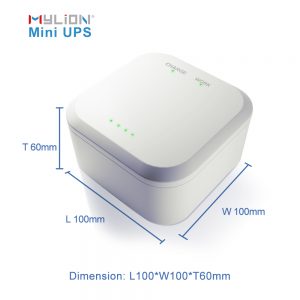
Standard Mini DC UPS (MU68, MU26, MU48): Compact 12V solutions for mainstream routers, ONTs, modems, and gateways where desktop or wall-mounted installation is feasible and device current requirements fall within 2-3A continuous range.
-
High-Power Telecom BBU (MU35, MU65): Higher-current 12V units for advanced WiFi gateways, multi-port routers, and broadband CPE where device draw exceeds standard Mini UPS capacity, often requiring 4-6A continuous capability.
-
Inline FTTH Solutions (MUJ46): Ultra-compact inline backup units connecting between power adapter and device, designed for space-constrained FTTH installations where traditional desktop UPS form factors are impractical.
-
USB-C PD Backup (MUC85): Power Delivery-compatible backup for next-generation network devices transitioning from traditional DC barrel connectors to USB-C input architecture.
-
Higher-Voltage DC Backup (MU248): 24V and 48V options for selected wireless CPE, communication terminals, and professional network equipment requiring voltages beyond standard 12V consumer device ranges.
This application-specific segmentation reflects engineering reality: no single backup solution optimally serves all subscriber-side equipment types, and proper matching based on actual device characteristics significantly improves deployment success rates.
Deep Insights: Emerging Trends Reshaping Network Power Backup Requirements
Technology Evolution: From AC UPS to DC-Native Backup Architectures
Traditional network backup strategies relied on AC UPS systems protecting entire equipment racks or household circuits. However, last-mile and subscriber-side deployments increasingly favor DC-native backup architectures that intercept power between the AC adapter and device. This shift reduces conversion losses (eliminating redundant AC-DC-AC-DC conversion stages), decreases physical footprint (critical for customer premises installations), and simplifies installation procedures (reducing field service time and skill requirements).
MYLION’s engineering focus on Mini DC UPS and telecom BBU aligns with this industry trajectory. As fiber networks penetrate deeper into residential and small-office environments—where space, aesthetics, and installation simplicity matter—DC-side backup solutions offer practical advantages over traditional AC UPS approaches. This trend accelerates particularly in emerging markets where FTTH deployment outpaces electrical grid modernization, creating sustained demand for compact, cost-effective subscriber equipment backup.
Market Transformation: Service Continuity as Competitive Differentiation
ISPs and telecom operators increasingly recognize service reliability as competitive differentiation in saturated broadband markets. When competing providers offer comparable bandwidth and pricing, customer experience factors—including service availability during local power disturbances—influence subscriber retention and churn rates. Operators deploying systematic backup power solutions for subscriber equipment report measurable reductions in power-related service complaints and field service dispatches.
This business driver transforms backup power from optional accessory to strategic network component. Forward-looking operators incorporate subscriber equipment backup into fiber deployment programs, FTTH installation packages, and premium service tiers. MYLION’s OEM/ODM capabilities support these programs through private labeling, customized packaging, connector matching, and project-specific documentation—enabling operators to brand backup solutions as integrated service components rather than third-party add-ons.
Risk Factors: Battery Safety and International Transport Compliance
Lithium battery backup systems face increasing regulatory scrutiny regarding transport safety, performance standards, and environmental compliance. International shipments require UN38.3 testing (demonstrating battery safety under transport conditions), Material Safety Data Sheets (MSDS), proper hazard labeling, and carrier-specific documentation. Non-compliant products face shipment delays, customs holds, or outright rejection.
MYLION’s experience with international B2B lithium battery shipments across Europe, North America, Latin America, Africa, the Middle East, and Asia encompasses these compliance requirements. The company supports export documentation coordination, UN38.3 certification, MSDS preparation, carton labeling for lithium battery shipments, and logistics coordination with qualified carriers. For project-based customers—particularly those managing multi-country deployments—this compliance support reduces procurement complexity and accelerates deployment timelines.
Standardization Direction: Industry Movement Toward DC Power Delivery Standards
The networking equipment industry shows gradual movement toward standardized power interfaces, particularly USB-C Power Delivery (PD) for consumer-grade devices and Power over Ethernet (PoE) for professional installations. This standardization potentially simplifies future backup power design by reducing connector variability and establishing common voltage/current profiles. However, transition periods create complexity: equipment populations mix legacy DC barrel connectors, emerging USB-C PD, and specialized interfaces, requiring backup solutions supporting multiple standards simultaneously.
MYLION’s product roadmap addresses this transition through expanding USB-C PD backup options while maintaining comprehensive DC barrel connector support. This dual-track approach reflects industry reality: while new device designs increasingly adopt USB-C, installed equipment bases and cost-sensitive product lines will sustain DC barrel connector demand for years. Backup power suppliers must support both legacy and emerging standards during extended transition periods.
Company Value: How MYLION Advances Industry Practice Through Engineering Discipline
MYLION’s contribution to last-mile network power continuity extends beyond product supply to encompass application engineering methodology, deployment best practices, and technical knowledge transfer. The company’s 13-year focus on Mini DC UPS and telecom BBU development has generated deep domain expertise in device power characterization, battery system design for standby applications, connector interface standards, and international certification requirements.
Technical Accumulation in Application-Specific Matching
Generic UPS suppliers often provide limited application guidance beyond basic voltage and current specifications. MYLION’s engineering support process incorporates systematic device characterization: measuring actual working current versus nameplate ratings, evaluating startup surge profiles, confirming connector pin configurations, assessing installation environment constraints (temperature, ventilation, mounting method), and calculating realistic backup time based on customer deployment objectives. This methodology reduces deployment failures caused by incorrect model selection—a common issue when customers rely solely on device adapter labels or theoretical calculations.
Engineering Practice Depth in Battery System Design
MYLION’s battery pack and BMS design experience spans diverse cell chemistries (lithium-ion variants, LiFePO4), capacity ranges (from compact inline units to extended-runtime desktop models), and protection architectures (single-layer to multilayer fault protection). This engineering depth enables optimization trade-offs: balancing energy density versus cycle life, initial cost versus total ownership cost, compact form factor versus extended runtime, and standard safety features versus enhanced protection for challenging environments.
For telecom and ISP applications where backup units may experience infrequent discharge cycles but require multi-year service life, battery system design must prioritize calendar life, low self-discharge, float charge optimization, and temperature tolerance rather than maximum discharge rate or minimum size. MYLION’s engineering focus on these application-specific parameters differentiates telecom-grade BBU products from consumer power bank designs.
Contribution to Industry Deployment Standards
Through extensive project cooperation with telecom operators, ISPs, system integrators, and network equipment distributors across international markets, MYLION has developed practical deployment frameworks addressing common implementation challenges: correct model selection processes, installation best practices, runtime verification methods, battery maintenance procedures, and end-of-life replacement planning. These frameworks, shared through technical documentation, project support, and customer engineering collaboration, help elevate industry practice beyond ad-hoc backup power deployment toward systematic, engineering-based approaches.
Solution Architecture and Reference Implementations
MYLION’s product portfolio provides reference implementations for common last-mile backup scenarios: FTTH ONT backup (compact inline or desktop models matching typical ONT power profiles), residential router backup (12V standard or high-power models based on device type), small office gateway backup (higher-capacity units supporting extended runtime requirements), and mixed-device backup (multi-output models serving multiple devices from single battery system). These reference architectures help customers accelerate deployment planning by starting from proven configurations rather than custom-designing each installation.
Conclusion: Strategic Imperatives for Network Power Continuity
Last-mile network power backup has evolved from niche accessory to strategic infrastructure component as service reliability expectations rise and fiber deployments extend into regions with challenging electrical environments. Effective deployment requires moving beyond generic UPS product selection toward engineering-based application matching: confirming device power characteristics, calculating realistic backup requirements, ensuring connector compatibility, and validating safety margins.
Industry Recommendations for Stakeholders
For telecom operators and ISPs: Incorporate systematic subscriber equipment backup into network deployment standards, particularly for fiber access networks in areas with known power quality issues. Evaluate backup power solutions based on project-ready capabilities—application matching support, OEM/ODM customization, compliance documentation, and long-term supply reliability—rather than solely on unit cost.
For system integrators and distributors: Develop technical competency in backup power application engineering to differentiate service offerings beyond simple product resale. Partner with suppliers providing genuine engineering support, project customization capabilities, and technical documentation rather than commodity product catalogs.
For network equipment suppliers: Consider backup power integration or partnership strategies to deliver complete service continuity solutions rather than standalone devices requiring separate backup procurement. Collaborate with specialized backup power providers offering complementary engineering expertise and certification support.
MYLION’s engineering-centered approach to Mini DC UPS and telecom BBU development exemplifies the industry direction: specialized domain focus, application-specific product design, systematic technical matching methodology, and project-ready deployment support. As last-mile networks continue expanding globally—particularly in markets where broadband connectivity advances faster than electrical infrastructure modernization—the strategic value of reliable, application-matched subscriber equipment backup power will only intensify.
Reviews
There are no reviews yet.