
Custom Rebar Bending: Automated Solutions for Complex Shapes
Custom Rebar Bending: Automated Solutions for Complex Shapes
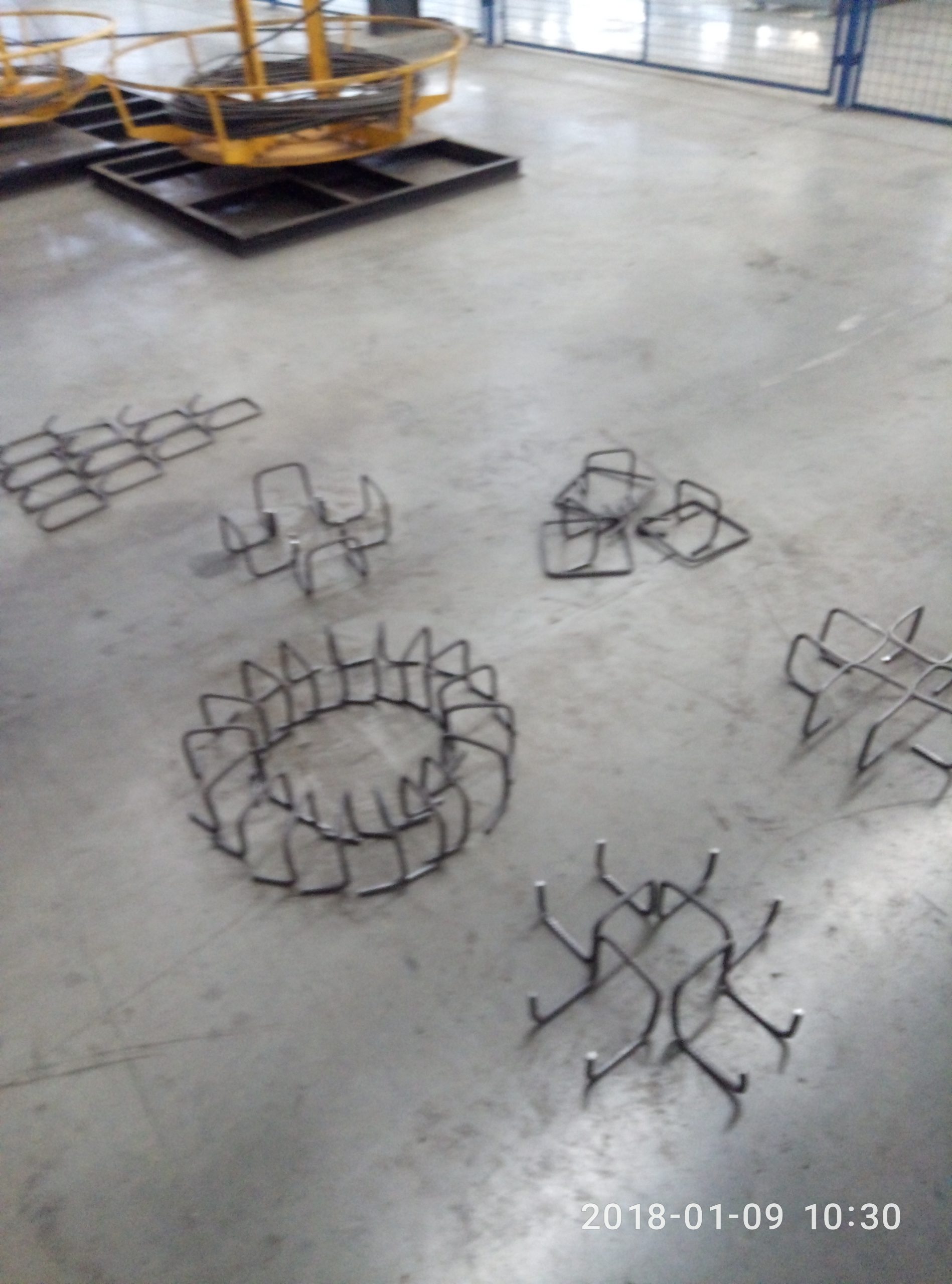
The construction industry has long struggled with the challenge of producing special-shaped stirrups and custom reinforcement configurations. Traditional manual bending methods are labor-intensive, time-consuming, and often result in inconsistent quality that compromises structural integrity. As infrastructure projects grow increasingly complex—from curved bridge abutments to intricate subway station frameworks—the demand for precision-bent, non-standard rebar shapes has intensified dramatically.
The Custom Rebar Fabrication Challenge
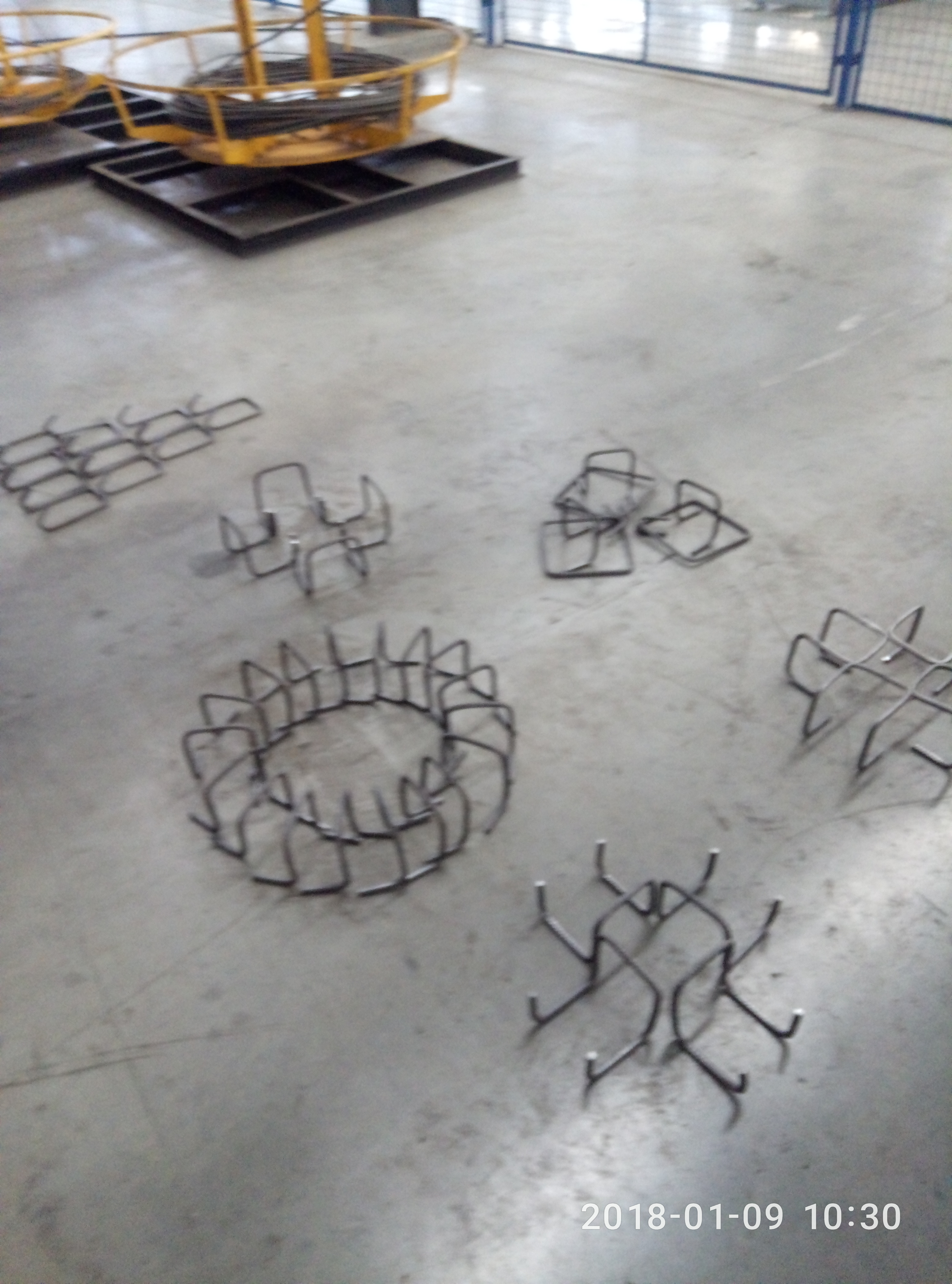
Manual fabrication of special-shaped stirrups presents multiple operational difficulties. Conventional bending tools require significant physical effort and skilled labor to produce complex geometries, yet still deliver poor angle consistency and dimensional accuracy. For projects requiring hundreds or thousands of identical custom shapes—such as horseshoe-shaped stirrups for circular columns or multi-angle configurations for bridge pier caps—manual methods become economically and logistically impractical. The result is extended construction timelines, elevated labor costs, and potential structural vulnerabilities from fabrication inconsistencies.
Large-scale construction enterprises and steel processing centers face additional complications when specifications demand irregular geometries. Three-dimensional reinforcement patterns, which cannot be created through simple planar bending, require specialized tooling and exceptional operator expertise. This capability gap has historically forced contractors to choose between compromising on design specifications or investing in prohibitively expensive custom fabrication services.
CNC Technology Transforming Custom Bending
Modern CNC reinforcement bending systems have revolutionized the production of special-shaped components through programmable precision and automated repeatability. These intelligent machines utilize PLC numerical control integrated with high-power servo closed-loop systems, enabling the fabrication of complex geometries that manual methods cannot reliably achieve. The technology addresses both the efficiency bottleneck and the quality inconsistency inherent in traditional approaches.
Gooden has developed comprehensive solutions specifically engineered to handle diverse custom rebar configurations across multiple equipment platforms. The company’s CNC bending centers feature innovative mechanical designs that expand the geometric possibilities for automated fabrication, delivering the precision required for demanding infrastructure applications while maintaining production speeds that support large-volume projects.
Specialized Equipment for Complex Geometries
The LSW32B Vertical CNC Rebar Bending Center represents a significant advancement in custom shape capability for bars ranging from 10mm to 32mm diameter. This system incorporates an innovative horseshoe-shaped fixture that enables one-step molding of complex stirrup configurations—a capability that dramatically simplifies the production of circular column reinforcement and curved structural components. The full servo control architecture operates dual bending heads simultaneously, facilitating high-efficiency multi-angle bending operations that would require multiple manual setup changes.
Deployed extensively in high-speed rail, bridge, and subway construction, this vertical bending center has demonstrated particular value in processing complex bridge abutment frames with multi-angle configurations. Projects utilizing this equipment achieve processing accuracy within ±2mm tolerances while significantly increasing productivity compared to traditional manual fabrication methods. The integrated material rack with PLC-controlled storage platform facilitates direct transfer from shearing lines, creating a seamless workflow for custom component production.
For specialized three-dimensional reinforcement patterns, the SGWZ16D-3D-4 3D Reinforcement Bar Bending Machine extends automation capabilities into spatial geometries. This system features a rotation mechanism with a rotating gear plate that allows bars to be bent at specified angles, creating genuinely three-dimensional shapes rather than simple planar configurations. The magnetic feeding system with magnet-assisted suction blocks automatically captures straight bars, streamlining the material handling process while the operator focuses on quality verification.
This 3D bending capability has proven particularly valuable for international infrastructure projects requiring non-standard reinforcement geometries. The machine processes custom patterns that would be virtually impossible to replicate consistently through manual methods, ensuring that every component meets exact specifications regardless of complexity.
High-Volume Custom Stirrup Production
When projects require large quantities of custom stirrups rather than unique one-off shapes, the SGW12D-1 / SGW12D-4 / SGW16D Fully Automatic CNC Stirrup Bending Machines deliver exceptional throughput without sacrificing geometric precision. These integrated systems combine straightening, length adjustment, bending, and cutting operations in a continuous automated workflow.
Manual stirrup fabrication typically produces approximately 400 units per hour with significant variability in angle accuracy. In contrast, these CNC systems achieve production rates of 1,400 stirrups per hour—representing a 3.5x efficiency gain—while maintaining consistent angular precision across the entire production run. The dual-line processing capability enables synchronous straightening and bending of two bars simultaneously, effectively doubling production capacity within the same equipment footprint.
The alloy die steel wheels used for straightening and metering functions provide exceptional wear resistance, ensuring long operational life even under continuous production schedules. This durability is particularly critical for processing centers that must maintain consistent output quality across multiple shifts and projects.
Horizontal Systems for Large-Diameter Custom Shapes
Infrastructure applications involving large-diameter reinforcement—such as box girders and cap beams—require specialized equipment capable of handling both the physical mass and the bending forces involved. The WS42 Horizontal CNC Rebar Bending Center addresses these demands through a robust mechanical architecture optimized for heavy-duty custom fabrication.
The crank-link lifting mechanism simultaneously delivers bars above the bending head, substantially reducing operator lifting effort while maintaining precise positioning for complex bending sequences. A splined high-quality alloy spindle provides the strength and wear resistance necessary for extended service life when processing large-diameter bars through multiple bend angles.
This horizontal configuration proves particularly advantageous when fabricating custom shapes that incorporate multiple bend points along extended bar lengths—scenarios where vertical bending centers would require frequent repositioning or multiple handling steps.
Precision Control for Irregular Configurations
Beyond the mechanical capability to create complex shapes, achieving consistent quality in custom fabrication requires sophisticated control systems. Gooden equipment integrates touch-screen human-machine interaction with CNC systems capable of storing over 100 to 300 predefined graphic shapes and processing patterns for rapid retrieval. This database approach enables operators to recall proven custom configurations without manual reprogramming, reducing setup time and eliminating transcription errors.
Integrated sensors provide real-time position feedback throughout the bending cycle, with automatic shutdown alarms that prevent continuation if dimensional deviations exceed programmed tolerances. This intelligent fault tolerance ensures that custom components meet specifications before leaving the machine, eliminating costly downstream rework or field modifications.
Quantified Performance in Custom Applications
Bridge and infrastructure projects utilizing the LSW32B Vertical CNC Bending Centers for complex bridge abutment frameworks have documented processing accuracy within ±2mm specifications across multi-angle configurations. Building construction teams implementing the SGW12D Fully Automatic Stirrup Bending Machines report production rates of 1,400 units per hour for standard 200x200mm stirrups, with comparable efficiency maintained when switching to custom dimensions or irregular geometries through rapid pattern retrieval from the stored database.
Strategic Advantages of Automated Custom Fabrication
The transition from manual to CNC-based custom rebar fabrication delivers multiple strategic benefits beyond simple productivity gains. Consistency across large production runs ensures that structural performance matches engineering calculations, eliminating the uncertainty introduced by manual fabrication variability. Labor requirements shift from physically demanding repetitive bending to quality oversight and equipment operation, improving workplace safety while enabling smaller crews to support larger project scopes.
The modular designs employed across Gooden equipment platforms facilitate deployment in both fixed processing facilities and mobile construction sites, providing flexibility as project requirements evolve. Standardized components—including Schneider electrical parts and Taiwanese Yadeke pneumatic systems—ensure repair availability and predictable maintenance costs throughout equipment service life.
Conclusion
The question of whether automated equipment can bend special-shaped stirrups and custom rebar shapes has been definitively answered through advanced CNC technology platforms. Modern reinforcement bending systems not only match the geometric capabilities of skilled manual fabricators but exceed them in precision, consistency, and throughput while expanding into three-dimensional configurations that manual methods cannot reliably produce. For construction enterprises and steel processing centers managing complex infrastructure projects, CNC bending technology has transitioned from competitive advantage to operational necessity, enabling the efficient fabrication of custom reinforcement components that modern structural designs increasingly demand.


Reviews
There are no reviews yet.