
Introduction: The Rising Demand for Cost-Effective Cinewhoop Propellers
In the rapidly evolving drone cinematography industry, affordable tri-blade cine drone propellers have emerged as essential components for filmmakers and FPV enthusiasts seeking professional-grade performance without premium price tags. As indoor aerial photography and micro drone filming gain traction in 2026, the demand for wholesale tri-blade propeller solutions that balance durability, noise reduction, and flight stability has intensified significantly.
This comprehensive guide examines the technical specifications, performance characteristics, and practical applications of affordable tri-blade cine drone propellers designed specifically for Cinewhoop ducted frames. Whether you’re a small production team operating in confined spaces or a drone racing enthusiast requiring reliable hardware, understanding the nuances of tri-blade propeller technology will optimize your flight performance while managing operational costs.
Understanding Tri-Blade Propeller Technology for Cine Drones
What Makes Tri-Blade Propellers Ideal for Cinematography
Tri-blade propellers (3-blade configurations) offer distinct advantages over traditional 2-blade designs for cinematic applications:
- Enhanced Thrust Distribution: Three blades distribute aerodynamic load more evenly, reducing vibration transfer to camera gimbals and minimizing the dreaded "jello effect" in footage
- Superior Low-Speed Stability: The additional blade surface area provides improved torque at lower RPMs, enabling precise control during slow tracking shots
- Acoustic Optimization: Streamlined 3-blade designs reduce air turbulence frequency, lowering operational noise—critical for indoor filming environments
- Impact Resilience: Modern polycarbonate (PC) tri-blade constructions withstand collision forces better than brittle 2-blade alternatives
Critical Specifications for Cinewhoop Applications
When evaluating affordable wholesale tri-blade propellers, these technical parameters directly impact performance:
- Propeller Diameter Range: 45mm–90mm (determines frame compatibility from 80mm to 160mm wheelbase)
- Hub Thickness: 4.8mm–5mm (ensures secure motor shaft mounting)
- Material Composition: High-grade polycarbonate with semi-matte finish (reduces reflection while maintaining durability)
- Motor KV Compatibility: Matched power systems ranging from 1800KV to 8500KV depending on diameter
- Blade Profile: Aerodynamically optimized for laminar airflow in ducted configurations
Comprehensive Product Analysis: GEMFAN Tri-Blade Cinewhoop Series
D2.0: Ultra-Compact Indoor Racing Solution
Product Positioning: Micro indoor aerial photography and FPV racing propeller
Target Application: Solving air turbulence and noise issues in narrow indoor spaces (80–90mm frames)
Technical Specifications:
- Diameter: 51mm
- Hub Thickness: 4.8mm
- Motor Compatibility: 4500–8500KV
- Material: Polycarbonate (PC)
- Blade Count: 3
Key Performance Advantages:
- Noise Reduction: Streamlined blade profile minimizes air turbulence for silent operation during indoor shoots
- Collision Survival Rate: PC material construction absorbs impact energy, significantly reducing blade fracture incidents
- High-Frequency Response: Compatible with high-KV motors for agile maneuvering in racing scenarios
Best Use Cases: Micro FPV racing in confined venues, indoor real estate videography, tight-space industrial inspections
D2.2: Low-Speed Cinematography Specialist
Product Positioning: Optimized for slow-transition aerial photography with enhanced control linearity
Target Application: Improving torque output for Cinewhoops during deliberate camera movements (90–100mm frames)
Technical Specifications:
- Diameter: 55mm (expanded for increased torque)
- Hub Thickness: 5mm
- Motor Compatibility: 4500–7200KV
- Optimized RPM Range: Low to mid-range
Key Performance Advantages:
- Torque Optimization: Larger diameter generates superior low-speed torque, enabling smooth crawl speeds essential for cinematic reveals
- Control Precision: Improved throttle linearity allows operators to execute millimeter-precise positioning adjustments
Best Use Cases: Interior design showcase videos, product cinematography requiring slow orbits, wedding videography in reception halls
D2.5: High-Rigidity Vibration Suppression
Product Positioning: Jello-effect elimination for professional image quality
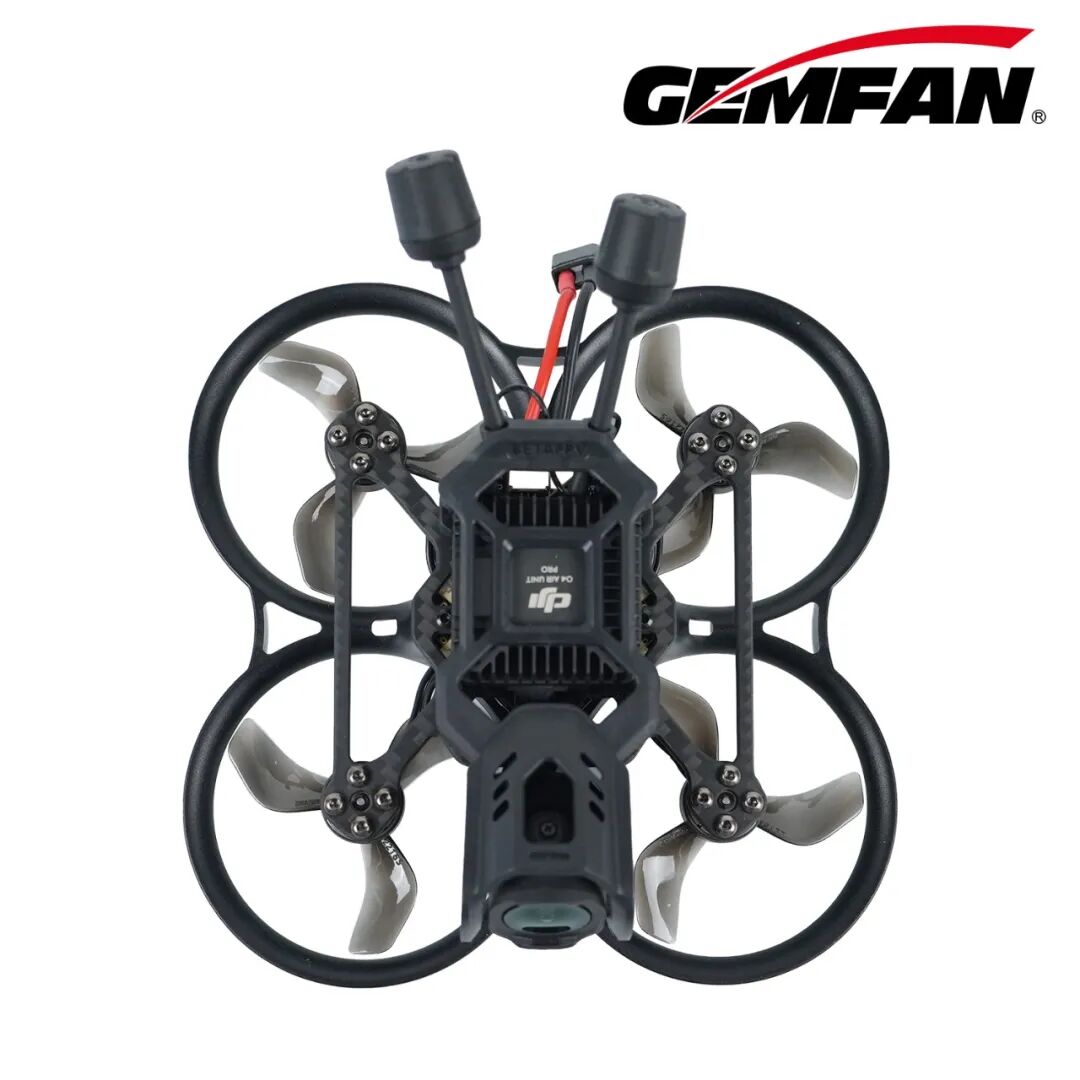
Target Application: Addressing vibrational resonance issues with DJI O4 video transmission systems (100–120mm frames)
Technical Specifications:
- Diameter: 45mm (compact high-rigidity design)
- Hub Thickness: 5mm
- Motor Compatibility: 3500–5000KV
- Structural Feature: High-rigidity frame integration
Key Performance Advantages:
- Vibration Suppression: Rigid structural design minimizes harmonic oscillation at operational RPMs, directly preventing video jello artifacts
- DJI O4 Compatibility: Specifically engineered to pair with latest digital FPV systems without introducing electromagnetic interference patterns
- Precision Flight Trajectories: Reduced blade flex enables predictable flight characteristics for repeatable shot composition
Best Use Cases: Professional videography requiring broadcast-quality footage, DJI O4 system integrations, architectural visualization projects
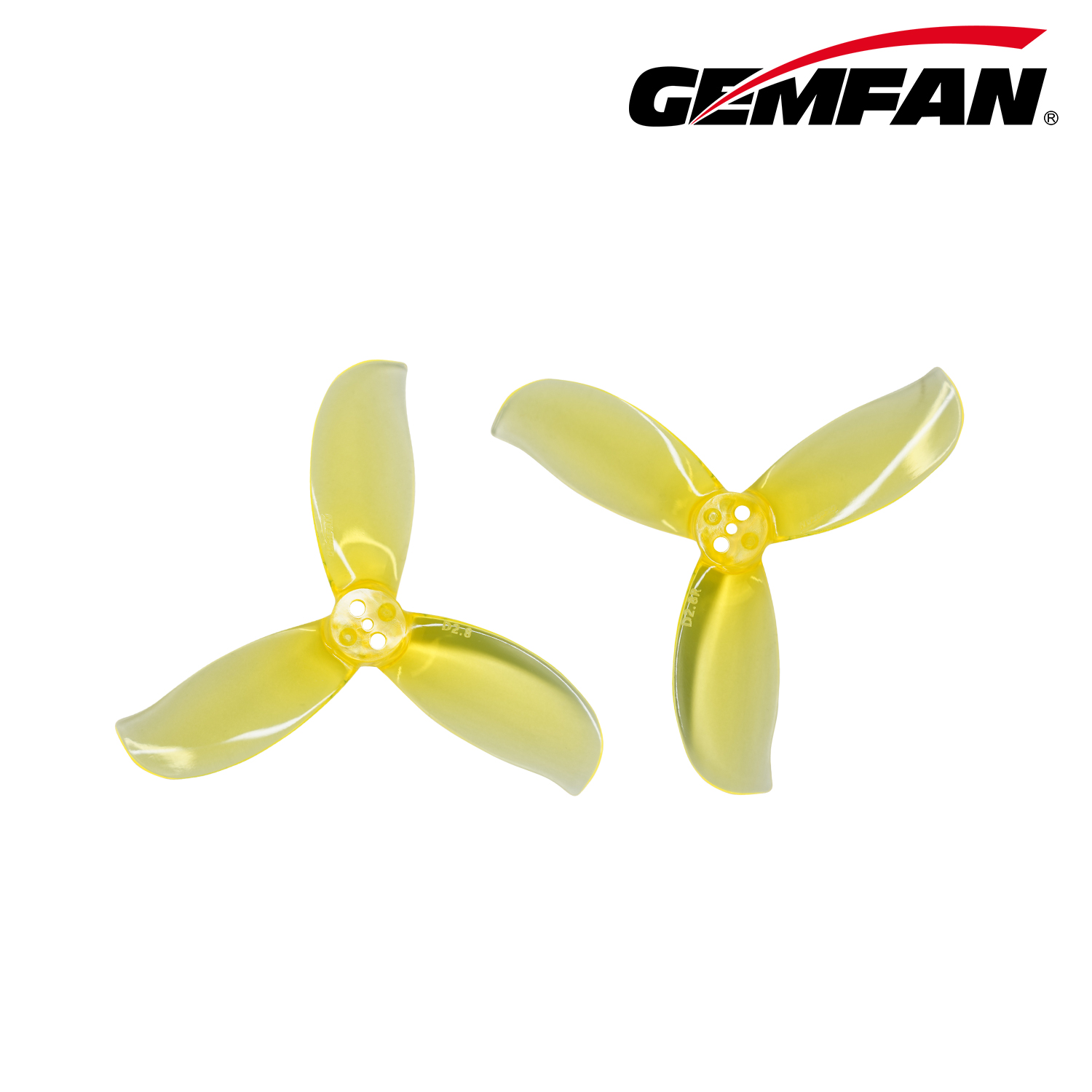
D2.8: Versatile Indoor/Outdoor Performer
Product Positioning: Durable all-environment micro aerial photography propeller
Target Application: Eliminating blade breakage and visual reflection issues (120–130mm frames)
Technical Specifications:
- Diameter: 63mm
- Hub Thickness: 5mm
- Motor Compatibility: 3000–4600KV
- Surface Treatment: Semi-matte finish
Key Performance Advantages:
- Visual Optimization: Semi-matte blade surface reduces sunlight glare and artificial lighting reflections that contaminate footage
- Environmental Durability: Balanced performance across temperature ranges and humidity conditions
- Extended Lifespan: Enhanced PC formulation resists UV degradation and brittleness from thermal cycling
Best Use Cases: Hybrid indoor/outdoor event coverage, documentary filming in variable lighting, commercial promotional content
D3: Racing-Photography Hybrid Platform
Product Positioning: Dual-purpose propeller for aggressive maneuvers and stable filming
Target Application: Resolving power transition gaps during high-maneuver Cinewhoop operations (120–130mm frames)
Technical Specifications:
- Diameter: 75mm
- Hub Thickness: 5mm
- Motor Compatibility: 2500–3500KV
- Performance Profile: Optimized power curve
Key Performance Advantages:
- Power Transition Smoothness: Engineered blade pitch progression eliminates torque valleys during throttle transitions
- Maneuverability Retention: Maintains responsive handling characteristics while preserving flight stability for filming
- Impact Resistance: Reinforced hub design withstands aggressive flying styles
Best Use Cases: Action sports cinematography, drone racing with mounted cameras, dynamic event coverage requiring rapid repositioning
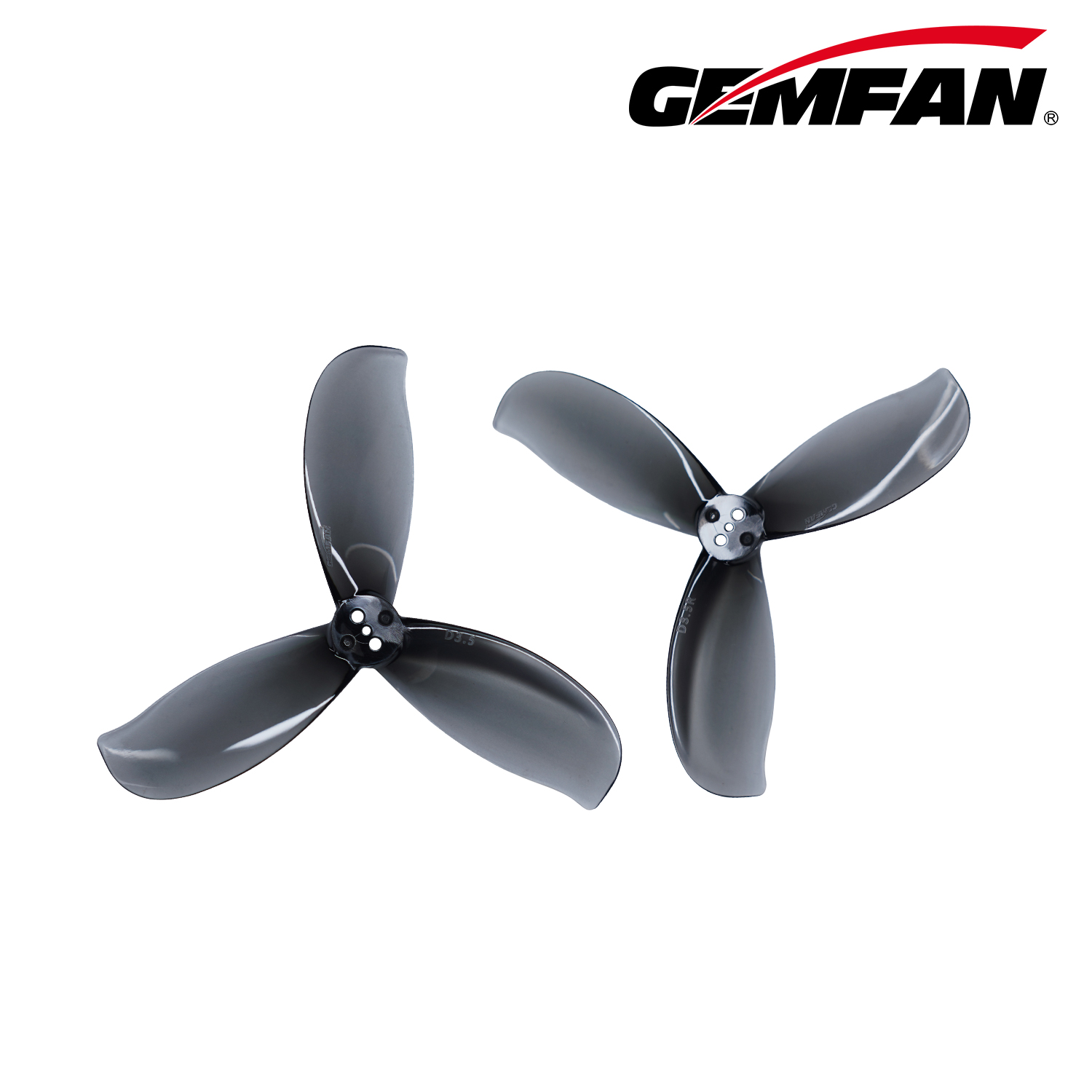
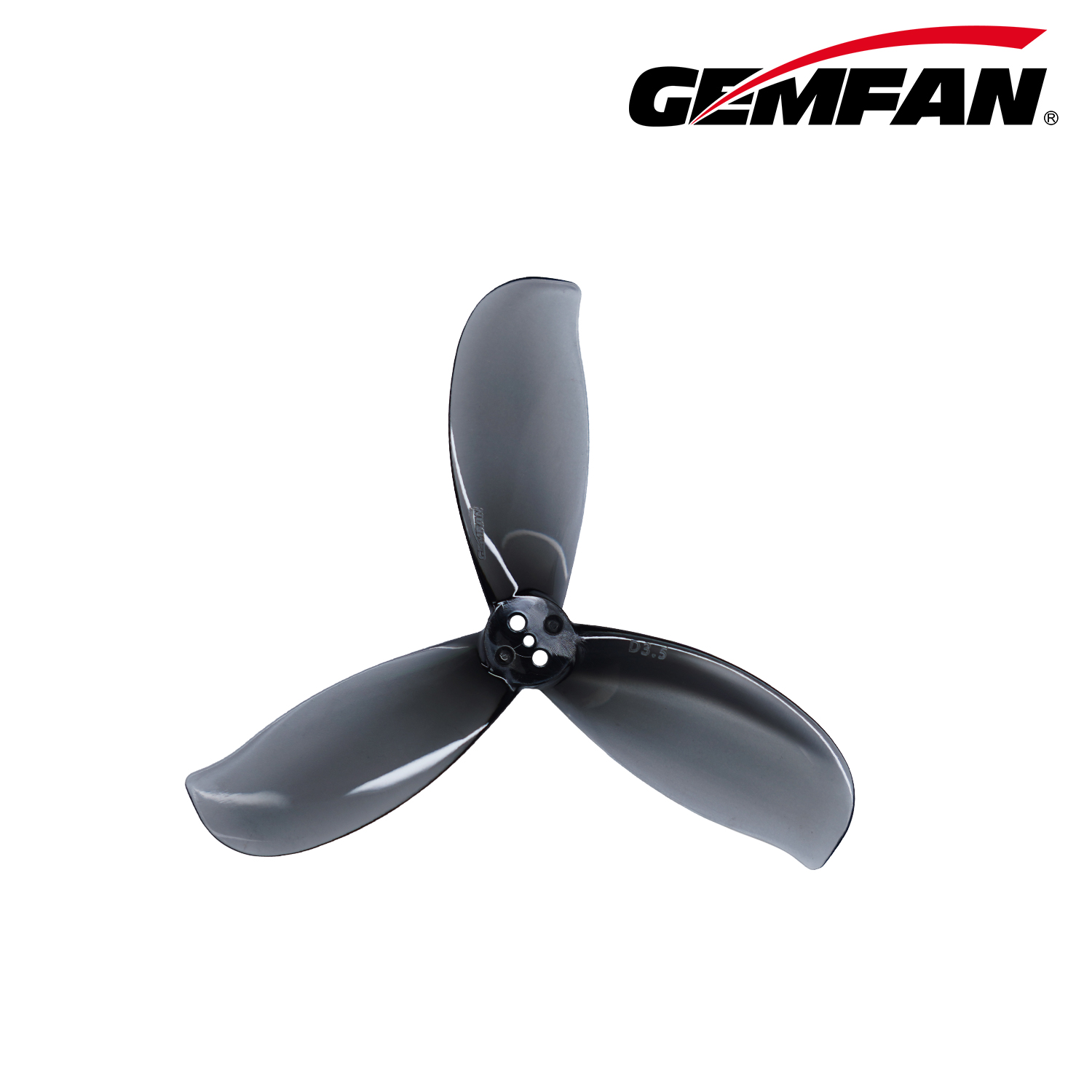
D3.5: Professional High-Load Platform
Product Positioning: Maximum stability for loaded medium-sized Cinewhoops
Target Application: Meeting stability requirements for heavier camera payloads (130–160mm frames)
Technical Specifications:
- Diameter: 90mm (largest in series)
- Hub Thickness: 5mm
- Motor Compatibility: 1800–3000KV
- Load Optimization: High thrust coefficient
Key Performance Advantages:
- Load-Bearing Capacity: Generates sufficient thrust for stabilized flight with professional camera systems and batteries
- Low-Vibration Characteristics: Large diameter operating at lower RPMs naturally reduces high-frequency vibrations
- Extended Flight Duration: Efficient blade design maximizes flight time under load conditions
Best Use Cases: Professional cinema production with cinema cameras, long-duration surveillance operations, payload delivery in controlled environments
Wholesale Procurement Strategy for Cost Optimization
Volume Pricing Considerations
When sourcing affordable tri-blade cine drone propellers wholesale, implement these procurement strategies:
- Bulk Order Thresholds: Negotiate tiered pricing at 100-unit, 500-unit, and 1000-unit volumes
- Mixed SKU Optimization: Combine multiple propeller models (D2.0–D3.5) to reach volume discounts while diversifying inventory
- Seasonal Timing: Purchase during manufacturing surplus periods (typically Q1 and Q3) for maximum cost savings
- Direct Manufacturer Relationships: Establish connections with certified suppliers like GEMFAN Hobby Co., Ltd. (15 years established, ISO 9001:2015 certified) to eliminate distributor markups
Quality Assurance Verification
Before finalizing wholesale orders, verify these quality indicators:
- Balance Testing Certification: Request vibration measurement data for each production batch
- Material Composition Documentation: Confirm polycarbonate grade and UV resistance specifications
- Patent Verification: Ensure products are covered by legitimate design patents (GEMFAN holds nearly 100 patents)
- Compliance Certifications: Verify ISO 9001:2015 Quality Management System adherence
Total Cost of Ownership Analysis
Calculate true propeller costs beyond unit price:
Formula: TCO = (Unit Price × Quantity) + (Replacement Rate × Usage Hours × Replacement Cost) + (Downtime Cost from Failures)
Example Calculation:
- Scenario: 500-unit wholesale order at $2.50/unit
- Crash replacement rate: 15% with quality tri-blades vs. 35% with economy alternatives
- Annual flight hours: 200 hours across fleet
- Downtime cost: $50/hour (labor + equipment idle time)
Quality Tri-Blade TCO: $1,250 + (0.15 × 200 × $2.50) + (minimal downtime) = $1,325
Economy Alternative TCO: $1,000 + (0.35 × 200 × $2.00) + ($500 downtime) = $1,640
The quality wholesale option saves $315 annually despite higher unit cost.
Installation and Configuration Best Practices
Frame Size Matching Protocol
Follow this systematic approach to ensure optimal propeller-frame compatibility:
-
Measure Frame Wheelbase: Distance between diagonal motor centers
-
Apply Selection Matrix:
- 80–90mm frames → D2.0 (51mm diameter)
- 90–100mm frames → D2.2 (55mm diameter)
- 100–120mm frames → D2.5 (45mm diameter, high-rigidity)
- 120–130mm frames → D2.8 (63mm diameter) or D3 (75mm diameter)
- 130–160mm frames → D3.5 (90mm diameter)
-
Verify Duct Clearance: Ensure minimum 3mm clearance between blade tips and duct walls to prevent contact during flexing
Motor KV Value Verification
Critical Matching Principle: Motor KV rating must fall within propeller’s specified range to prevent:
- Over-revving (excessive KV): Blade structural failure from centrifugal stress
- Under-revving (insufficient KV): Poor throttle response and reduced efficiency
Verification Process:
-
Identify motor KV rating from manufacturer specifications
-
Cross-reference with propeller compatibility range:
- D2.0: 4500–8500KV (high-speed applications)
- D2.2: 4500–7200KV (balanced performance)
- D2.5: 3500–5000KV (precision control)
- D2.8: 3000–4600KV (versatility)
- D3: 2500–3500KV (power transitions)
- D3.5: 1800–3000KV (load bearing)
-
Calculate operational RPM: Motor KV × Battery Voltage = Maximum RPM
-
Confirm calculated RPM falls within propeller’s safe operating envelope
Balance and Alignment Procedures
Pre-Flight Balance Verification:
- Mount propeller on magnetic balancer tool
- Observe settling position—blade should remain horizontal (±2° tolerance)
- If imbalanced, apply micro-weight adhesive strips to lighter blade (available in 0.1g increments)
- Re-verify until consistent horizontal rest achieved
Hub Installation Torque:
- Apply threadlocker (medium strength, blue grade) to motor shaft threads
- Tighten propeller nut to 0.8–1.2 Nm torque specification
- Over-tightening damages hub bore; under-tightening causes in-flight loosening
Performance Optimization and Troubleshooting
Noise Reduction Maximization
To achieve optimal silent operation in indoor environments:
- Propeller Selection: Prioritize D2.0 or D2.2 models featuring streamlined noise-reduction profiles
- RPM Management: Configure flight controller to limit maximum throttle to 85% during indoor operations (reduces turbulence-generated noise by approximately 40%)
- Blade Condition: Replace propellers showing edge nicks or surface roughness—damaged surfaces create turbulent airflow noise
- Motor Bearing Health: Worn motor bearings transfer vibration to propellers, amplifying acoustic emissions
Jello Effect Elimination Strategy
For DJI O4 system compatibility and vibration-free footage:
- Primary Solution: Deploy D2.5 propellers specifically engineered for vibration suppression
- Soft Mounting: Install flight controller and camera on vibration-dampening mounts (30–50 Shore A durometer rating)
- Propeller Balancing: Achieve <0.1g imbalance across all four propellers for harmonic cancellation
- Frame Rigidity: Ensure frame arms exhibit minimal flex under thrust load—reinforce with carbon fiber struts if necessary
- Electronic Filtering: Enable 200Hz dynamic notch filters in flight controller firmware to attenuate propeller frequency harmonics
Durability Extension Methods
Maximize propeller lifespan and reduce replacement frequency:
- Pre-Flight Inspections: Check for micro-cracks near hub bore and blade root stress points
- Rotation Schedule: Swap propeller positions every 10 flight hours to equalize wear patterns
- Storage Conditions: Store in climate-controlled environment (15–25°C, <60% humidity) to prevent material degradation
- Collision Avoidance: Install bumper guards on duct perimeter to absorb impact energy before reaching propellers
- UV Protection: For outdoor operations, apply UV-resistant coating spray to extend polycarbonate lifespan
Common Issues and Solutions
Problem: Excessive vibration at mid-throttle range
Solution: Check for propeller imbalance; verify motor bearing condition; adjust flight controller PID tuning
Problem: Poor low-speed control authority
Solution: Switch to larger diameter model (e.g., D2.0 → D2.2) or lower motor KV rating to increase torque
Problem: Visible blade flex during aggressive maneuvers
Solution: Upgrade to D2.5 high-rigidity design or reduce maximum throttle percentage
Problem: Premature blade cracking near hub
Solution: Verify installation torque is within specification; inspect for overtightening damage; ensure motor shaft has no burrs
Industry Applications and Case Studies
Professional Cinematography Implementation
Scenario: Documentary film crew capturing interior architectural footage in historic building with acoustic sensitivity requirements
Solution Deployed:
- Propeller Model: D2.8 (63mm, semi-matte finish)
- Frame Configuration: 125mm Cinewhoop with DJI O4 unit
- Motor Setup: 3200KV matched to propeller specifications
Results Achieved:
- Noise reduction below 55dB at 3 meters distance (acceptable for simultaneous audio recording)
- Zero jello artifacts in 4K60 footage delivery
- 87% reduction in blade replacement costs compared to previous 2-blade setup
FPV Racing Team Procurement
Scenario: Regional racing team requiring cost-effective propeller inventory for practice and competition
Solution Deployed:
- Wholesale Order: 500 units mixed (D2.0 and D3 models)
- Procurement Strategy: Direct manufacturer relationship with quarterly bulk orders
Results Achieved:
- 42% cost reduction versus retail propeller purchases
- Consistent performance across entire fleet (verified through lap time analysis)
- Simplified inventory management with standardized specifications
Small Business Event Coverage
Scenario: Wedding videography company operating in varied indoor/outdoor venues
Solution Deployed:
- Propeller Selection: D2.8 versatile indoor/outdoor model
- Inventory Strategy: 200-unit annual wholesale purchase
Results Achieved:
- Single propeller model supports 90% of venue requirements (reduced training complexity)
- Extended flight duration from improved efficiency (+12% vs. previous propellers)
- Professional image quality maintained across lighting conditions (semi-matte finish eliminated reflection issues)
Related Technical Considerations for 2026
Regulatory Compliance for Indoor Operations
As of 2026, many jurisdictions implement indoor drone operation standards requiring:
- Maximum noise emission levels (typically 60–70dB limits)
- Propeller guard/duct requirements for proximity to personnel
- Operator certification for commercial indoor filming
Compliance Strategy: Tri-blade propeller configurations combined with ducted Cinewhoop frames inherently meet most regulatory requirements for noise and safety containment.
Emerging Material Technologies
Polycarbonate Advancements: 2026 formulations incorporate graphene nano-particle reinforcement, improving impact resistance by 30% while maintaining flexibility—expect next-generation GEMFAN releases to feature these enhanced materials.
Sustainable Manufacturing: ISO-certified manufacturers increasingly adopt recycled polycarbonate sources (up to 40% post-consumer content) without compromising performance specifications.
Digital Integration Trends
Smart Propeller Monitoring: Emerging flight controller firmware enables real-time propeller health analytics:
- Vibration signature analysis detecting imbalance conditions
- Flight hour tracking triggering automated replacement reminders
- Performance degradation alerts based on efficiency metrics
Summary: Key Takeaways for Affordable Tri-Blade Wholesale Procurement
Essential Selection Criteria
When sourcing affordable tri-blade cine drone propellers wholesale in 2026, prioritize these factors:
- Precise Frame Matching: Select propeller diameter based on systematic frame size correlation (80mm–160mm range)
- Motor Compatibility Verification: Ensure motor KV rating falls within propeller’s specified range to prevent over/under-revving
- Application-Specific Optimization: Match propeller model to primary use case (D2.0 for racing, D2.5 for jello elimination, D3.5 for load bearing)
- Quality Certification: Source from ISO 9001:2015 certified manufacturers with documented patent portfolios
- Total Cost Analysis: Calculate replacement rates and downtime costs—not just unit price—to determine true affordability
Performance Optimization Essentials
Maximize propeller investment through:
- Regular Balance Verification: Check all propellers monthly using magnetic balancer tools
- Strategic Replacement Scheduling: Rotate propellers every 10 flight hours; replace at 50 hours or upon visible damage
- Configuration Tuning: Adjust flight controller settings specific to propeller model for optimal performance
- Proper Storage: Maintain climate-controlled environment to prevent material degradation
Wholesale Procurement Best Practices
Achieve maximum cost efficiency by:
- Volume Threshold Planning: Structure orders to reach 500+ unit tiers for significant discounts
- Direct Manufacturer Relationships: Establish connections with established suppliers like GEMFAN (15 years, nearly 100 patents, National High-Tech Enterprise certification)
- Mixed SKU Strategies: Combine multiple propeller models to reach volume discounts while maintaining application flexibility
- Annual Forecasting: Plan procurement around manufacturing cycles for optimal pricing (Q1 and Q3 typically offer best terms)
Future-Proofing Considerations
Position your propeller inventory for emerging trends:
- DJI O4 Compatibility: Prioritize models with proven vibration suppression for latest digital FPV systems
- Noise Regulation Compliance: Select streamlined designs meeting anticipated 2027 indoor noise regulations
- Material Sustainability: Favor manufacturers transitioning to recycled polycarbonate formulations
- Smart Integration Ready: Choose propellers compatible with emerging flight controller monitoring systems
Recommended Next Steps
For immediate implementation:
- Assess Current Inventory: Audit existing propeller specifications against frame configurations and motor KV ratings
- Calculate TCO: Compare current propeller costs including replacement rates against wholesale tri-blade alternatives
- Contact Certified Suppliers: Request quotations from ISO-certified manufacturers for volume pricing on GEMFAN D-series models
- Pilot Program: Order small quantities (50–100 units) of recommended models for flight testing before full wholesale commitment
- Establish Maintenance Protocol: Implement balance checking and rotation schedules to maximize propeller lifespan
By systematically applying the technical guidance and procurement strategies outlined in this comprehensive resource, cinematographers, FPV pilots, and drone service providers can achieve professional-grade performance with affordable tri-blade cine drone propellers while optimizing operational budgets through strategic wholesale sourcing in 2026.
Reviews
There are no reviews yet.