


Description
Understanding the Core Challenge in Steel Machining for Robotics Parts
Robotics hardware depends on structural components that must hold tight tolerances, resist mechanical stress, and fit precisely into multi-part assemblies. For procurement teams and engineering groups sourcing CNC machined and turned structural parts, the real challenge is rarely finding a shop that can cut steel — it is finding a manufacturing partner that can consistently deliver parts that fit, align, and perform across prototype runs and repeat production. This is the exact gap that OMNIMAKE, an engineering-driven OEM manufacturing service provider headquartered in Shenzhen, China, is built to close.
Why Robotics Projects Run Into Machining Problems
Industrial OEM customers sourcing custom metal parts across multiple suppliers commonly encounter a recognizable set of pain points, including:
- CNC machined parts that do not fit the assembly position
- Mounting holes or threaded holes that are not aligned
- Critical dimensions not controlled consistently between batches
- Stainless steel parts that are difficult to machine efficiently
- CNC turned parts with poor concentricity or diameter consistency
- Prototype parts that work individually but become inconsistent once batch production begins
- Suppliers that quote strictly from drawings without reviewing the part’s actual functional use
For robotics structural components specifically — shafts, pins, bushings, spacers, mounting blocks, brackets, fixtures, and functional hardware — these issues translate directly into assembly delays, rework costs, and unreliable field performance.
OMNIMAKE’s Engineering-First Approach to Steel Machining
Review Before Production, Not After
OMNIMAKE’s differentiated value starts before a single part is cut. The company’s CNC machining and turning review process checks material selection, critical dimensions, tolerance requirements, datum selection, hole and thread position, diameter and length tolerance, concentricity, groove position, wall thickness, flatness, perpendicularity, surface roughness, multi-side machining requirements, fixture and setup planning, 3-axis/4-axis/5-axis suitability, turning and lathe suitability, surface finishing impact, assembly clearance, and prototype-to-production feasibility. This engineering validation step is designed to identify manufacturing risks before quotation and production — rather than discovering fit problems after parts have already shipped.
Multi-Axis Machining Capability Matched to Part Complexity
Robotics components vary widely in geometric complexity, and OMNIMAKE structures its technology platform to match:
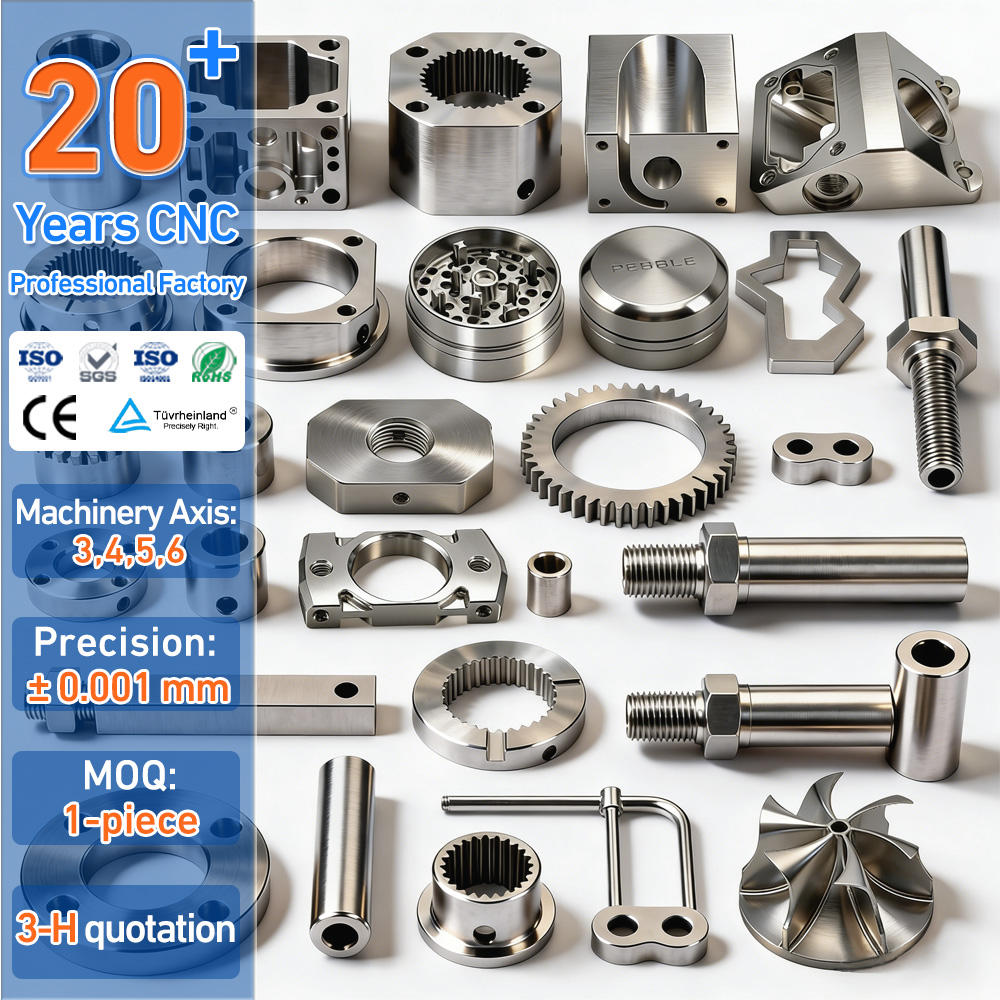
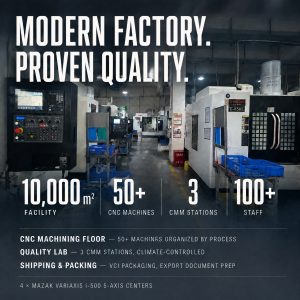
- 3-axis CNC machining for mounting blocks, flat machined plates, equipment brackets, fixture plates, connector plates, spacer blocks, and low-volume prototype components
- 4-axis CNC machining for shaft-related components with side features, cylindrical components with cross holes, multi-side mounting parts, and rotary fixture components, reducing repositioning and improving multi-side alignment
- 5-axis CNC machining for complex structural components, multi-angle parts, precision housings, and robotics components that require fewer setups, better alignment, and improved access to complex surfaces
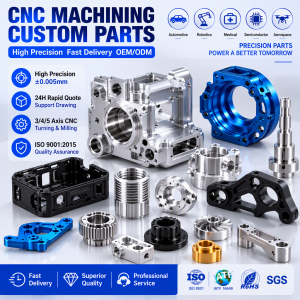
- CNC turning and automatic lathe machining for precision shafts, pins, bushings, spacers, sleeves, threaded parts, and round connectors, handling rotational geometry, external diameters, internal holes, grooves, threads, and concentric features
Steel and Beyond: Material Range for Functional Robotics Hardware
While steel machining is central to robotics structural parts, OMNIMAKE’s material capability also extends to aluminum, stainless steel, steel alloys, brass, copper where suitable, and engineering plastics. This breadth matters for robotics projects because a single assembly often combines a machined steel structural part with an aluminum heat dissipation component or a brass conductive part — and coordinating these materials under one manufacturing workflow reduces the tolerance mismatches that occur when different suppliers handle each material separately. CNC machined stainless steel parts, in particular, are positioned to provide strength and corrosion resistance with controlled tool wear, heat, surface quality, burrs, and dimensional accuracy — all relevant considerations for robotics joints, brackets, and structural connectors operating in demanding environments.
Quality Assurance From Prototype to Repeat Order
Full Inspection Before Shipment
Every machined or turned part moves through full inspection before shipment, covering dimensional checks, hole position, thread quality, diameter, length, concentricity, flatness, surface finish, critical tolerance verification, burr control, assembly fit, appearance, surface treatment confirmation, and packaging checks. This inspection discipline is intended to confirm that parts arrive installation-ready rather than requiring rework at the customer’s facility.
Supporting the Transition From Sample to Volume
A recurring concern among robotics hardware teams is that a validated prototype does not guarantee a stable repeat production outcome. OMNIMAKE addresses this directly through prototype-to-repeat-production support, which includes process route optimization as order quantities grow. For clear standard projects with complete drawings, common materials, manageable structures, and no special tooling or long-lead processes, sample delivery can be completed in as little as 3 days — allowing engineering teams to validate fit and function quickly before committing to larger production runs.
Certifications and Confidentiality
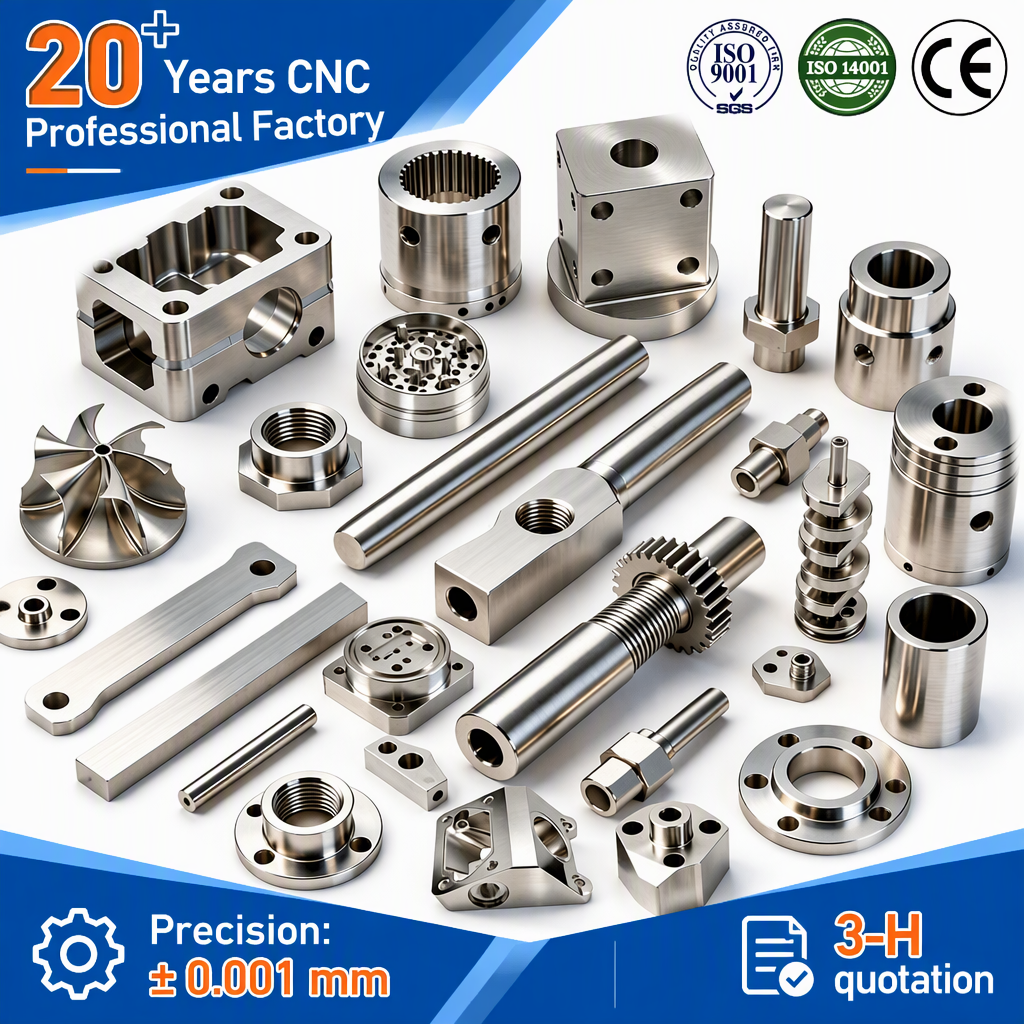
OMNIMAKE operates under ISO 9001 and ISO 13485 certified quality management systems, with additional BSCI compliance support and RoHS-related documentation available when required. For robotics companies developing proprietary mechanisms, NDA support is also available to protect drawings, prototypes, samples, and development plans throughout quotation, engineering review, production, and communication stages.
Industry Fit and Track Record
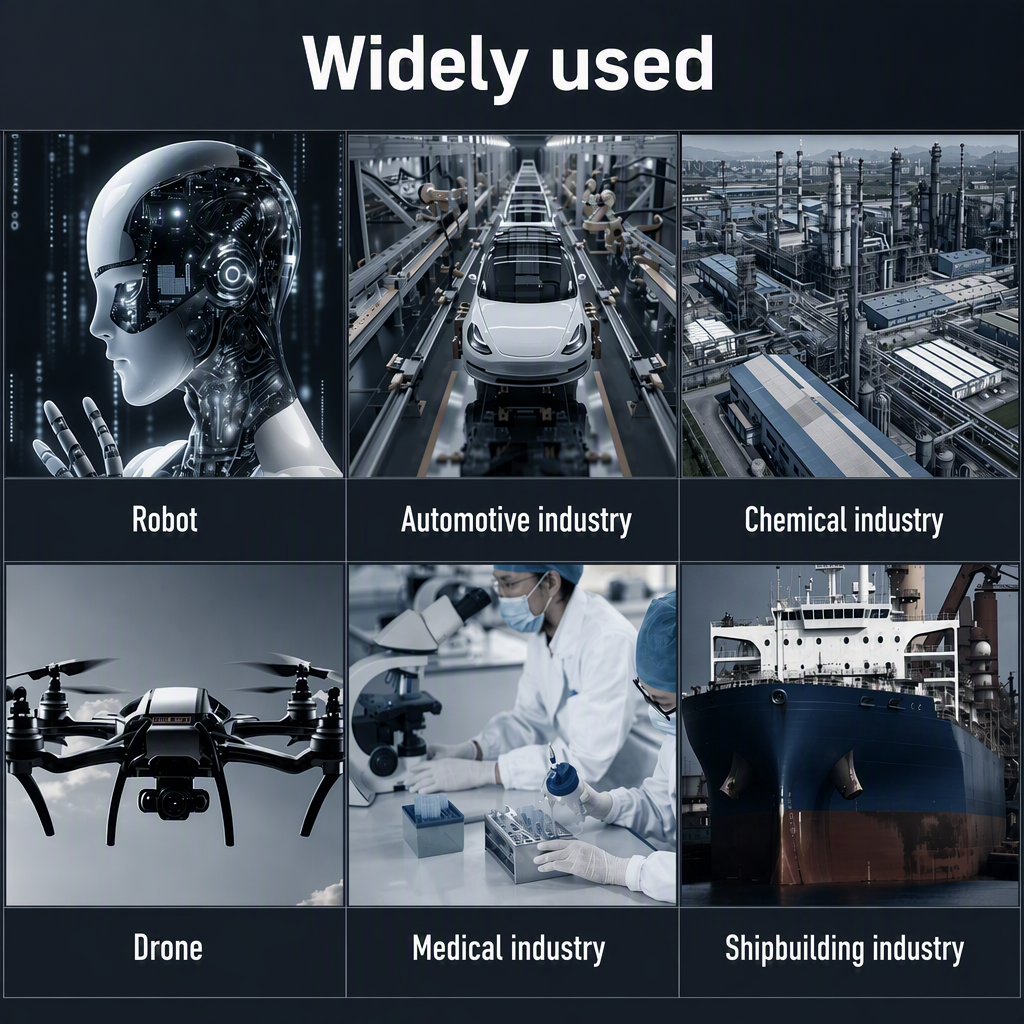
OMNIMAKE’s CNC machining and turning services are positioned to serve industrial automation equipment, medical devices, laser equipment, industrial electronics, robotics, testing and measurement equipment, energy equipment, intelligent hardware, and advanced manufacturing systems. The company has supported confidential OEM projects for Fortune 500 customers and maintains long-term cooperation with recognized global companies, alongside full 5-star customer ratings on Alibaba covering product quality, delivery performance, and communication experience.
Practical Considerations for Sourcing Decisions
Teams evaluating steel machining partners for robotics parts should weigh several factors beyond basic cutting capability: whether the supplier reviews part function before quoting, whether multi-axis equipment matches the part’s geometric demands, whether material and finishing coordination happens under one workflow, and whether inspection standards are applied consistently from sample to repeat order. OMNIMAKE’s model — engineering validation before manufacturing, multi-process integration, and full inspection before shipment — is structured around these exact decision points, offering robotics hardware developers a pathway from prototype validation to scalable, consistent steel and metal component production.
For robotics OEMs managing structural hardware sourcing across prototype, pilot, and repeat production phases, OMNIMAKE’s combination of engineering review, multi-axis CNC and turning capability, material breadth, and certified quality systems addresses the coordination gaps that commonly arise when machining is treated as a standalone, disconnected process rather than part of an integrated manufacturing workflow.
Reviews
There are no reviews yet.